Additional information
Terrain
- Tracks and byways, field paths, metalled lanes
Landscape
- Chalk downland
Dog friendliness
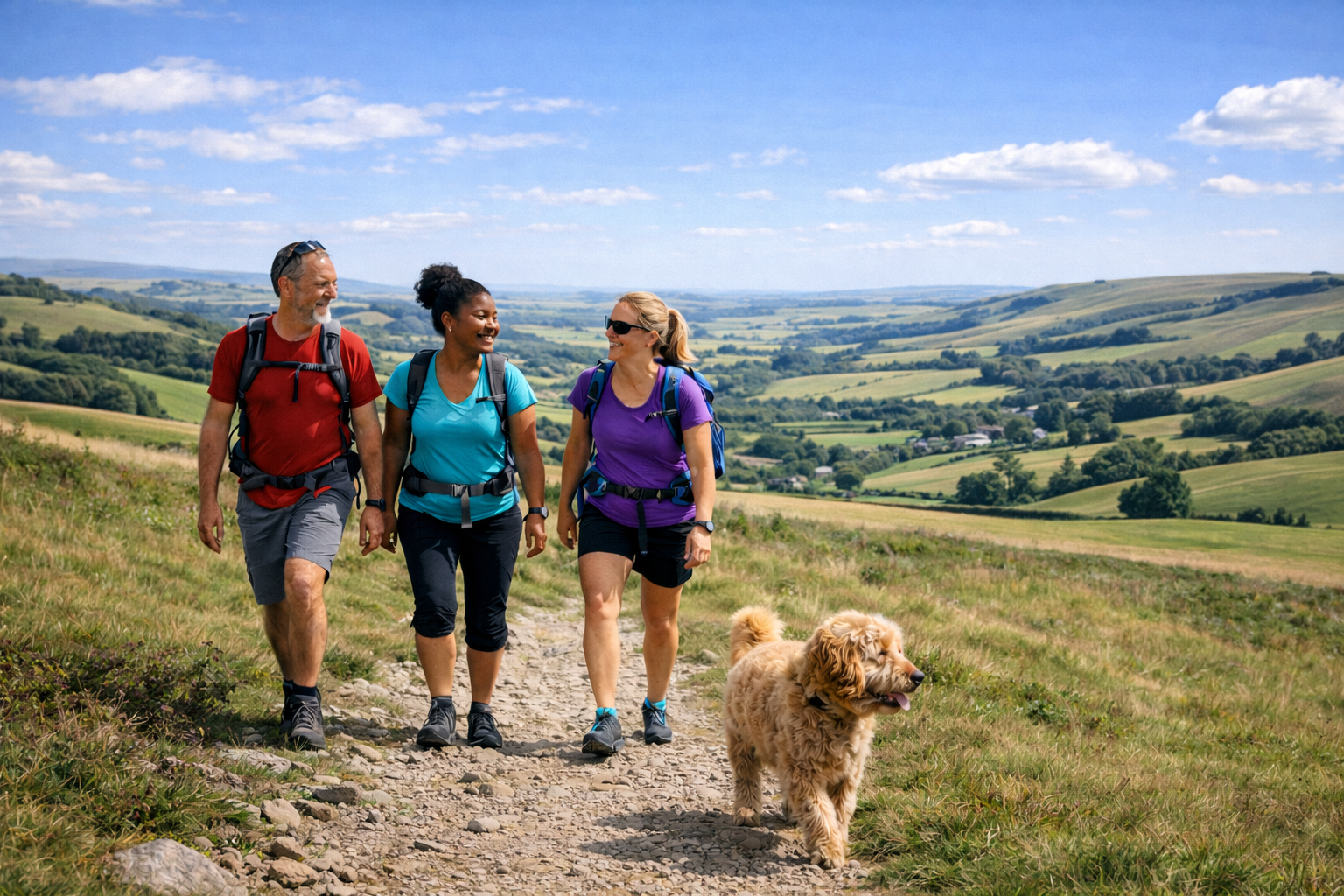
- Let off lead in country park
Parking
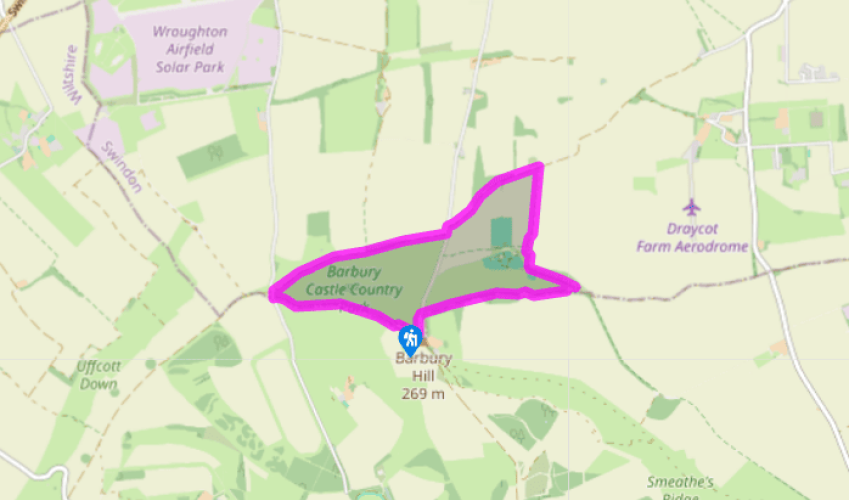
- Free parking at Barbury Castle Country Park
Toilets en route
- Barbury Castle Country Park
About the walk
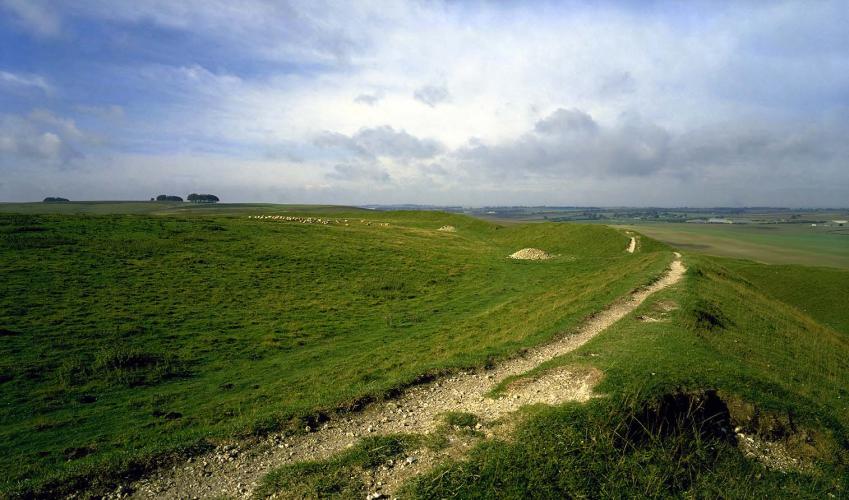
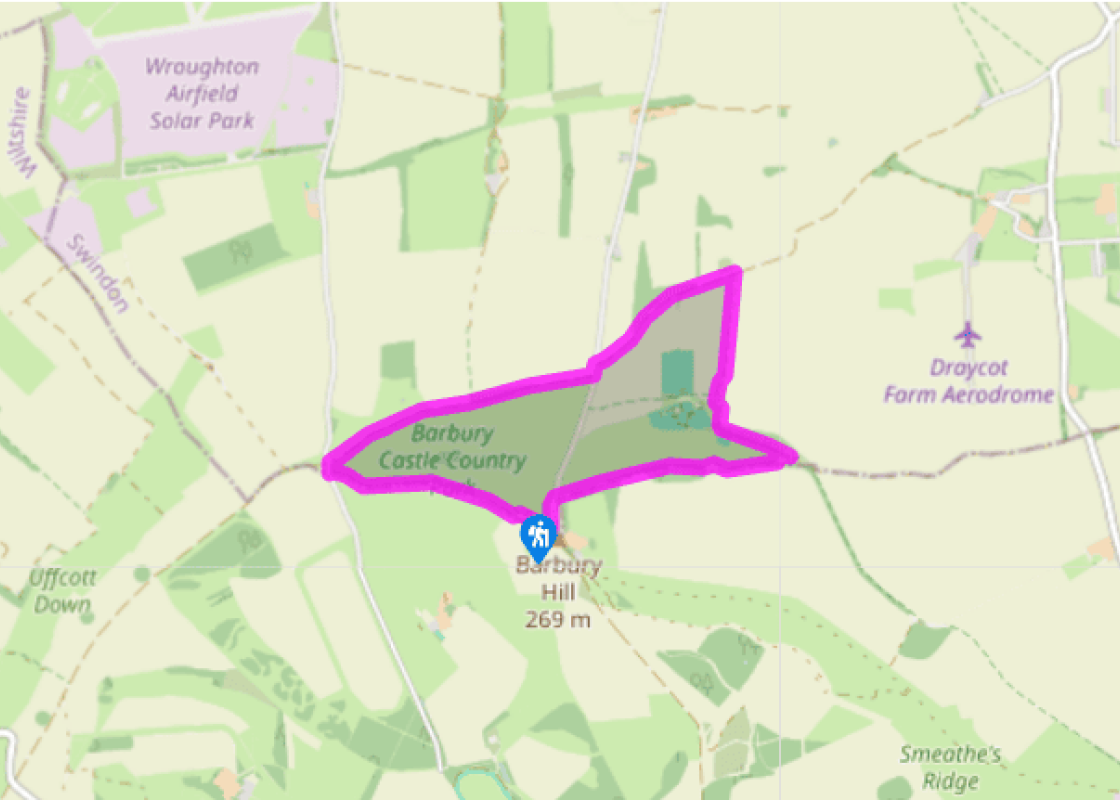
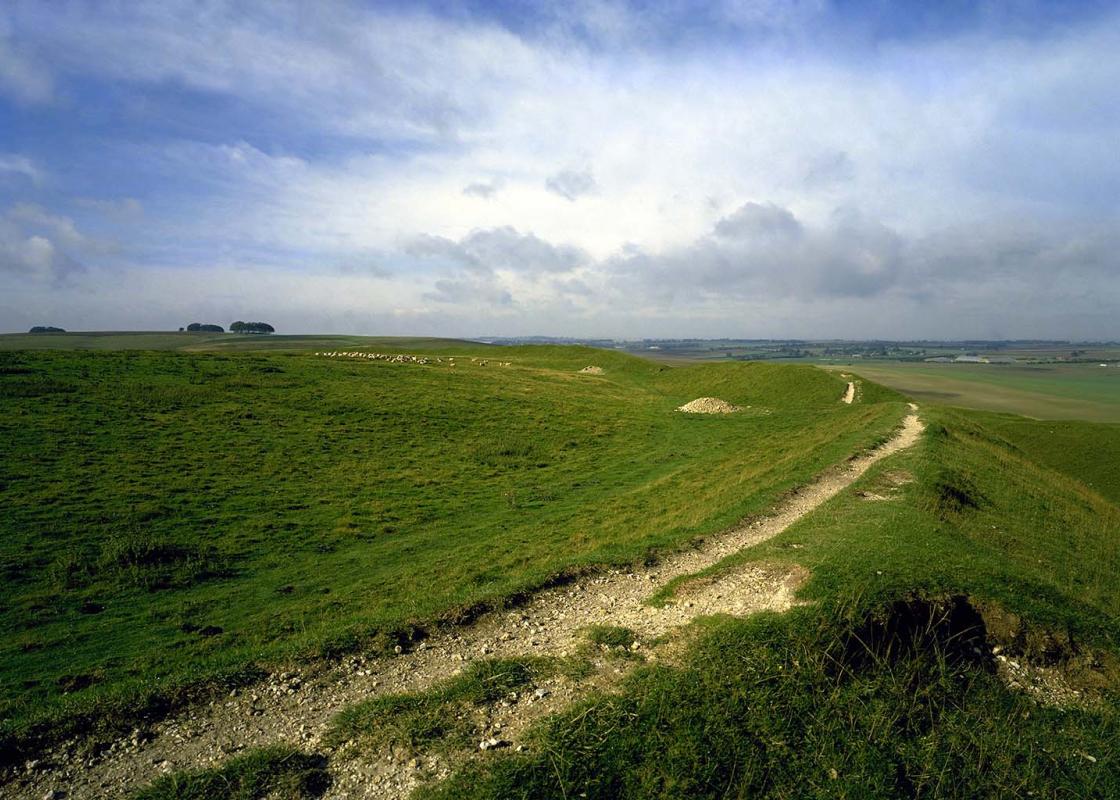
Some of the finest scenery in southern England can be found on the chalk downlands of Wiltshire, in particular the Marlborough Downs, which extend south from Swindon across the Vale of Pewsey to the northern flanks of Salisbury Plain. These expansive landscapes, with their wide skies and smooth... ridges interspersed with long shallow combes, have captured the imagination of many writers, including Richard Jefferies (1848–87). Jefferies’ lyrical prose was deeply influenced by the vast open downland and the far-reaching views. His favoured spot along the northern ridge of the Marlborough Downs was on Barbury Down, with its breathtaking views across the Vale of the White Horse to the Cotswolds. About 150 acres (61ha) of open land on Barbury Down have now been designated a country park. The archaeology of the area is renowned, with a mass of ancient field monuments, including stone circles, post-Roman earthworks, field systems, burial mounds and hill-forts littering the landscape. During the Iron Age, a succession of tribes invaded Britain, many of them settling on the North Wessex Downs where they constructed dramatic hill-forts on the downland escarpments, away from the threat of advancing enemies. One of the best-known hill-forts in southern England provides the focal point of the country park and our walk. Following the ancient Ridgeway Barbury Castle is a well-defined oval of about 12 acres (5ha), with entrances at the eastern and western sides passing through towering double ramparts, as well as ditches and other defences, which may have been added when it was re-fortified in the Saxon period. Finds from the site suggest that it was used over a long period of time and include flint axes, Iron Age and Roman pottery, weapons, tools and jewellery. You can see many of these on display in Devizes Museum. Half a mile (800m) north of the castle lies the battlefield of Beranburth, where Saxon chief Cynric and his son Ceawlin defeated the Britons in a bloody massacre. It established the Saxons as overlords of southern England and later, in AD 560, Ceawlin became King of Wessex. The walk starts by following one of Britain’s best-loved national long-distance trails. Used for over 4,000 years, the Ridgeway linked East Anglia with the Dorset coast. The official route begins at Ivinghoe Beacon in Buckinghamshire and follows the chalk ridges to Avebury, 85 miles (137km) away. Memorial to a Popular Writer The walk finishes as it starts, by following another popular waymarked path – the Millennium Trail Byway. As well as offering stunning views to the north, the trail passes a memorial stone to Richard Jefferies who was born at Coate near Swindon and is perhaps Wiltshire’s best-known country writer. He spent much of his time walking the Wiltshire Downs and wrote: ‘They only know a country who are acquainted with its footpaths. By the roads, indeed, the outside may be seen; but the footpaths go through the heart of the land.’ His plaque on the stone faces his birthplace. On the other side of the memorial stone is a plaque recalling Alfred Williams (1877–1930), self-taught scholar, linguist and nature poet who was born at nearby South Marston. The Hammerman Poet Williams worked at the Great Western Railway works in Swindon by day. He was nicknamed the ‘Hammerman Poet’ and spent most of his life in his home village. The son of a carpenter, he grew up in poverty after his father abandoned his wife and eight children. He became a farm labourer at 11; when he was 14 he began working as a steam hammer operator at the railway works where he remained for the next 23 years. He published his first book of poetry in 1909, but his health declined and he left the works at the outbreak of World War I. His most famous work, Life in a Railway Factory (1915), has been described as the most important literary work ever produced in Swindon about Swindon.
Read more