Along the Colne Valley
Recommended by

Walk directions
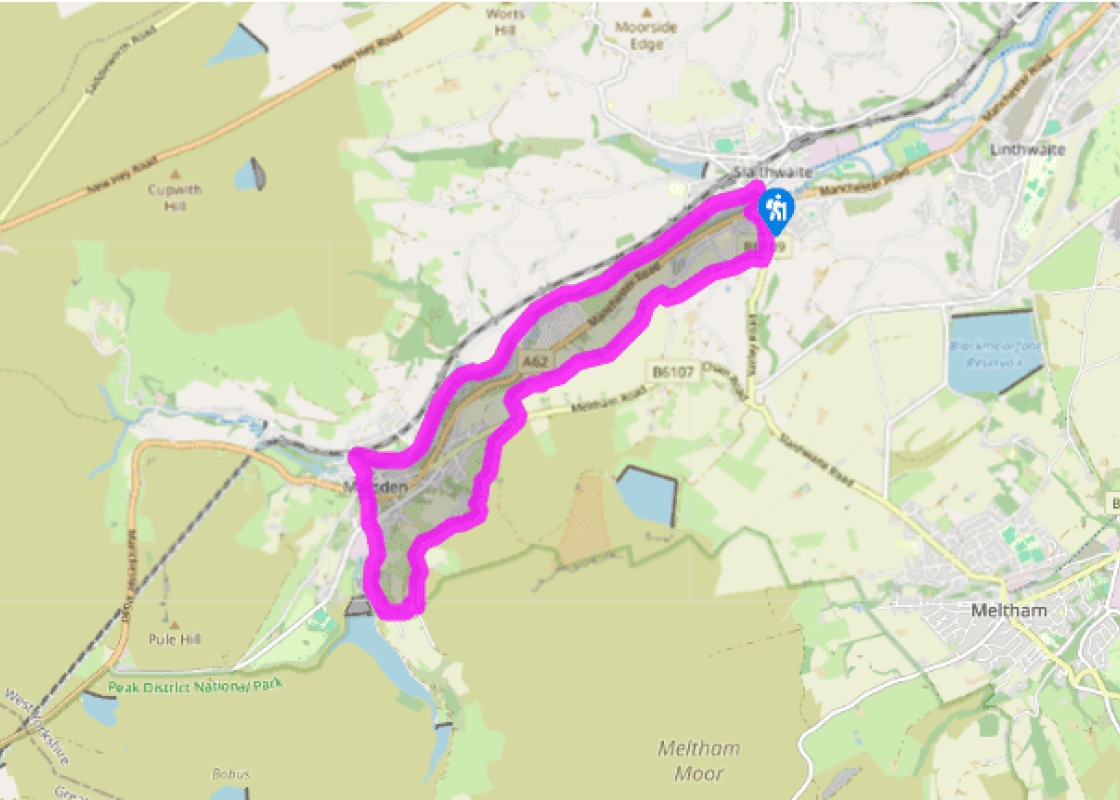
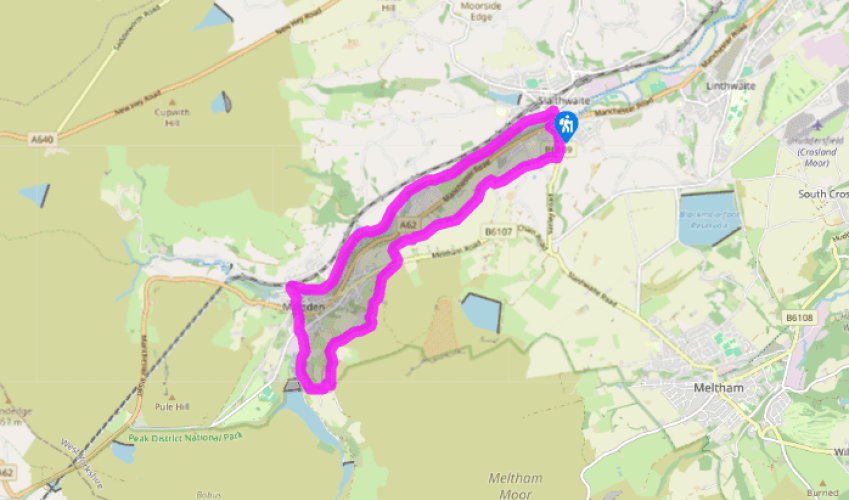
Begin along Britannia Road, turning right on to the A62 and crossing to continue up Varley Road. Beyond the last house, go through a squeeze gap on the right and climb to a field. Swinging right and left, follow an indistinct path to a stile on the opposite side. Carry on beside the right-hand wall, crossing through a gate to a tarmac lane. Follow it right and left to a crossroads. Take the track opposite, bearing left after 20yds (18m) on to another track between houses. Go over a stile at the end, keep ahead at the edge of successive fields, crossing more stiles and eventually leaving beside a house on to a tarmac lane.
Go briefly right before turning left along a track that ultimately leads to a farm. Walk forwards past the front of a cottage (through the garden), passing through a dilapidated gate into a field corner. Carry on ahead, negotiating gates either side of a beck at the far side and passing an abandoned farmstead to a walled path. Where the path shortly veers right, take the gate ahead into a field. Follow the right wall, bearing slightly left beyond its end to slant up across rough pastures. Go over a stile and keep forwards, continuing on to reach a walled path. Climb left to another stile, then turn right down to a bend. Scaling a wall stile on the left, walk away at the bottom edge of fields to a kissing gate. Continue through a plantation, swinging left at the far side along a path up to the B6107.
View all directions
Additional information
Terrain
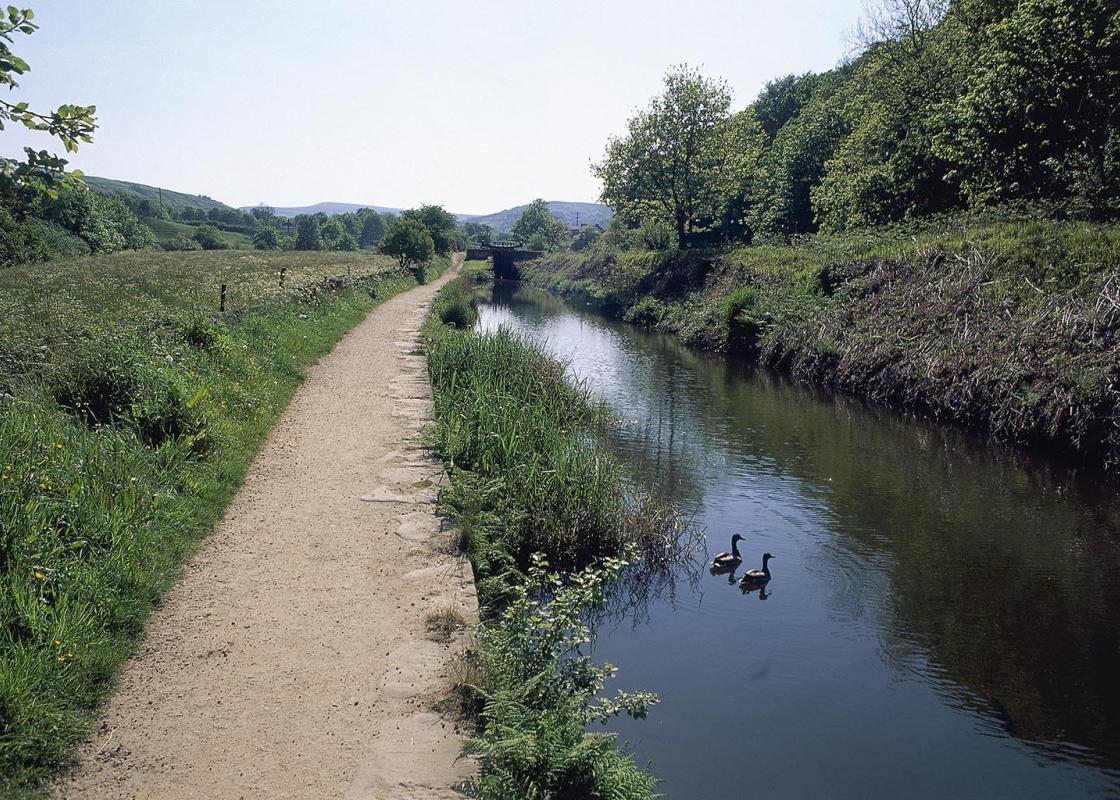
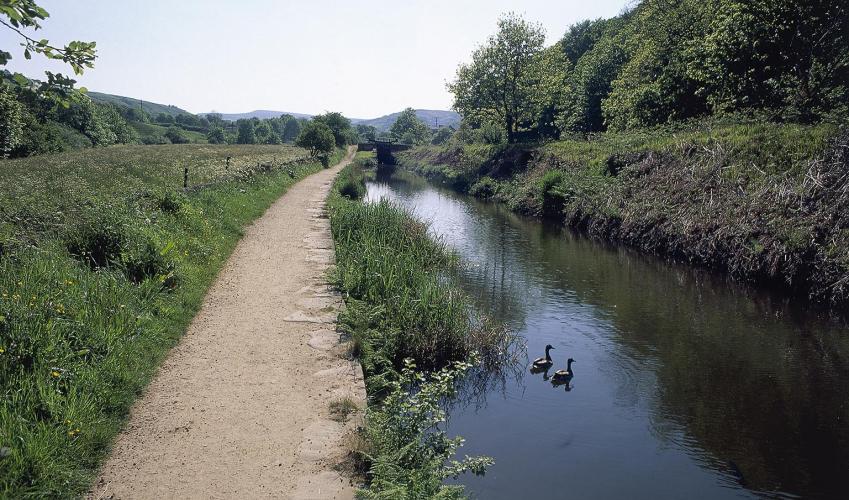
- Field paths, good tracks and canal tow path, many stiles
Landscape
- Typical South Pennine rough pastures, canalside
Dog friendliness
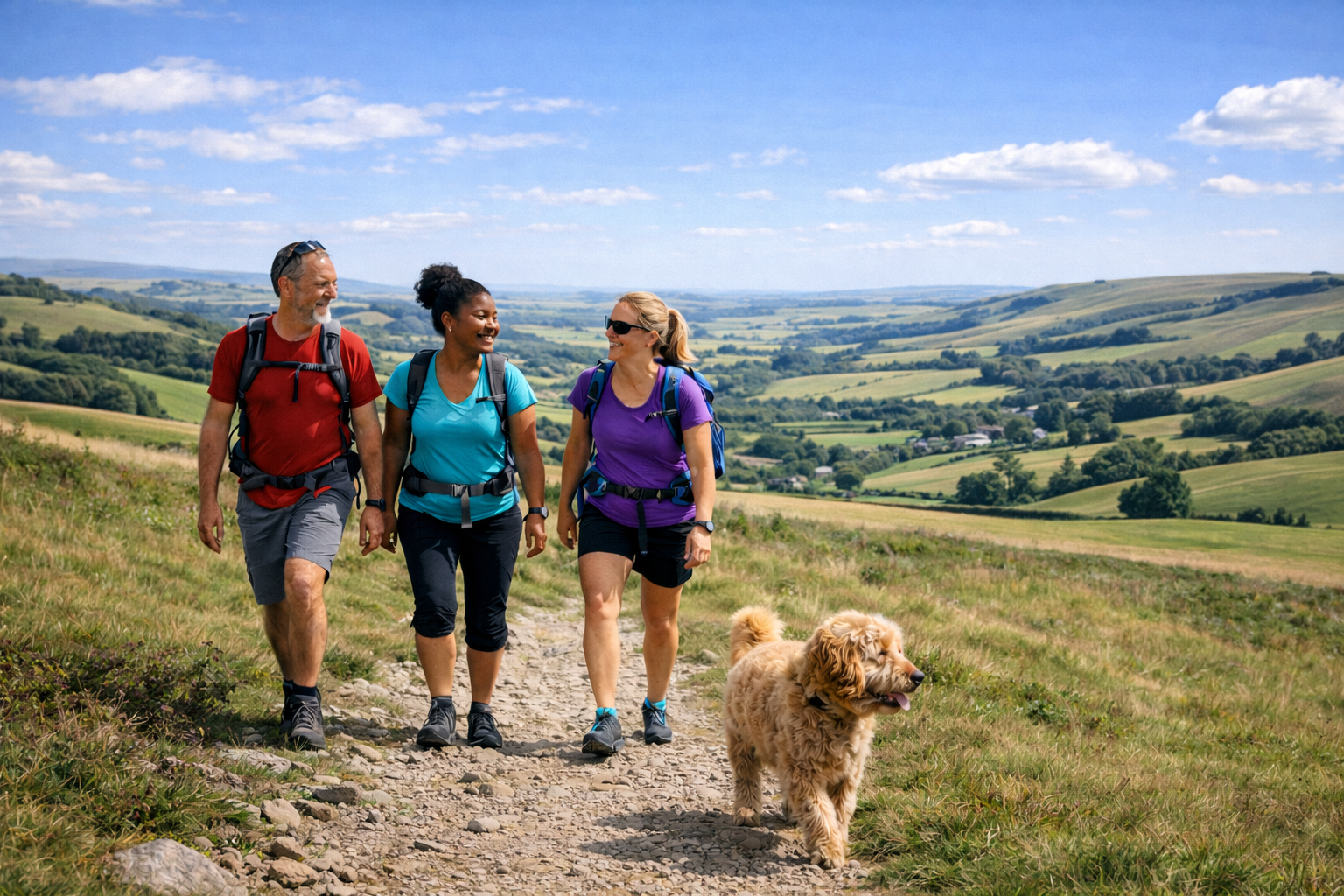
- Towpath is especially good for dogs
Parking
- Plenty of street parking in Slaithwaite; car park next to the library on New Street
Toilets en route
- Marsden
About the walk
Transport across the Pennine watershed has always presented problems. The Leeds and Liverpool Canal, built during the 1770s, took a convoluted route across the Pennines, through the Aire Gap at Skipton. Then came the Rochdale Canal. However, its more direct route came at a high price: mile for...
Read more

Been on this walk?
Send us photos or a comment about this route. Or recommend a route of your own.

Walking in Safety
Read our tips to look after yourself and the environment when following this walk.
Get an AA guide
Explore our range of ‘50 Walks in’ guides - they’re the ideal companion for a ramble.
Been on this walk?
Send us photos or a comment about this route. Or recommend a route of your own.
Walking in Safety
Read our tips to look after yourself and the environment when following this walk.
Get an AA guide
Explore our range of ‘50 Walks in’ guides - they’re the ideal companion for a ramble.
About the area
Everybody knows that Yorkshire has some special landscapes. The Dales and the Moors first spring to mind, but what about West Yorkshire? That’s Leeds and Bradford isn’t it? Back-to-back houses and blackened mills… Certainly if you had stood on any of the hills surrounding Hebden Bridge a hundred years ago, and gazed down into the valley, all you would have seen was the pall of smoke issuing from the chimneys of 33 textile mills.

Nearby places to stay
View all (8)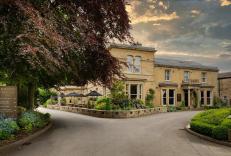






Nearby places to stay
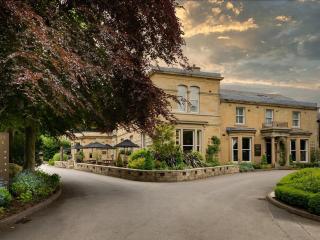
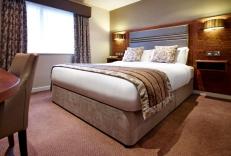
Manor House Lindley
A number of years ago the owners of Manor House transformed it from a derelict property by almost entirely rebuilding it. Now packed full of style and character, the bedrooms are extrem...
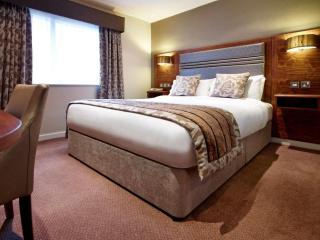
Briar Court Hotel and Venue
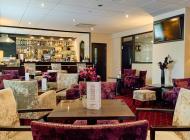
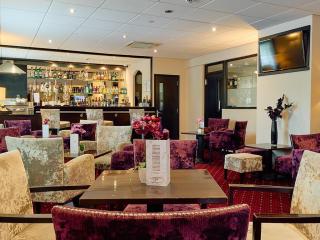
Situated in the heart of the West Yorkshire Pennines, Briar Court Hotel is ideal for a visit to Yorkshire. Relax in the stylish lounge and bar area, an ideal meeting point for morning c...
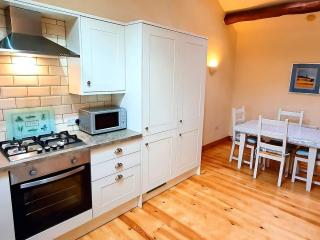
Laithe Cottage
Awaiting description...
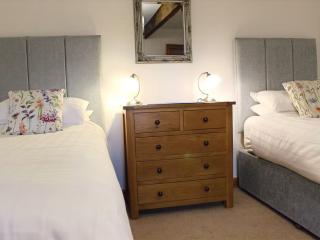
Stable Cottage
Awaiting description...
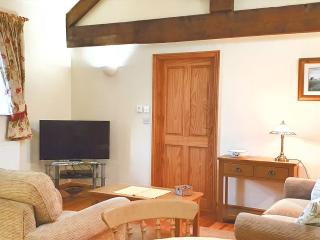
Mistal Cottage
Awaiting description...
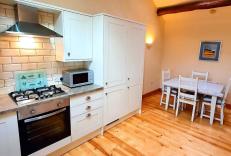
Castle House Farm Cottages
Castle House Farm Cottages offers two ground floor cottages and a first-floor apartment set in a private courtyard with outside seating/dining. Furnished to a high standard, fully equip...
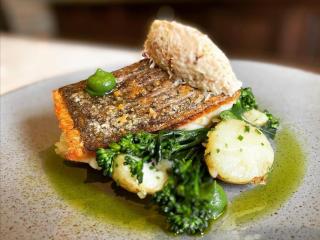
The Fleece Countryside Inn
The Fleece is a sympathetically restored 18th-century inn with stunning views over Ripponden and The Calder Valley. The interior has many original features including half-timbered walls...
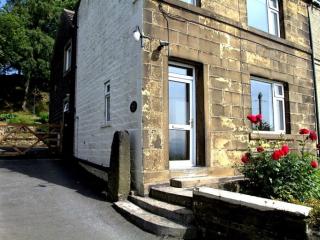
Cherry Tree Cottage
Awaiting description...
Places to eat nearby View all