"Great views of Airedale from a viewpoint known as the Druid's Altar."
Walk directions
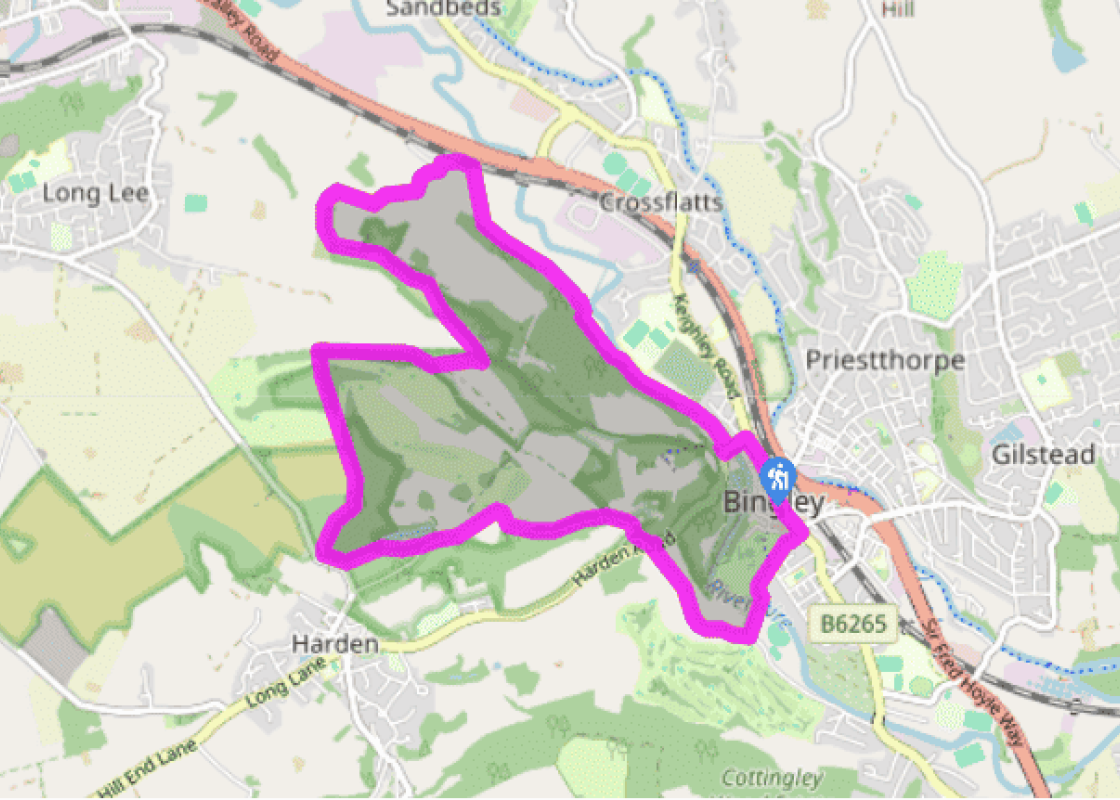
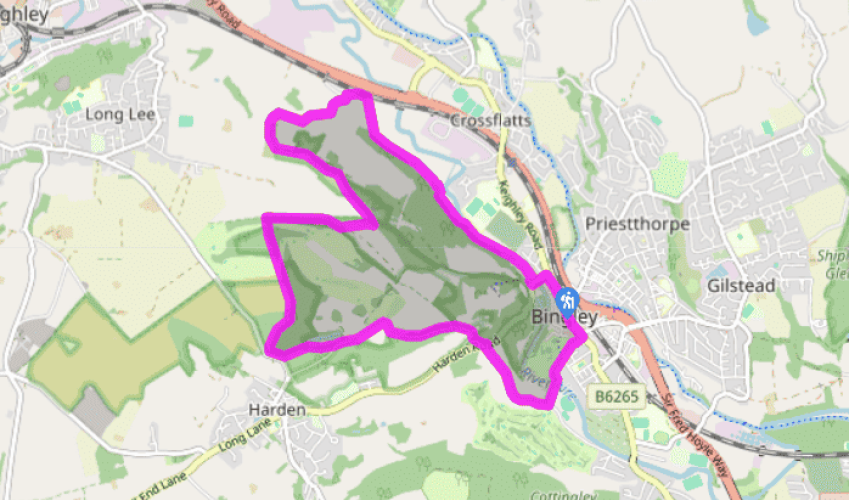
Walk northwest from the centre of Bingley towards the church. Go left at the traffic lights beside the Old White Horse pub into Millgate. Cross the River Aire and take the first right, Ireland Street. Swing immediately right again and then left along a riverside track, soon leaving the town behind. Reaching Ravenroyd Farm, bear right and pass between farm buildings to continue on a walled track to Cophurst. Pass left of the cottage and continue beside a wood at the edge of successive pastures.
A developing track leaves the third pasture through a gap. Continue to a stile and gate and skirt a hillock, eventually leaving over a stile by Marley Farm. Follow the rough track up left, passing Marley Brow. Where the track subsequently swings into a farm, bear off right on a grass trail across a bracken and scrub slope, ultimately winding up to a small gate. A narrow path rises through more trees. Keep right and then left at successive forks, shortly joining a wall on the right bounding the top of the wood. Eventually, after crossing a broad track, the path leads to a rocky outcrop known as the Druid’s Altar, a striking viewpoint.
Bear right, after the rocks, to come to a meeting of tracks. Go through a gap in the wall opposite, onto a walled track into the St Ives Estate. Leave immediately through a kissing gate on the right onto a path that runs pleasantly for half a mile (800m) within Race Course Plantation. Ignoring the kissing gate leading out at the end, go left, now descending, initially still within trees through a golf course and then at the edge of open heather moor. When the accompanying wall later turns away, bear right with the main path, dropping through wood once more to come upon Lady Blantyre’s Rock.
Descend with the main path, past exuberant displays of rhododendrons, and on beside Coppice Pond. Meeting a metalled drive, bear left, soon passing The Ivy Kitchen, the golf clubhouse and then, set back on the right, the house itself, St Ives Mansion.
Beyond the house, curve right and left to follow the main drive downhill for 0.5 miles (800m). Just after passing a car park, take a path left into woodland. Keep right where it immediately forks, to reach the B6429, the Bingley– Cullingworth road. Cross it and continue downhill on narrow Beck Foot Lane. After houses the lane becomes an unmade track leading down to a delectable spot: here you will find Beck Foot Farm, in a wooded setting by Harden Beck, with a ford and a packhorse bridge that dates back to 1723.
Cross the bridge to Beck Foot Farm and bear left past some allotments. Where they end, take a path left to a footbridge over the River Aire. Walk ahead through Myrtle Park, leaving at its far side between the swimming pool and the supermarket on Myrtle Grove. Turn right and then left to return to the main road running through the town. The Old White Horse, past which the walk began, lies to the left.
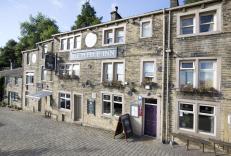
Sitting astride both the River Aire and the Leeds and Liverpool Canal, in a steep-sided valley, Bingley is a typical West Yorkshire town. With its locks, wharves and plethora of mills, the town grew in size and importance during the 19th century as the textile trades expanded. But Bingley’s... pre-eminence did not begin with the Industrial Revolution; it is, in fact, one of the county’s oldest settlements, with its market charter being granted by King John as far back as 1212. Bingley has a number of splendid old buildings, such as the town hall, parish church, butter cross, the old market hall and the Old White Horse, a venerable coaching inn, where King John is reputed to have stayed. However, Bingley has more than its fair share of modern buildings around the town centre. The River Aire rises close to the village of Malham, in the limestone dales of North Yorkshire, and flows past Bingley. By the time it joins the Ouse and decants into the Humber Estuary, it has been one of the hardest worked watercourses in Yorkshire. When the textile trades were at their height, the Aire was both a source of power for the woollen mills and a convenient dumping ground for industrial waste. But, like so many other West Yorkshire rivers, the water quality is now greatly improved. For part of this walk, you will be exploring the St Ives Estate, which from 1636 was owned by one of Bingley’s most prominent families, the Ferrands. It was William Ferrand who, during the 1850s, landscaped the estate and created many of the paths and tracks that climb steeply through the woods. The view from the top of the hill is ample reward for your efforts. From the gritstone outcrop known as the Druid’s Altar, you have a splendid panorama across Bingley and the Aire Valley. There is an inscription on Lady Blantyre’s Rock, passed later on the walk, which commemorates William Ferrand’s mother-inlaw. Lady Blantyre often used to sit in the shade of this rock and read a book.
Everybody knows that Yorkshire has some special landscapes. The Dales and the Moors first spring to mind, but what about West Yorkshire? That’s Leeds and Bradford isn’t it? Back-to-back houses and blackened mills… Certainly if you had stood on any of the hills surrounding Hebden Bridge a hundred years ago, and gazed down into the valley, all you would have seen was the pall of smoke issuing from the chimneys of 33 textile mills.
"Great views of Airedale from a viewpoint known as the Druid's Altar."
Walk details
2hrs 45min
Difficulty:
Medium
Gradient:
Moderate
Distance:
6.25 miles (10.1kms)
Ascent:
1247ft (380m)
Walk directions
Walk northwest from the centre of Bingley towards the church. Go left at the traffic lights beside the Old White Horse pub into Millgate. Cross the River Aire and take the first right, Ireland Street. Swing immediately right again and then left along a riverside track, soon leaving the town behind. Reaching Ravenroyd Farm, bear right and pass between farm buildings to continue on a walled track to Cophurst. Pass left of the cottage and continue beside a wood at the edge of successive pastures.
1 of 6
A developing track leaves the third pasture through a gap. Continue to a stile and gate and skirt a hillock, eventually leaving over a stile by Marley Farm. Follow the rough track up left, passing Marley Brow. Where the track subsequently swings into a farm, bear off right on a grass trail across a bracken and scrub slope, ultimately winding up to a small gate. A narrow path rises through more trees. Keep right and then left at successive forks, shortly joining a wall on the right bounding the top of the wood. Eventually, after crossing a broad track, the path leads to a rocky outcrop known as the Druid’s Altar, a striking viewpoint.
2 of 6
Bear right, after the rocks, to come to a meeting of tracks. Go through a gap in the wall opposite, onto a walled track into the St Ives Estate. Leave immediately through a kissing gate on the right onto a path that runs pleasantly for half a mile (800m) within Race Course Plantation. Ignoring the kissing gate leading out at the end, go left, now descending, initially still within trees through a golf course and then at the edge of open heather moor. When the accompanying wall later turns away, bear right with the main path, dropping through wood once more to come upon Lady Blantyre’s Rock.
3 of 6
Descend with the main path, past exuberant displays of rhododendrons, and on beside Coppice Pond. Meeting a metalled drive, bear left, soon passing The Ivy Kitchen, the golf clubhouse and then, set back on the right, the house itself, St Ives Mansion.
4 of 6
Beyond the house, curve right and left to follow the main drive downhill for 0.5 miles (800m). Just after passing a car park, take a path left into woodland. Keep right where it immediately forks, to reach the B6429, the Bingley– Cullingworth road. Cross it and continue downhill on narrow Beck Foot Lane. After houses the lane becomes an unmade track leading down to a delectable spot: here you will find Beck Foot Farm, in a wooded setting by Harden Beck, with a ford and a packhorse bridge that dates back to 1723.
5 of 6
Cross the bridge to Beck Foot Farm and bear left past some allotments. Where they end, take a path left to a footbridge over the River Aire. Walk ahead through Myrtle Park, leaving at its far side between the swimming pool and the supermarket on Myrtle Grove. Turn right and then left to return to the main road running through the town. The Old White Horse, past which the walk began, lies to the left.
Sitting astride both the River Aire and the Leeds and Liverpool Canal, in a steep-sided valley, Bingley is a typical West Yorkshire town. With its locks, wharves and plethora of mills, the town grew in size and importance during the 19th century as the textile trades expanded. But Bingley’s... pre-eminence did not begin with the Industrial Revolution; it is, in fact, one of the county’s oldest settlements, with its market charter being granted by King John as far back as 1212. Bingley has a number of splendid old buildings, such as the town hall, parish church, butter cross, the old market hall and the Old White Horse, a venerable coaching inn, where King John is reputed to have stayed. However, Bingley has more than its fair share of modern buildings around the town centre. The River Aire rises close to the village of Malham, in the limestone dales of North Yorkshire, and flows past Bingley. By the time it joins the Ouse and decants into the Humber Estuary, it has been one of the hardest worked watercourses in Yorkshire. When the textile trades were at their height, the Aire was both a source of power for the woollen mills and a convenient dumping ground for industrial waste. But, like so many other West Yorkshire rivers, the water quality is now greatly improved. For part of this walk, you will be exploring the St Ives Estate, which from 1636 was owned by one of Bingley’s most prominent families, the Ferrands. It was William Ferrand who, during the 1850s, landscaped the estate and created many of the paths and tracks that climb steeply through the woods. The view from the top of the hill is ample reward for your efforts. From the gritstone outcrop known as the Druid’s Altar, you have a splendid panorama across Bingley and the Aire Valley. There is an inscription on Lady Blantyre’s Rock, passed later on the walk, which commemorates William Ferrand’s mother-inlaw. Lady Blantyre often used to sit in the shade of this rock and read a book.
Everybody knows that Yorkshire has some special landscapes. The Dales and the Moors first spring to mind, but what about West Yorkshire? That’s Leeds and Bradford isn’t it? Back-to-back houses and blackened mills… Certainly if you had stood on any of the hills surrounding Hebden Bridge a hundred years ago, and gazed down into the valley, all you would have seen was the pall of smoke issuing from the chimneys of 33 textile mills.