Above the Holme Valley
 Our view
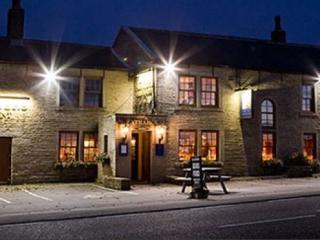
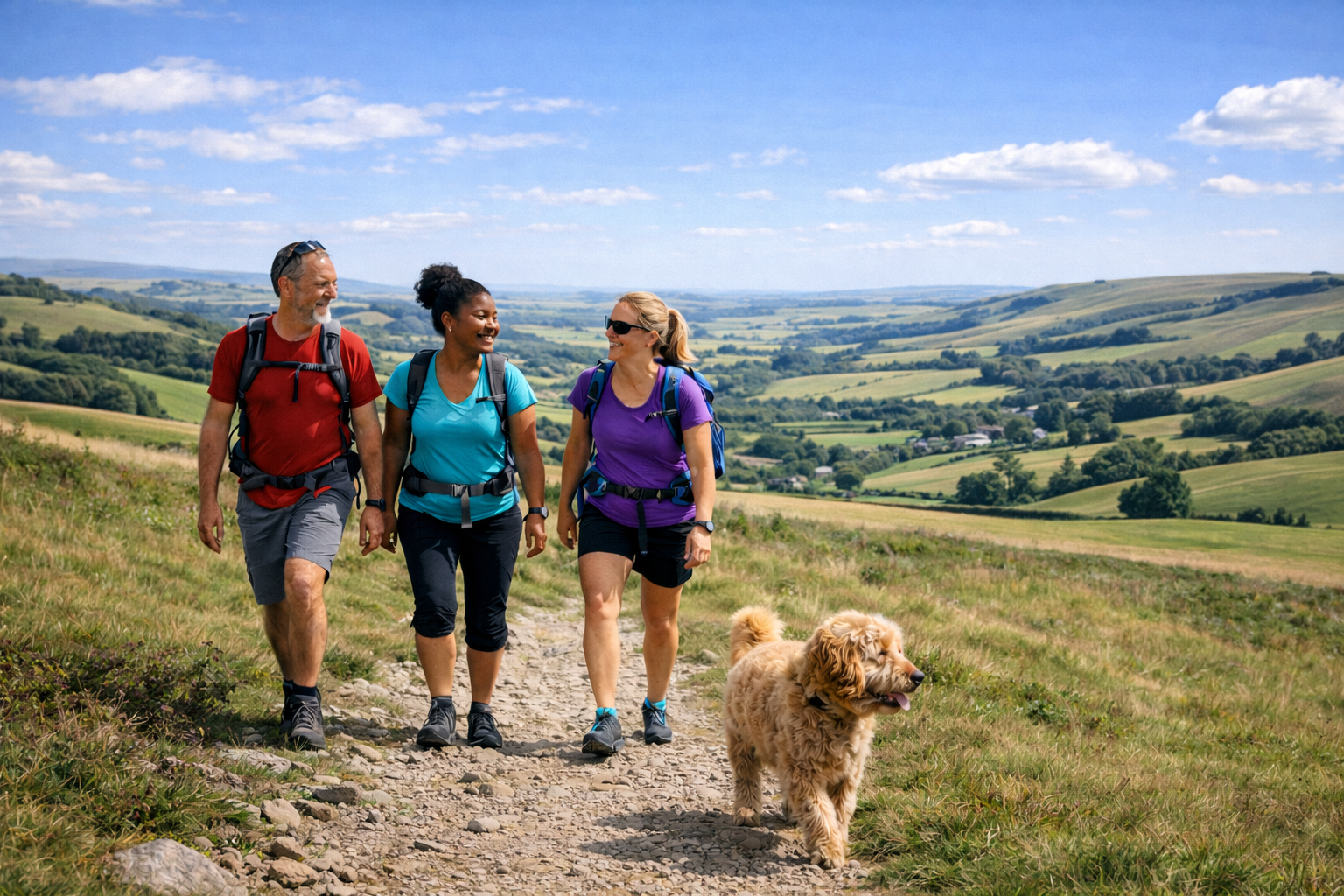
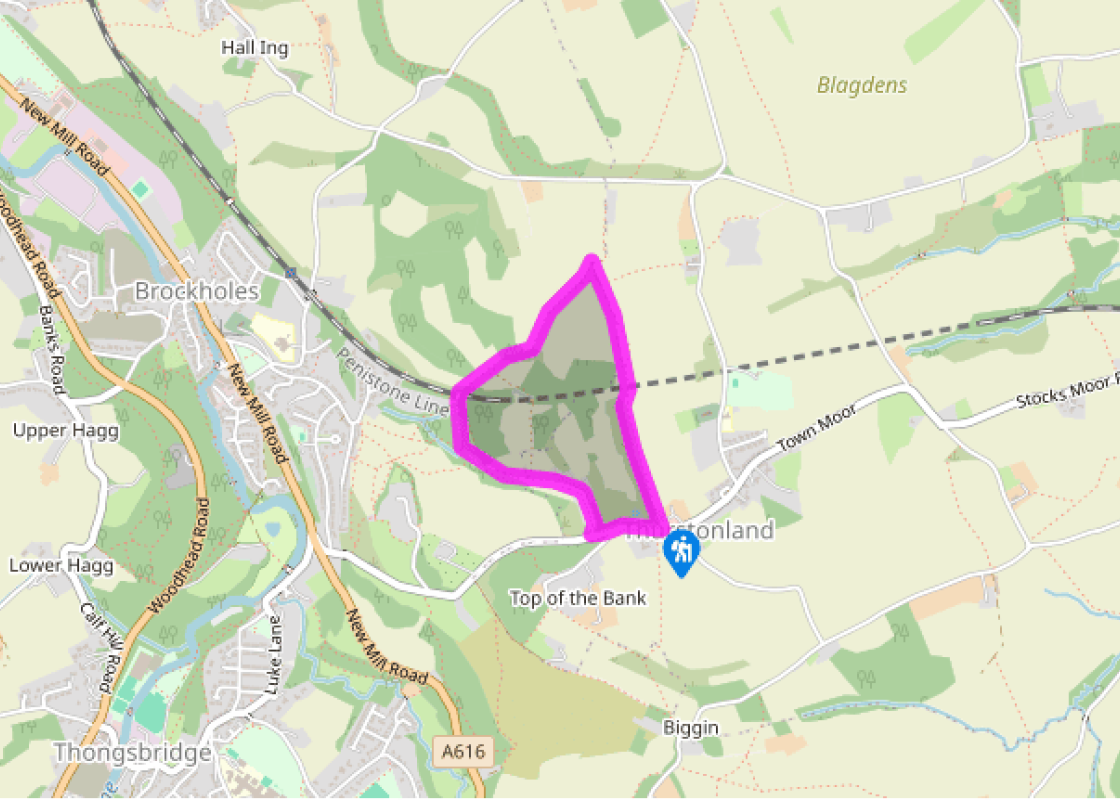
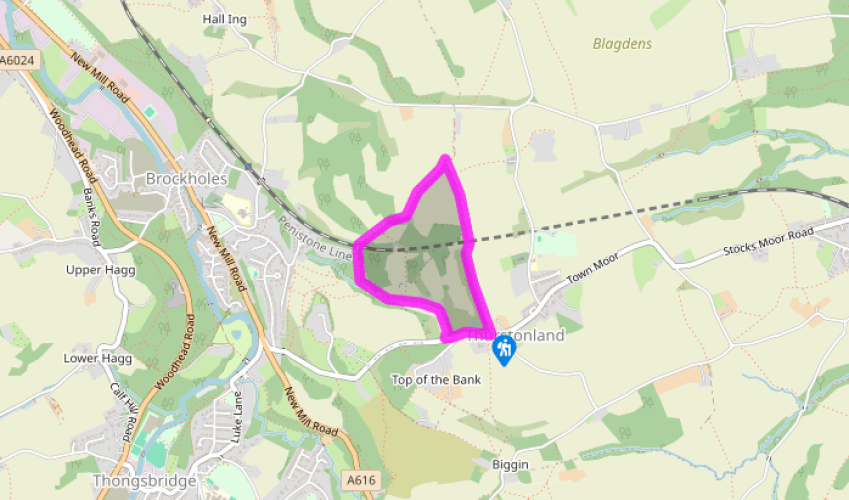
Take the signed footpath next door-but-one to the left of the Rose & Crown pub, past The Barn, Upperfold. The obvious green lane beyond immediately offers views across the Holme Valley on your left and soon, on your right, across the valley of Shepley Dike, to Emley Moor telecommunications and TV transmitter mast, the highest free-standing structure in the UK. Cross a tricky stone stile into the field ahead, through which a less-pronounced path follows the wall on your left, to a stone gap stile. Keep ahead, the wall now on your right, to cross another stile beyond which the path continues diagonally ahead-right over the subsequent field, to meet and follow a wall on your right. Where this bears off, continue ahead and across to a stone gatepost.
Although the right of way turns left here to follow the wall downhill, the easier, more frequented option is to cross the wooden step stile to the right of the gate ahead and turn left down a well-worn grassy path, which becomes a lane passing through Great Place Wood, then cuts diagonally across the next field to its lowest corner.

Been on this walk?
Send us photos or a comment about this route. Or recommend a route of your own.

Walking in Safety
Read our tips to look after yourself and the environment when following this walk.
Get an AA guide
Explore our range of ‘50 Walks in’ guides - they’re the ideal companion for a ramble.
Been on this walk?
Send us photos or a comment about this route. Or recommend a route of your own.
Walking in Safety
Read our tips to look after yourself and the environment when following this walk.
Get an AA guide
Explore our range of ‘50 Walks in’ guides - they’re the ideal companion for a ramble.
Nearby places to stay
View all (8)