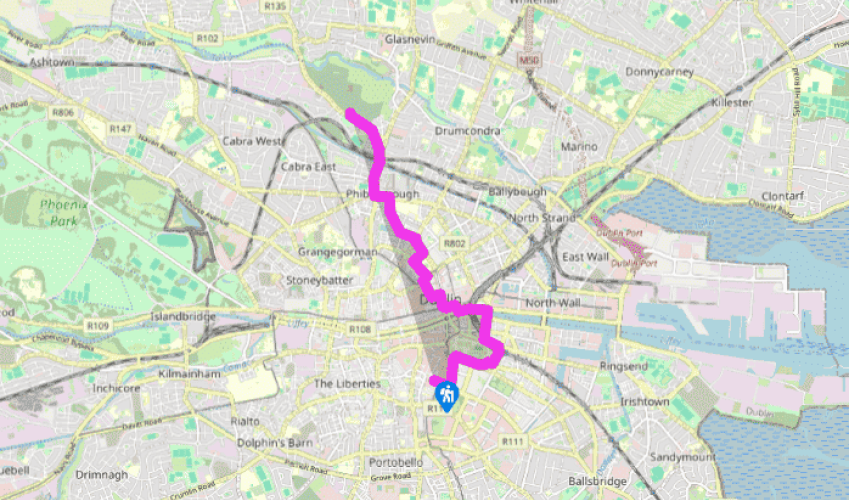
General Post Office to Glasnevin Cemetery
 Our view
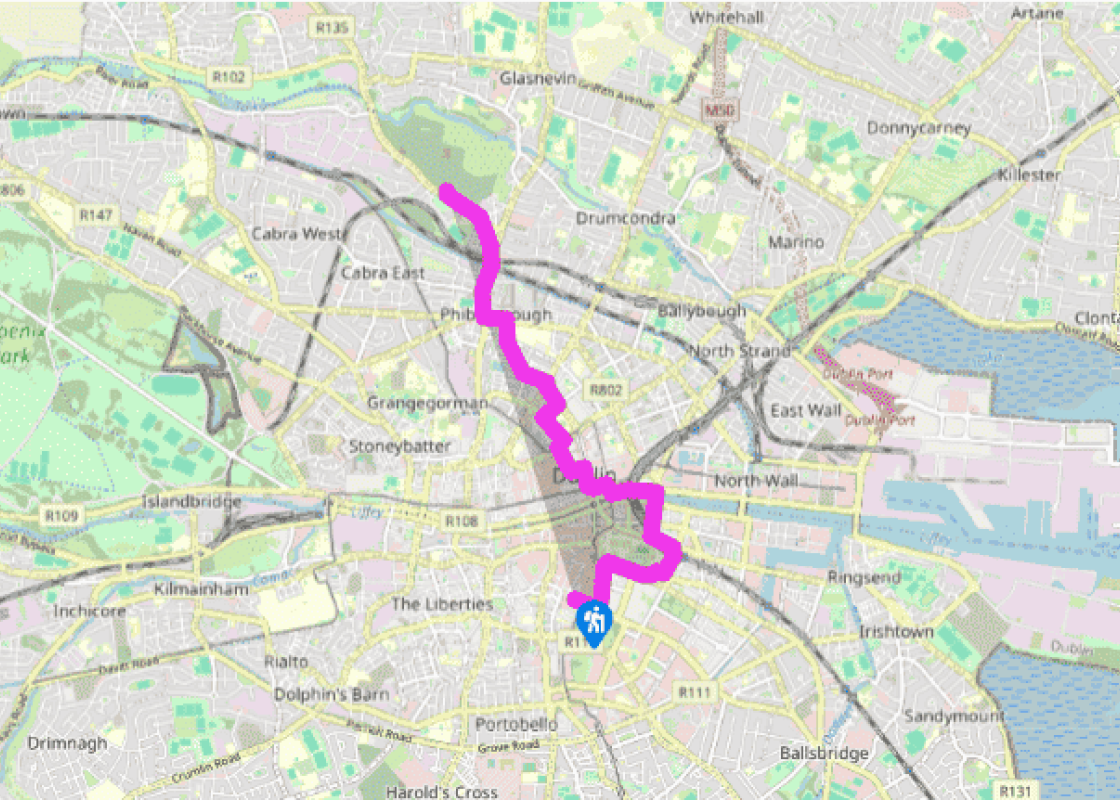
Start from the north side of St Stephen’s Green and walk north up Dawson Street, keeping to the right-hand side, to a sturdy two-storey Georgian building about 150yards (135m) from the corner, on your right. You could argue that this is where the modern Irish state was really born. Built in 1710, the Mansion House has been the residence of the Lord Mayor of Dublin since 1715, but on 21 January 1919 it was co-opted as the seat of the first Dáil Éireann (Irish Parliament), formed by the Sinn Fein MPs who won a landslide victory in the elections of 1918 but refused to take their seats in the British Parliament at Westminster. From here, Michael Collins (1890–1922), the former post office worker who became the Dáil’s Éireann’s Minister of Finance, also directed the Irish Volunteers in an urban guerrilla campaign against the British. When the British brought in a crack team of undercover Special Branch officers, Collins traced them and had 14 of them assassinated. British reprisals only hardened support for Sinn Fein, but in 1921 a ceasefire was called and the Anglo-Irish Treaty created the Irish Free State. But the treaty did not go far enough for radical Republicans; within a year, they and the new Free State government were embroiled in civil war. Mansion House is not open to the public.
Continue for three blocks to the north end of Dawson Street. Cross Nassau Street and turn right. Go along Nassau Street with College Park on your left, continue along Leinster Street South and turn left into Lincoln Place. At the end of Lincoln Place turn left on to Westland Row. Follow this to its north end (with Pearse Station on the corner). Turn left at Pearse Street. Cross the road and take the second on your right, Shaw Street, and walk north for one block to Townsend Street. Cross, and continue north on Moss Street to the riverside. Cross the Liffey to the north bank. While walking across the bridge, admire the grand front of the Custom House beneath its green copper dome. Walk left along to Eden Quay, passing the new Rosie Hackett Bridge, opened in 2014. Cross, and continue north on Moss Street to the riverside. Cross the Liffey to the north bank. While walking across the bridge, admire the grand front of the Custom House beneath its green copper dome. Walk left along to Eden Quay, turn right into O’Connell Street. James Gandon, who designed the Custom House as well as many other Dublin landmarks, would be pleased to see his building looking so spruce more than 200 years after it was completed, in 1791. It has always been underused, and in 1921, with Sinn Fein fighters and British troops skirmishing in Dublin’s streets and a self-declared Sinn Fein government sitting in the Mansion House, Sinn Fein sympathisers torched this little-loved symbol of British rule. It burned for five days, and it wasn’t completely restored until 1991.
Been on this walk?
Send us photos or a comment about this route. Or recommend a route of your own.

Walking in Safety
Read our tips to look after yourself and the environment when following this walk.
Get an AA guide
Explore our range of ‘50 Walks in’ guides - they’re the ideal companion for a ramble.
Been on this walk?
Send us photos or a comment about this route. Or recommend a route of your own.
Walking in Safety
Read our tips to look after yourself and the environment when following this walk.
Get an AA guide
Explore our range of ‘50 Walks in’ guides - they’re the ideal companion for a ramble.
Nearby places to stay
View all (3)
- Family rooms: 0

- En-suite rooms:
- Family rooms: