Dublin’s music legends
 Our view
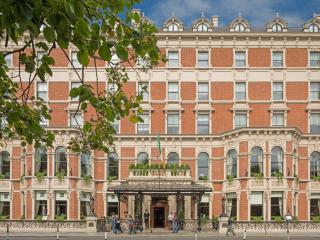
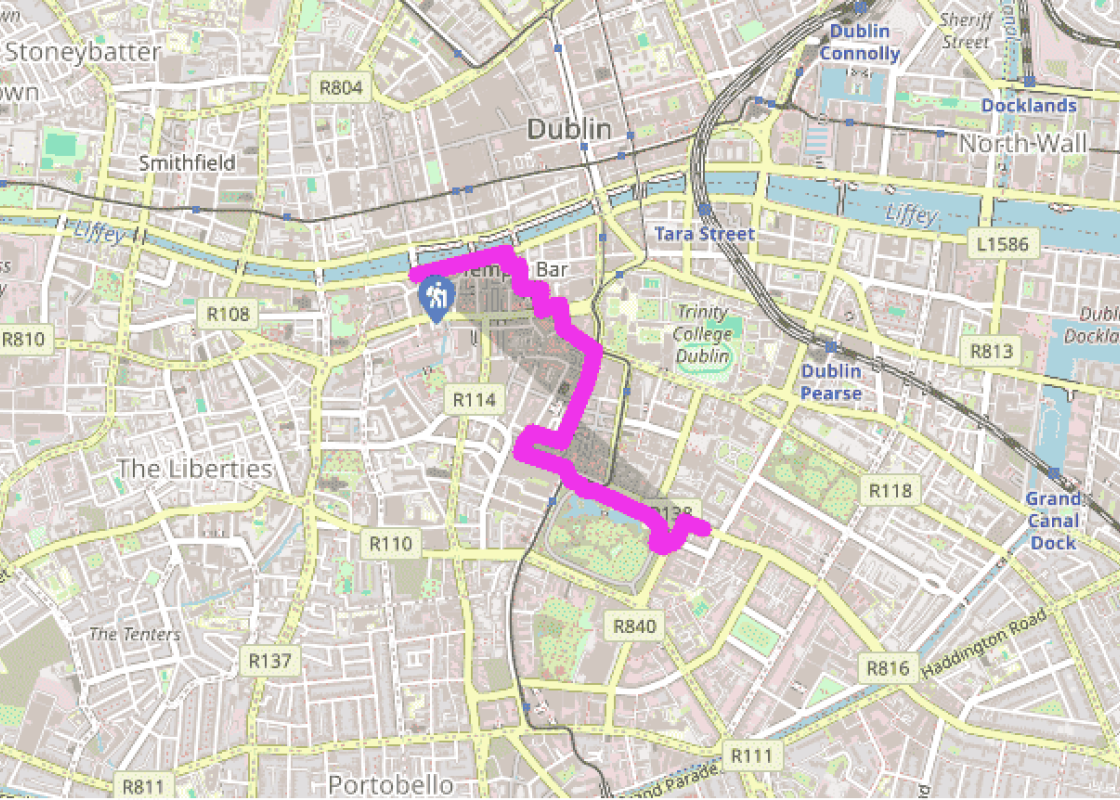
From the south side of Wellington Quay, opposite Grattan Bridge, walk eastward to the Clarence Hotel, which faces the Liffey, at 6–8 Wellington Quay. Built in 1852, the Clarence was given a facelift in the 1930s but grew shabbier over the next four decades. By the 1970s it was looking decidedly down at heel, but its bar had become popular with the young guns of the nascent bohemian Temple Bar scene – among them a group of musicians who would go on to mega-star status. They were Bono and The Edge, and U2, the band that they formed with Adam Clayton and Larry Mullen, became the biggest musical phenomenon ever to come out of Dublin. By 1992, with a portfolio of hugely successful hits, Bono and The Edge were wealthy enough to buy their old haunt and convert it into a glamorous boutique hotel that has become the favoured Dublin address for visiting celebs. The band recorded Beautiful Day here for the BBC’s Top of the Pops in September 2000.
Continue along Wellington Quay to No. 42, on your right next to Ha’penny Bridge. The Ha’penny Bridge Inn, at 42 Wellington Quay, was a favourite watering-hole for the members of Thin Lizzy in the early years of their career, and an original photo of Phil Lynott still has a place of honour on its crowded walls. Thin Lizzy exploded onto the world stage in 1973 with a sound totally unlike anything that had ever come out of Ireland – a country that until then had been pretty much associated with the old-style folk music and ‘rebel songs’ of bands like The Dubliners or The Clancy Brothers. With his afro hair and tight black leathers, Lynott was Ireland’s first classic rock cowboy. His mixed ancestry – his African-Brazilian father left his Irish mother soon after Phil was born in 1949 – gave him an even greater exotic appeal. Thin Lizzy’s first big hit, Whiskey in the Jar (1973) took an old Irish folk ballad and turned it into a rock anthem, while the swaggering lyrics of The Boys are Back in Town became their greatest hit. Sadly, Phil Lynott did not handle success well. Drug and alcohol abuse ruined his health and destroyed his creative abilities, and he died young, in 1986. For a generation of fans, though, Thin Lizzy’s music lives on.

Been on this walk?
Send us photos or a comment about this route. Or recommend a route of your own.

Walking in Safety
Read our tips to look after yourself and the environment when following this walk.
Get an AA guide
Explore our range of ‘50 Walks in’ guides - they’re the ideal companion for a ramble.
Been on this walk?
Send us photos or a comment about this route. Or recommend a route of your own.
Walking in Safety
Read our tips to look after yourself and the environment when following this walk.
Get an AA guide
Explore our range of ‘50 Walks in’ guides - they’re the ideal companion for a ramble.
Nearby places to stay
View all (3)
- Family rooms: 0

- En-suite rooms:
- Family rooms: