Geology at Crackington Haven
"A coastal and inland walk with sea cliff views"
Walk directions
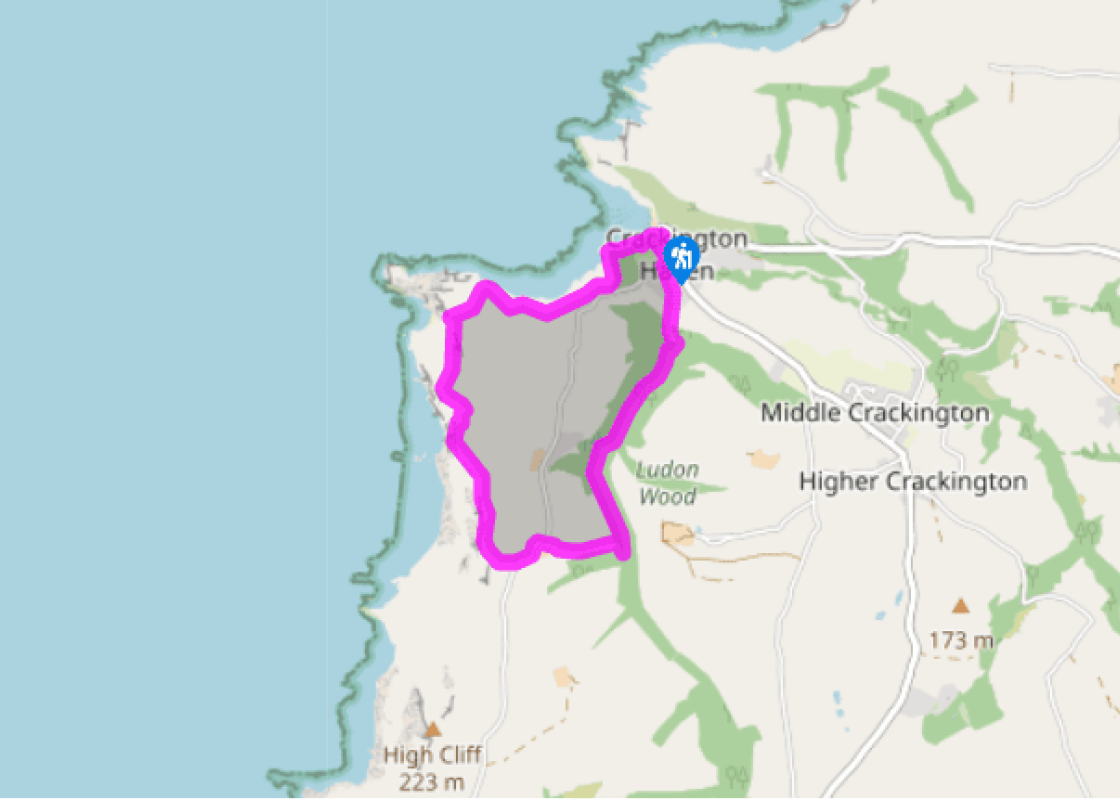
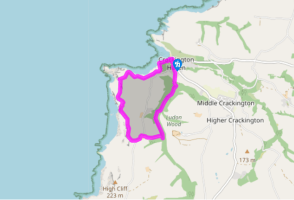
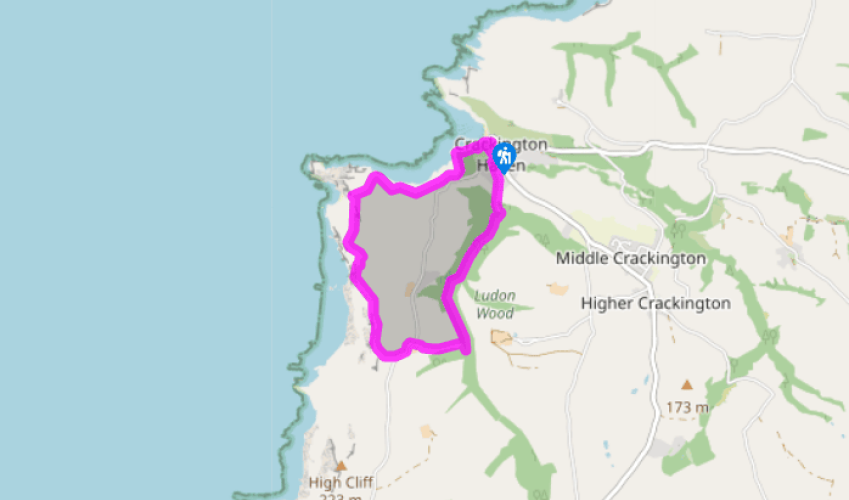
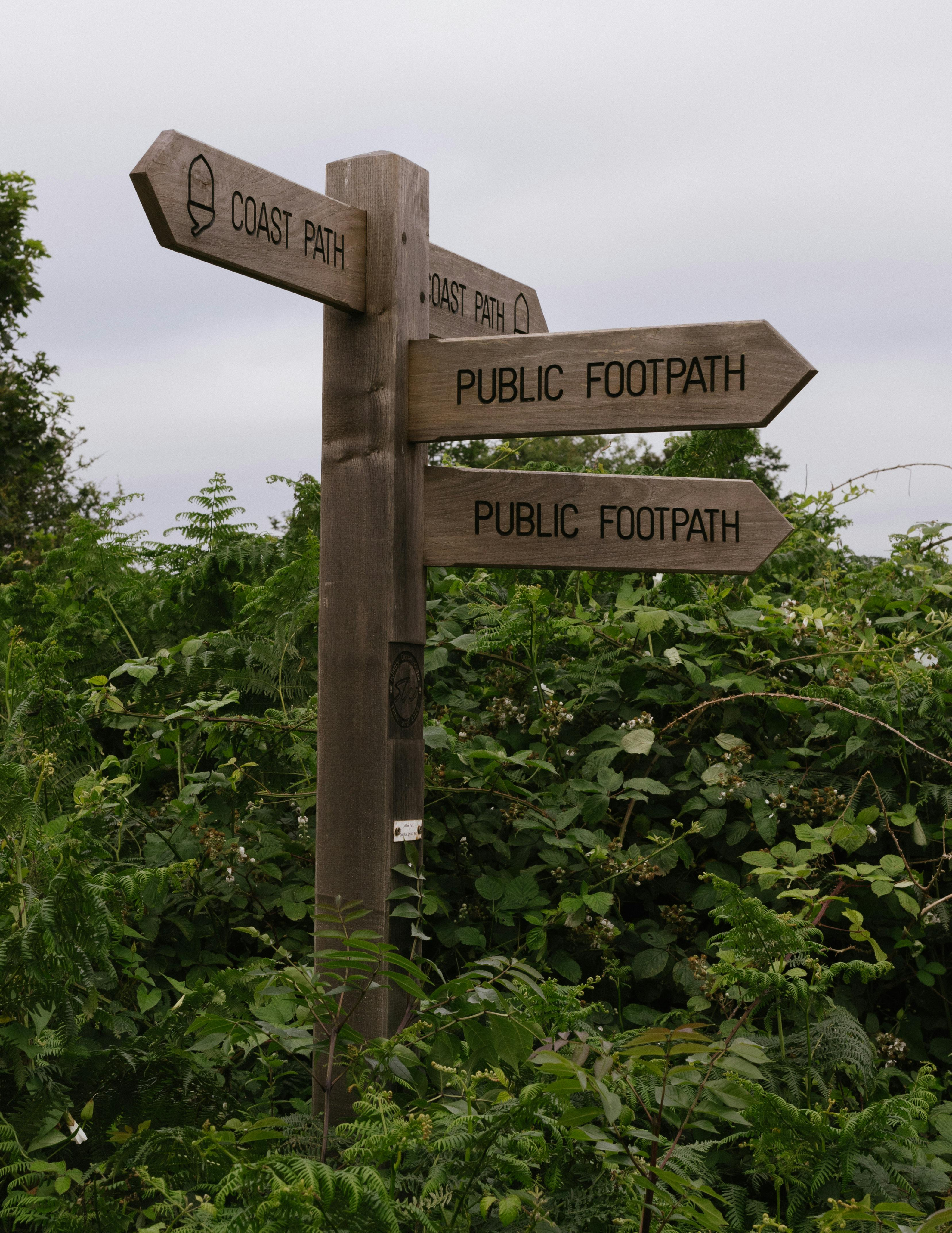
From the Crackington Haven car park entrance go left across a bridge, then turn right opposite the Cabin Café. Follow the coast path signs along a broad track to the left, past tennis courts and through a kissing gate. Fork right a few paces later.
Eventually a stile leads to a steep stepped descent to footbridges below Cambeak and a path junction. Keep left, signed High Cliff, and follow a path up a sheltered valley on the inland side of the steep hill, then continue on the cliff path.
At the start of a stretch of low inland cliff, turn left at a coast path post marked 'Trevigue' to reach a road.
Go left up the lane to reach buildings at Trevigue. Follow the lane left, then bear right down a drive alongside the house. Bear off to the left across the grass to go through a gate with a yellow arrow.
Go directly down the field, keeping left of a telegraph pole, to reach a stile. Continue downhill over a field to a stile on the edge of a wood. Continue down a tree-shaded path to a junction of paths in a shady dell by the stream.
Turn sharp left here, following the signpost towards Haven, and continue on the obvious path down the wooded river valley, ignoring a left turn to the coast road.
Cross a footbridge, then turn left at a junction with a track. Cross another footbridge and continue to a gate by some houses. Follow a track and then a surfaced lane to the main road, then turn left to the car park.
Additional information
Terrain
- Good coastal footpath and woodland tracks; wet and muddy at times; several stiles
Landscape
- Open coast and wooded valley
Dog friendliness
- Dogs on lead on cliffs and in fields; goats on cliffs south of Cambeak
Parking
- Crackington Haven car park from the A39 at Wainhouse Corner or from Boscastle on the B3263; can be busy in summer. Burden Trust car park and picnic area
Toilets en route
- Crackington Haven
About the walk
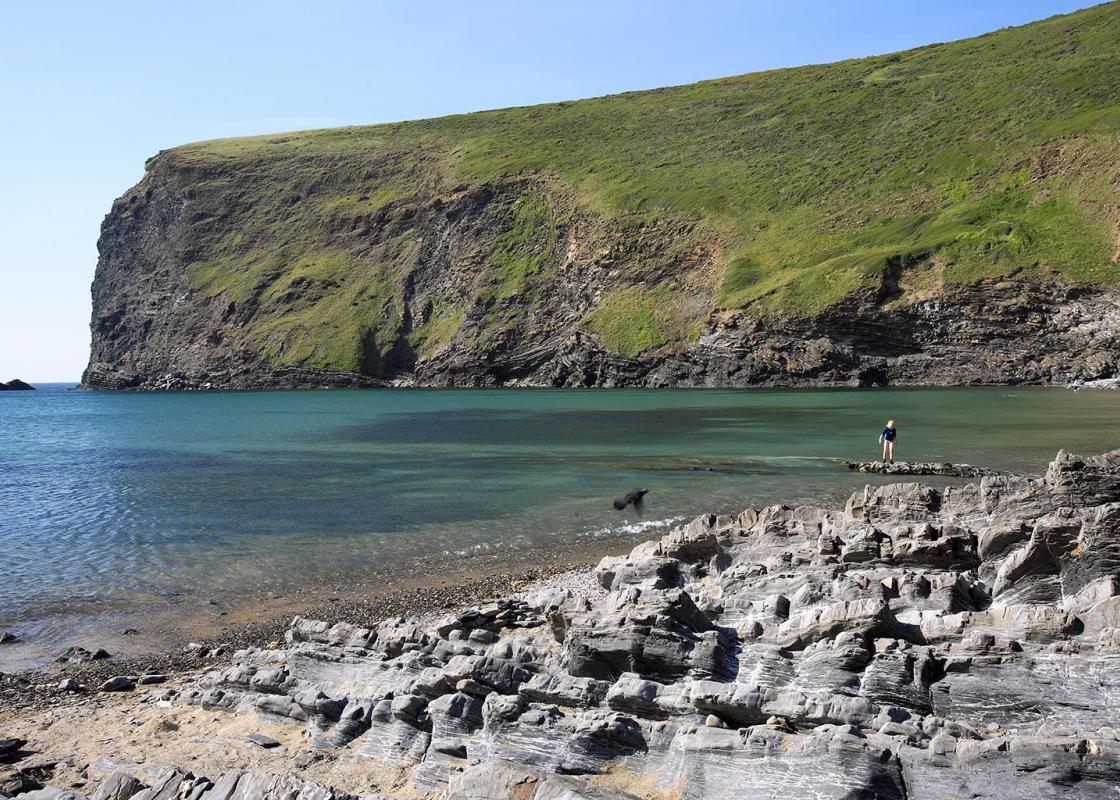
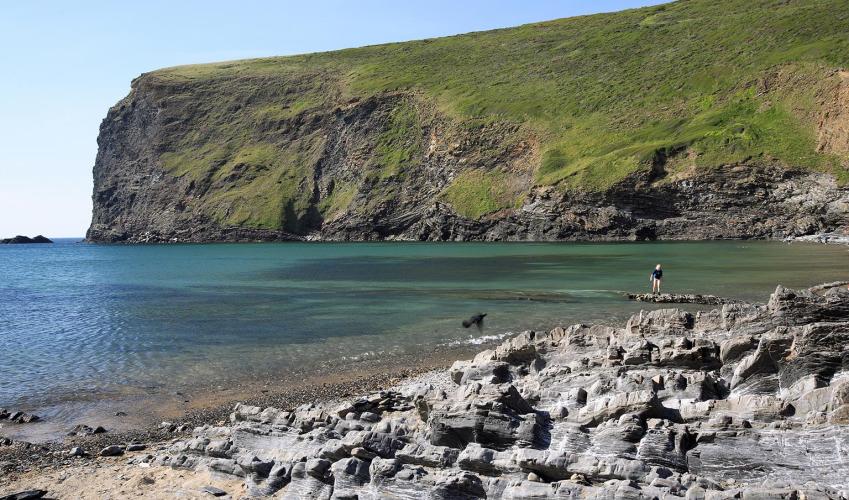
Crackington Haven has given its name to a geological phenomenon, the Crackington Formation, a fractured shale that has been shaped into incredibly twisted and contorted forms. On the sheared-off cliff faces of the area, you can see the great swirls and folds of this sedimentary rock that was... metamorphosised by volcanic heat and contorted by the geological storms of millions of years ago. Even the name Crackington derives from the Cornish word for sandstone, crak. The very sound of the word, in English, hints at a dangerous friability and dramatic decay. Scripted across the face of the vast cliffs traversed by this walk are the anticlines (upward folds) and synclines (downward folds) that are so characteristic of these great earth movements. A small port During the 18th and 19th centuries Crackington Haven was a small port, landing coal and limestone and shipping out local agricultural produce and slate. Small coastal ships would anchor off the beach, or settle on the sands at low tide in order to exchange cargoes. Plans to expand Crackington into a major port were made in the early 19th century. The grandiose scheme aimed to build huge breakwaters to protect Crackington and the neighbouring Tremoutha Haven from the often huge Atlantic swells. Quays and docks were to be built inside the protected harbour. A rail link to Launceston was proposed and a small new town planned for the Haven, which was to be renamed Port Victoria. As with many development plans of the time, the scheme did not materialise, otherwise the Crackington Haven of today would be a dramatically different place. As you set out along the open cliff south from Crackington, the remarkable nature of the geology unfolds before you. Looking back from Bray's Point, you see clearly the massive contortions in the high cliff face of Pencannow Point on the north side of Crackington. Soon the path leads above Tremoutha Haven and up to the cliff edge beyond the domed headland of Cambeak. From here there is a breathtaking view of the folded strata and quartzite bands of Cambeak's cliffs. The coast path leads out to the tip of the headland; which is very exposed and not recommended in times of high wind and driving rain. The geology of the cliffs is still active and one day erosion will destroy the neck of the headland, transforming Cambeak into an island, but preferably without you on it. A short distance further on you arrive above the Strangles beach where again you look back towards such fantastic features as Northern Door, a promontory of harder rock pierced by a natural arch where softer shales have been eroded by the sea. Where the route of the walk turns inland there is a line of low cliffs set back from the main cliff edge. These represent the old wounds of a land slip where the cliff has slumped towards the sea. From here the second part of the walk turns inland and descends into East Wood and the peaceful Trevigue Valley, itself part of a great geological extravaganza having once been a 'fjord' filled by the sea. Today much of the valley is a nature, reserve and wandering down its leafy length is a wonderful antidote to the coastal drama of the Crackington cliffs.
Read more
Been on this walk?
Send us photos or a comment about this route. Or recommend a route of your own.

Walking in Safety
Read our tips to look after yourself and the environment when following this walk.
Get an AA guide
Explore our range of ‘50 Walks in’ guides - they’re the ideal companion for a ramble.
Been on this walk?
Send us photos or a comment about this route. Or recommend a route of your own.
Walking in Safety
Read our tips to look after yourself and the environment when following this walk.
Get an AA guide
Explore our range of ‘50 Walks in’ guides - they’re the ideal companion for a ramble.
About the area
Cornwall has just about everything – wild moorland landscapes, glorious river valley scenery, picturesque villages and miles of breathtaking coastline. Known for its popular surfing spots, the region provides ample opportunities for water sport enthusiasts, and for those who prefer to stay on land, visitor attractions like the Eden Project and the Lost Gardens of Heligan offer a lovely day out.
Nearby places to stay
View all (8)
Self-Catering
Burngullow
★★★★
"Attractive and well-equipped accommodation within walking distance of the surfing beach..."
- Total units: 1
- Private garden
- Lawn area
- Garden furniture
Self-Catering
Burngullow
★★★★
"Attractive and well-equipped accommodation within walking distance of the surfing beach..."
- Private garden
- Lawn area
- Garden furniture
- Washing machine
Nearby places to stay
Burngullow
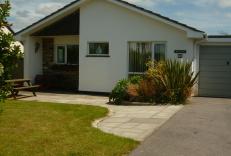
Set in a quiet village location, Burngullow sleeps five in two doubles and a single. It has a fully fitted kitchen, a conservatory, and an enclosed rear garden with patio and seating. A...
★★★★ Rating
Burngullow
Set in a quiet village location, Burngullow sleeps five in two doubles and a single. It has a fully fitted kitchen, a conservatory, and an enclosed rear garden with patio and seating. A...
★★★★ Rating
Nutmeg Cottage
Awaiting description...
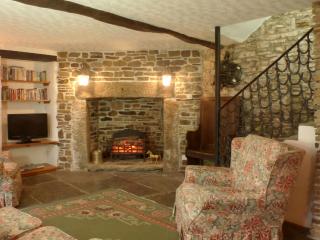
★★★★ Rating
Stables Cottage
Awaiting description...
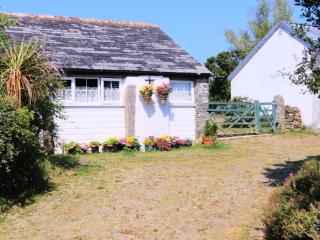
★★★★ Rating
Skyber Cottage
Awaiting description...
★★★★ Rating
Old Newham Farm Holiday Cottages
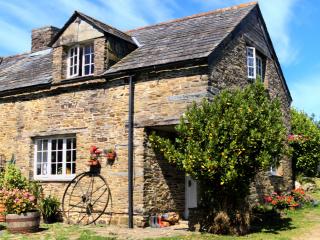
Old Newham Farm Holiday Cottages occupy a desirable location on a 30-acre organic farm deep in the Cornish countryside. In the same family since 1979, the traditional stone cottages are...
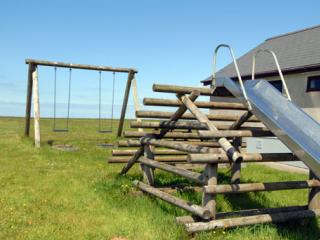
★★★★ Rating
Penhalt Farm Holiday Park
Penhalt Farm Campsite is set on the Coastal Downs. A mile south of Widemouth Bay, it enjoys stunning views of the magnificent Atlantic coastline and the surrounding countryside....
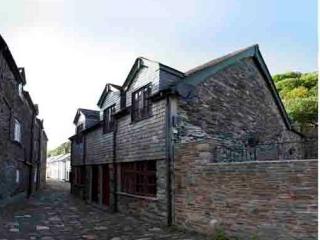
★★★ Rating
1B The Old Oil House
A great base for exploring Tintagel, Crackington Haven and other North Cornwall treats, 1B The Old Oil House occupies the first floor of a former stone shop and garage just minutes from...
★★★ Rating
Places to eat nearby View all