Ancient sites above Pooley Bridge
"Cross a Roman road and take in prehistoric artefacts, including an Iron Age fort"
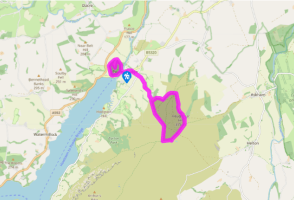
Walk directions
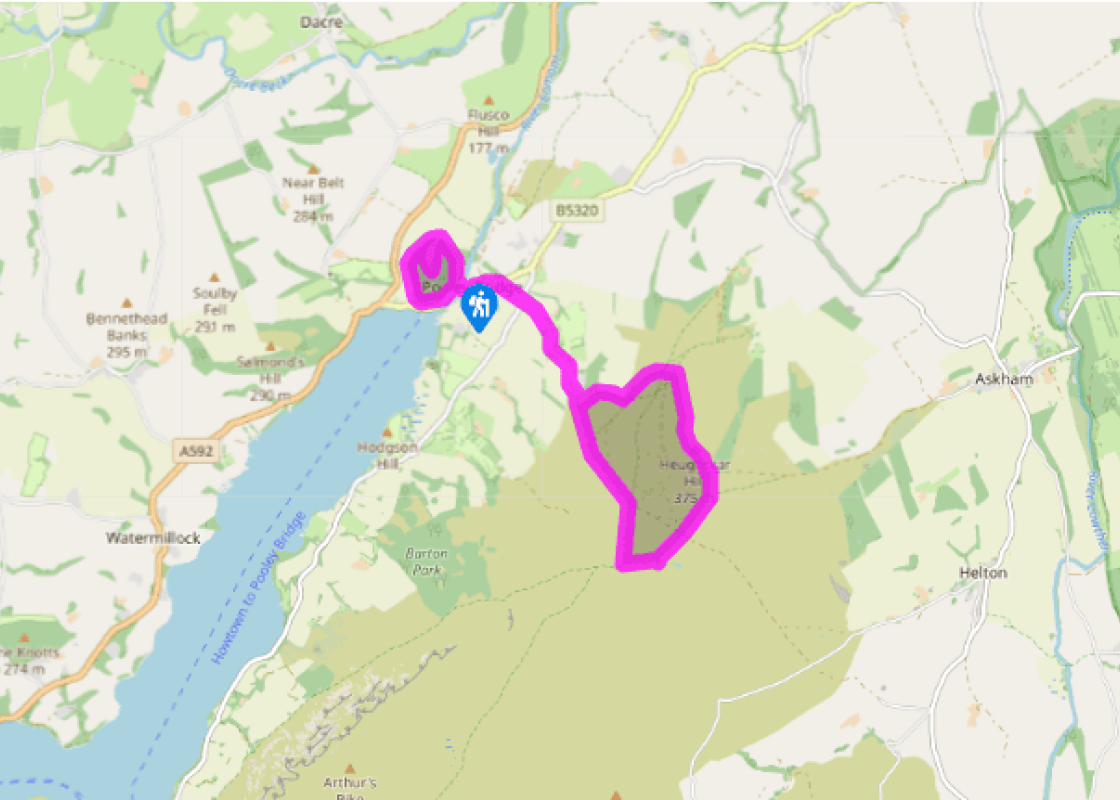
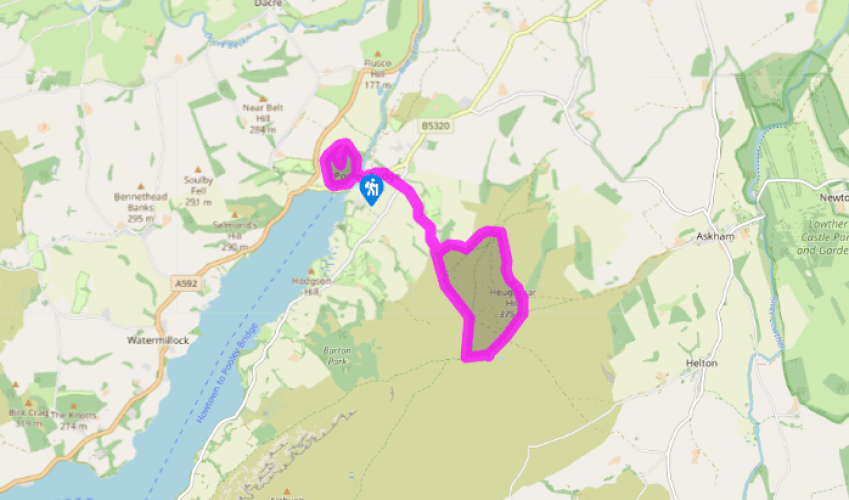
From the car park entrance, go through the gate on the right and then immediately bear right to follow the ascending path.
Where a public footpath signed ‘Dacre’ cuts off down to the right, a worn muddy path climbs the bank to the left. This path leads steeply up the wooded slopes of Dunmallard Hill before levelling off slightly. A final section of steep bank leads over the earth ramparts of the fort and onto the tree-clad summit area. Nearing the highest point, keep left at a fork. Gaps in the foliage show how impressive a viewpoint this would be if the trees were thinned.
Return to the fork just encountered and descend left. Watch carefully for the next split in the path, where you should turn right. Join the footpath near the base of the hill just beyond Point 2 and go left, following the path around the hill anticlockwise. This eventually leads back to the gate at the entrance to the car park at Point 1. Cross over the River Eamont on the B5320 to enter the village of Pooley Bridge. Continue through the village and then turn right after the church, along High Street.
At the junction continue over the crossroads. The road rises and becomes tree-lined before ending at an unsurfaced track. Gates lead onto the moor.
Go through one of the gates and climb the wide track, continuing to where the path levels at a fingerpost and another track crosses. (This is the third, and most obvious, path crossing since leaving the road.)
Turn right along the stony path – the route of the High Street Roman road. Just before it bends right, there is a low, circular, ancient wall of earth and stone on the left. This is the Cockpit, the largest of the prehistoric antiquities on Moor Divock.
Take the path, indistinct at first, left of the Cockpit. This swings left round a marshy area before regaining the original track at Ketley Gate. (A little to the right, White Raise burial cairn is worthy of attention.) Cross the wide track, continuing virtually straight ahead on an ascending path. Turn left at a grassy crossing of paths, making directly for the top left corner of a walled wood above. From here head left along the edge of the high ground and then, almost immediately, bear right along a wide path through the bracken. Keep left at a fork to find the little cairn at the top of Heughscar Hill. The flat summit occupies a commanding position, offering rewarding views.
Walk north along the high ground, keeping left when a clearer path goes right, to pass the broken little limestone crag of Heugh Scar, below to the left. At the end of the scar take a path curling down steeply to the left. Cross a track and continue down, bearing left where a faint path comes in from the right. The line of the High Street Roman road is barely discernible here. Head for the left end of a line of trees, with a huge sycamore above the corner of a stone wall. Descend steeply beside the wall. The path then swings away from the wall to rejoin the outward route just above Point 5. Turn right and return to Pooley Bridge by the same road.
Additional information
Terrain
- Surfaced roads, stony tracks, grassy tracks, open hillside and woodland trails
Landscape
- Village, dale, open fell and woodland
Dog friendliness
- Under strict control as sheep and ponies roam open fell
Parking
- Dunmallard car park on western edge of Pooley Bridge
Toilets en route
- Pooley Bridge village centre
About the walk
This figure-of-eight walk first climbs a small hill topped by an Iron Age hill-fort before heading on to the open, grassy fellside above Pooley Bridge. It offers extensive views west over Ullswater, north across the stone buildings of Pooley Bridge and east to the Eden Valley and the hills of the... North Pennines. Ancient look-out Dunmallard Hill, sometimes known as Dunmallet, is topped by the earthwork remains of an Iron Age fort. Commanding a striking defensive site above the river crossing at Pooley Bridge, 2,000 years ago it would have been part of the territory of the Brigantes, a Celtic tribe who controlled much of what is now northern England. Antiquities of Moor Divock Ancient relics of prehistory, scattered across the high ground of Moor Divock, add an air of mystery and intrigue to this outing. The short section of the High Street Roman road followed on this walk leads directly to the Cockpit stone circle. This is distinct and unmistakable and, as it is thought to be of Bronze Age origin (c.2000 bc), it predates the Roman road. Two concentric circles of stones, some standing, some fallen, contain a stone and earth circular bank up to 3ft (1m) high. It has an internal radius of around 85ft (26m). In more recent times it was probably used for cockfighting, which was outlawed in 1849. Extending southeast from here is desolate Moor Divock where, hidden amongst the stark landscape of coarse hill grass, bracken, heather and bog, are many prehistoric burial mounds and cairns. A mound known as White Raise, presumably because of the white quartz which marks its rocks, when partially excavated in the 19th century revealed a crouched skeleton in one of its cists (a coffin or burial chamber of stone or wood). Nearby, the Cop Stone is a standing stone some 5ft (1.6m) high. Local sports were held by this stone until 1800, and tradition claims that an avenue of standing stones once led to it. Two further Bronze Age stone circles close by, referred to as Moor Divock 4 and Moor Divock 5, have been partially excavated to reveal urns and ashes.
Read more
Been on this walk?
Send us photos or a comment about this route. Or recommend a route of your own.

Walking in Safety
Read our tips to look after yourself and the environment when following this walk.
Get an AA guide
Explore our range of ‘50 Walks in’ guides - they’re the ideal companion for a ramble.
Been on this walk?
Send us photos or a comment about this route. Or recommend a route of your own.
Walking in Safety
Read our tips to look after yourself and the environment when following this walk.
Get an AA guide
Explore our range of ‘50 Walks in’ guides - they’re the ideal companion for a ramble.
About the area
Cumbria's rugged yet beautiful landscape is best known for the Lake District National Park that sits within its boundaries. It’s famous for Lake Windermere, England’s largest lake, and Derwent Water, ‘Queen of the English Lakes', but other lesser-known areas in the south, such as the Lune Valley and the coastal towns, are secret gems of wide cobbled streets and rolling hills.
Nearby places to stay
View all (8)
Inn
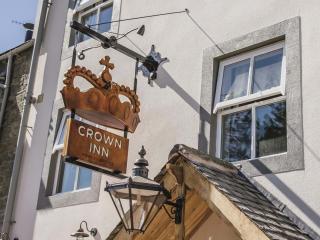
The Crown Inn
★★★★
"Chic and stylish accommodation in a glorious setting..."
- Rooms 18
- Satellite TV
- Wifi
Restaurant with Rooms
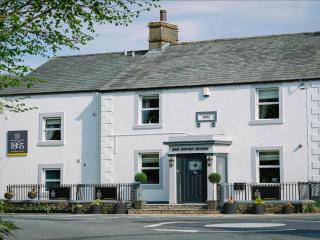
1863 Restaurant with Rooms
★★★★
"A family run all-rounder that just keeps getting better...."
- Rooms 8
- Free TV
- Wifi
- Open parking
Holiday Park
Waterfoot Park
★★★★★
"Green and tranquil holiday park in idyllic Lake District...."
- Launderette
- Ice pack facility
- Picnic Area
- Shop onsite
Nearby places to stay
The Crown Inn
The Crown Inn is part of The House of Daniel Thwaites, situated by the river in the bustling, seasonally popular village of Pooley Bridge at the head of Ullswater. With stunning views a...

★★★★ Rating
1863 Restaurant with Rooms
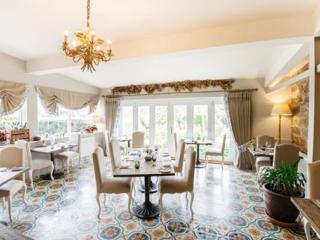
1863 Restaurant with Rooms is located in the heart of Pooley Bridge and offers high-quality accommodation as well as skilfully prepared meals. The contemporary dining room is a small op...
★★★★ Rating
Waterfoot Park
Waterfoot Park is in the Ullswater valley within the Lake District National Park, a UNESCO World Heritage Site. It is the perfect location for touring, self-catering and glamping holida...
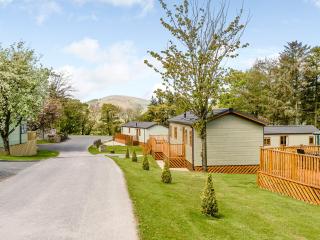
★★★★★ Rating
Hillcroft Park
Hillcroft Park is set in the Ullswater Valley above the pretty lakeside village of Pooley Bridge. There are luxury lodges and holiday homes to rent plus two fully equipped, year-round s...
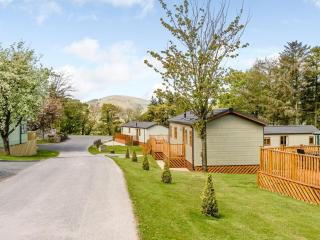
★★★★ Rating
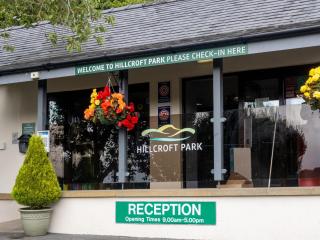
Hillcroft Park
Hillcroft Park has fully-equipped cottages located at the entrance to the site. On-site facilities include a small shop, children's playground and reception area. The units have their o...
★★★★ Rating
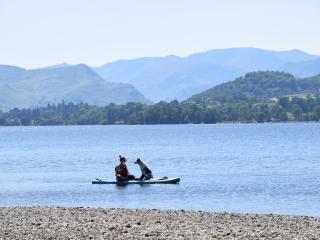
Hillcroft Park
Family owned Hillcroft Park is set in the Ullswater Valley above the pretty lakeside village of Pooley Bridge. On offer are luxury lodges and holiday homes to rent plus two fully-equipp...
★★★★★ Rating
Park Foot Holiday Park
Park Foot is located in a gorgeous area right beside Ullswater and the wonderful fells – it's perfect for those that wish to explore the many paths in the area and there is a lovely wal...
★★★★★ Rating
Bank Barn
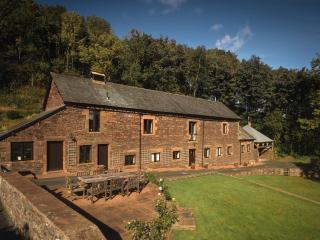
Enjoying a fabulous location north of Ullswater, Bank Barn provides sumptuous accommodation for larger families or groups of friends, and makes an ideal base for exploring this spectacu...
★★★★★ Rating
Places to eat nearby View all