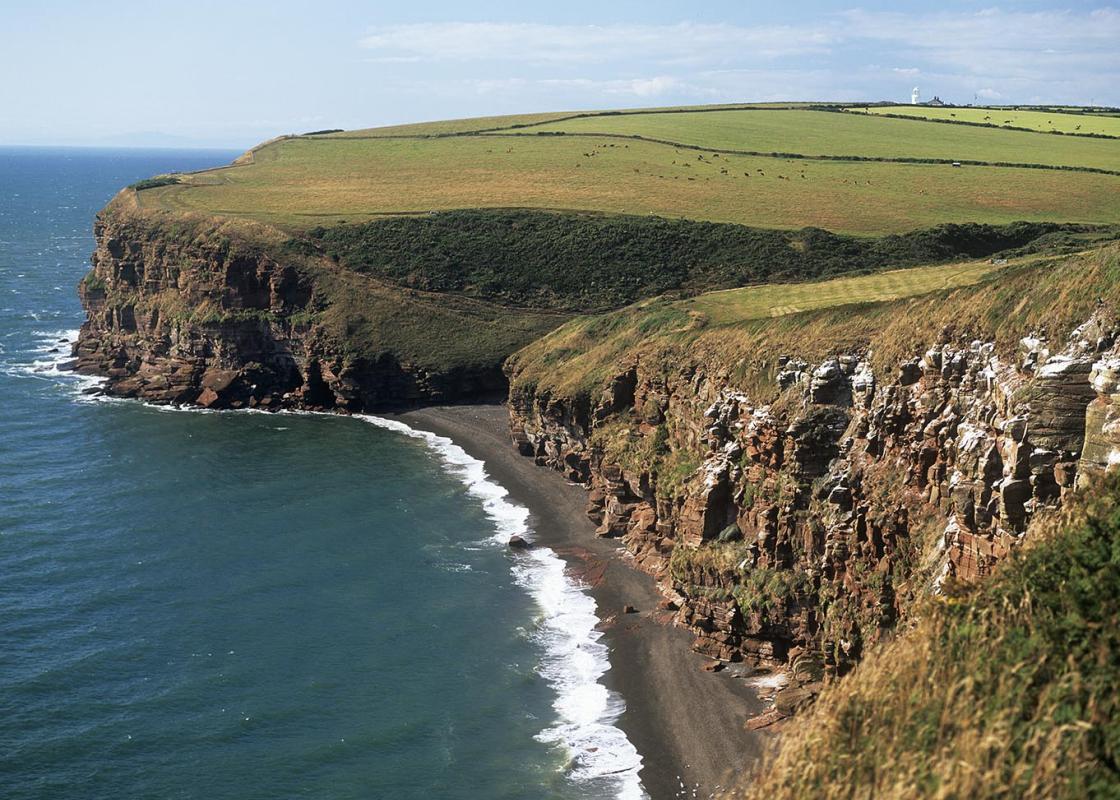
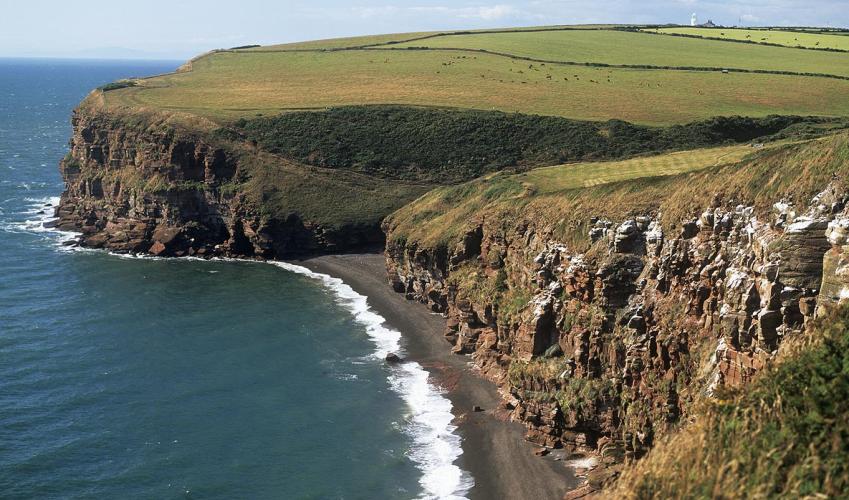
Dramatic St Bees Head
"The high sandstone cliffs of St Bees make a formidable bastion against the Irish Sea."
Walk directions
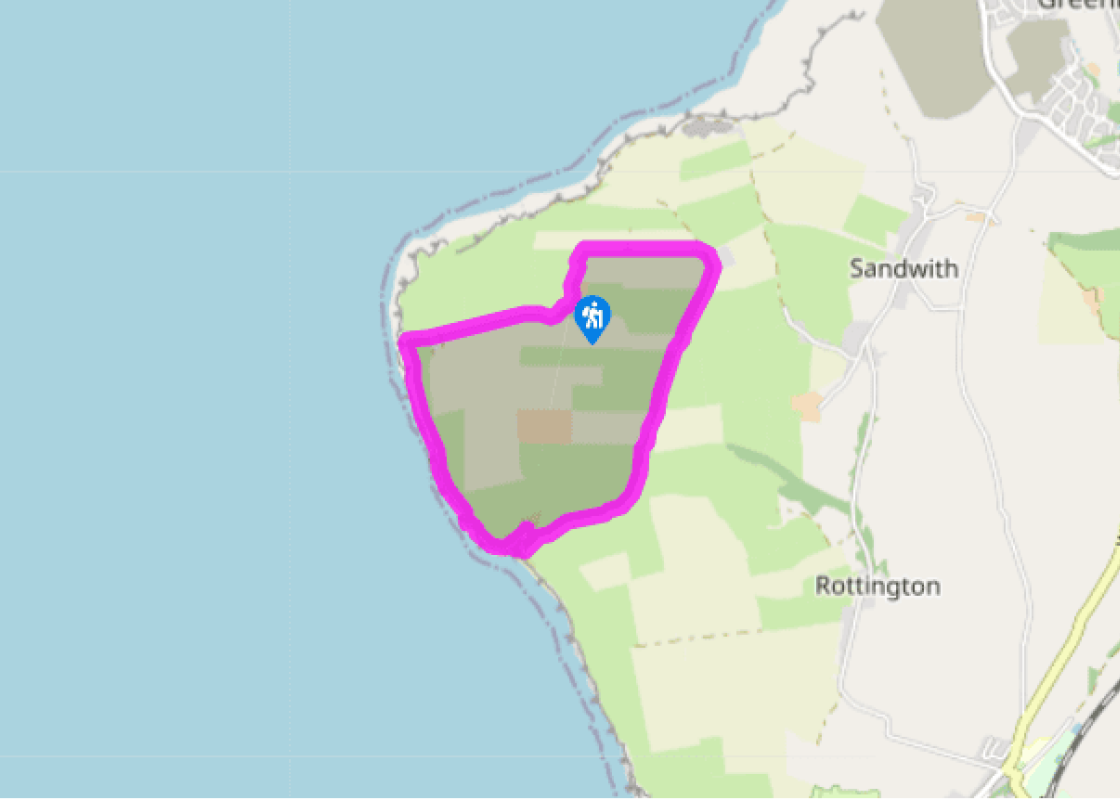
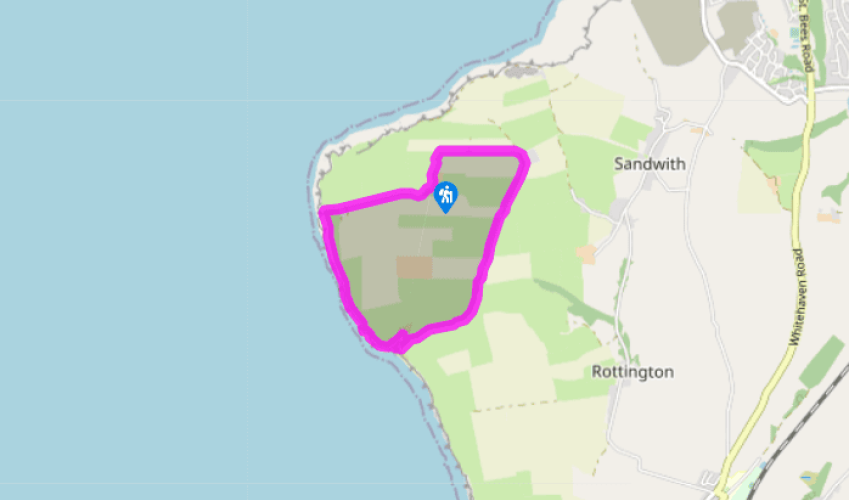
From the parking area within the farmyard return to the surfaced road and walk back along to the top of the hill marked by the telecommunications mast. Take the track on the right, Hannahmoor Lane, signed 'Coastal Way' Fleswick Bay'. Cross the ladder stile beside the gate and continue along the track, dipping at first and then rising through more stiles and gates, to climb the shoulder of Hannah Moor. There are grand views east to the Lakeland fells and west across to the Isle of Man.
The fifth stile, on the crest of Hannah Moor, has waymark arrows showing the path, which falls diagonally down the next open field. Follow the indicated direction across to the far boundary, then rightwards down the hill. Exit the field by another stile at the bottom and then continue downhill to one further stile.
Follow the line of the fence on the right to a kissing gate then descend the path and steps down into a little ravine. At the bottom, just before some steps up to a gate, a little path turns sharply back to the left. Follow this path, crossing and recrossing the stream as necessary, down through the mouth of the canyon to Fleswick Bay.
Return up the path and climb the steps to the gate passed earier. Cross the little stream and skirt back left along a slippery shelf of sandstone (needs great care when wet). Another gate leads out onto the open hillside. The steep path, with sections of steps, rises to the cliff top. There are fine views across Fleswick Bay to the cliffs of the South Head. Follow the path beside the fence which runs close to the cliff edge. At intervals kissing gates in the boundary fence provide access to safe viewing areas.
Continue ahead, passing below the main lighthouse, towards the smaller beacon on the cliff edge. Before you reach this you meet a concrete track. Turn right on this and follow it and a continuation lane beyond the main lighthouse to return to Tarn Flatt Hall Farm.
Additional information
Terrain
- Track, grassy paths and lane, rocks slippery after rain, seven stiles
Landscape
- Elevated fields, rocky bay, cliff top and open seascapes
Dog friendliness
- Good for fit and active dogs under strict control
Parking
- Tarn Flatt Hall Farm by private access road to lighthouse, small fee payable at farmhouse
Toilets en route
- On seafront at St Bees village
About the walk
This walk makes a rewarding round of the North Head of St Bees. North Head forms an imposing headland of sandstone looking out across the Irish Sea to the Isle of Man and over the Solway Firth to the hills of Galloway in Scotland. Here you'll find the most spectacular sea cliffs in the northwest of... England, home to an important nesting colony of seabirds. The cliff top is largely owned by the Royal Society for the Protection of Birds (RSPB) and this route will be most interesting in the spring and summer months, when the birds are in residence. Even so, the autumnal and winter gales can provide their own attractions. A walk on the wild side When huge breakers roll over Fleswick Bay to smash against the cliffs this becomes very much a walk on the wild side – obviously, some care is needed when things are really rough. At quieter times, Fleswick Bay is a natural sun-trap, and a popular sunbathing and swimming facility for the hardy natives of west Cumbria. The cliffs have also attracted considerable attention from rock-climbers. To avoid disturbing nesting birds, a voluntary agreement bars climbing on most of the cliffs from February to July. Bouldering on the rocks below the main cliffs is permitted year-round. The bay is also a wonderful place to watch birds, as are the clifftops further along the walk. The clifftop viewing areas, built by the RSPB and maintained by a seasonal warden, offer an opportunity to inspect the noisy bird life nesting on the cliffs below. Many thousands of birds return here each spring to lay their eggs and hatch their chicks before returning to sea where they spend three-quarters of their lives. Most prolific are the guillemots, which resemble dumpy little penguins. Some 5,000 of these birds squeeze precariously onto the narrow open ledges. Razorbills, not so common, can also be seen here along with fulmars, gulls and some 1,600 pairs of kittiwakes. Just beyond the second gate along the top, a pinnacle flake of rock can be seen. The gap isn't far, though the rift is very deep. Named Cloven Barth on the map, this feature is known locally as Lawson's Leap after a character who thought, fatally, he could make the jump across. To the lighthouse The first lighthouse here was built by Thomas Lutwige around 1723. It consisted of a round tower some 30ft (9m) in height, supporting a large metal grate on which coal was burnt. It became the last coal-fired lighthouse in use in Britain, but in 1822, perhaps unsurprisingly, it was destroyed by fire. It was replaced by an oil-fired lamp in a new tower; built at a cost of £2,322, the tower is 17 metres (56ft) tall. Today the lamp is electric. The lighthouse was automated in 1987 and is now operated remotely from Trinity House's main centre in Harwich. The former keeper's accommodation is now a holiday cottage.
Read more
Been on this walk?
Send us photos or a comment about this route. Or recommend a route of your own.

Walking in Safety
Read our tips to look after yourself and the environment when following this walk.
Get an AA guide
Explore our range of ‘50 Walks in’ guides - they’re the ideal companion for a ramble.
Been on this walk?
Send us photos or a comment about this route. Or recommend a route of your own.
Walking in Safety
Read our tips to look after yourself and the environment when following this walk.
Get an AA guide
Explore our range of ‘50 Walks in’ guides - they’re the ideal companion for a ramble.
About the area
Cumbria's rugged yet beautiful landscape is best known for the Lake District National Park that sits within its boundaries. It’s famous for Lake Windermere, England’s largest lake, and Derwent Water, ‘Queen of the English Lakes', but other lesser-known areas in the south, such as the Lune Valley and the coastal towns, are secret gems of wide cobbled streets and rolling hills.
Nearby places to stay
View all (8)
Hotel
Sella Park Country House Hotel
★★★★
"Traditional hotel with individually designed rooms...."
- Family rooms:
Caravan & Camping
Seven Acres Caravan Park
★★★
"Perfect base for exploring Eskdale and touring the Cumbrian coast...."
- Launderette
- Picnic Area
Inn
The Lutwidge Arms
★★★★
"On the edge of the National Park, inviting public areas and comfy rooms..."
- Rooms 15
- Free TV
- Wifi
- Lounge with TV
Nearby places to stay
Sella Park Country House Hotel
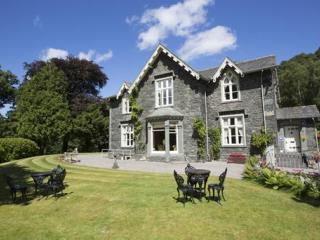
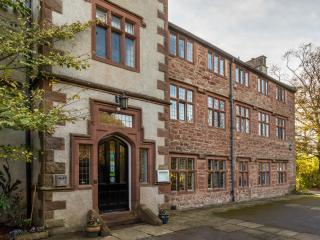
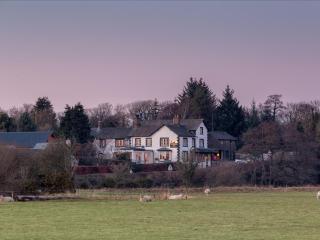
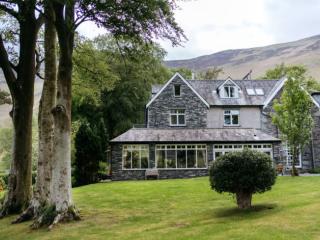
This property, parts of which date back to at least the 16th century, is set in six acres of mature grounds which lead down to the River Calder. The individually designed bedrooms are v...
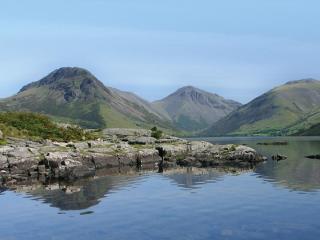
★★★★ Rating
Seven Acres Caravan Park
This sheltered park is close to quiet west Cumbrian coastal villages and beaches, and also handy for Eskdale and Wasdale. There is a good choice of pitches, some are hedged bays for pri...
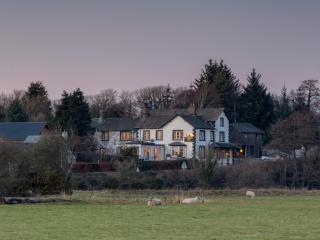
★★★ Rating
The Lutwidge Arms
This Victorian roadside inn is family run and offers a welcoming atmosphere. Its name comes from the Lutwidge family of Holmrook Hall, whose lineage included Charles Lutwidge Dodgson, b...
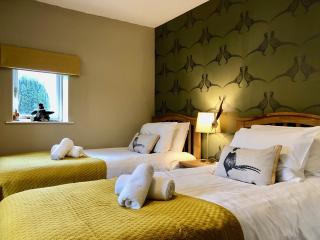
★★★★ Rating
Kirkstile Inn
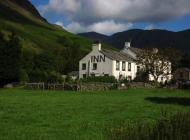
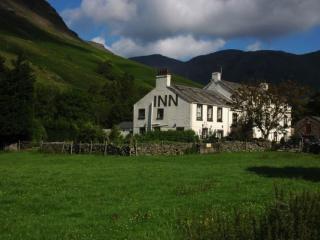
This historic 16th-century inn lies in a valley surrounded by mountains. Serving great food and ale, its rustic bar and adjoining rooms prove to be a mecca for walkers. There is also a ...
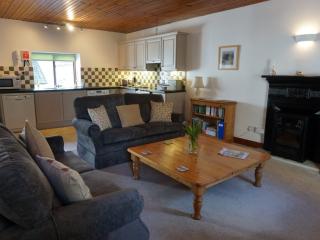
★★★★ Rating
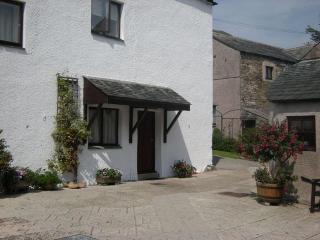
Buttermere Cottage
Awaiting description...
★★★★★ Rating
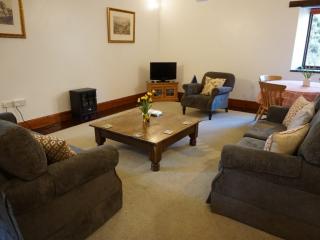
Crummock Cottage
Awaiting description...
★★★★★ Rating
Loweswater Cottage
Awaiting description...
★★★★★ Rating
Crummockwater Cottages
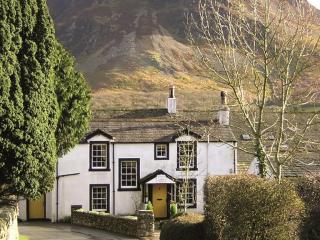
Crummockwater Cottages in Loweswater enjoy stunning views of Crummock Water and the surrounding fells including Haystacks and Great Gable. The cottages are the converted barns and stabl...
★★★★★ Rating
Places to eat nearby View all