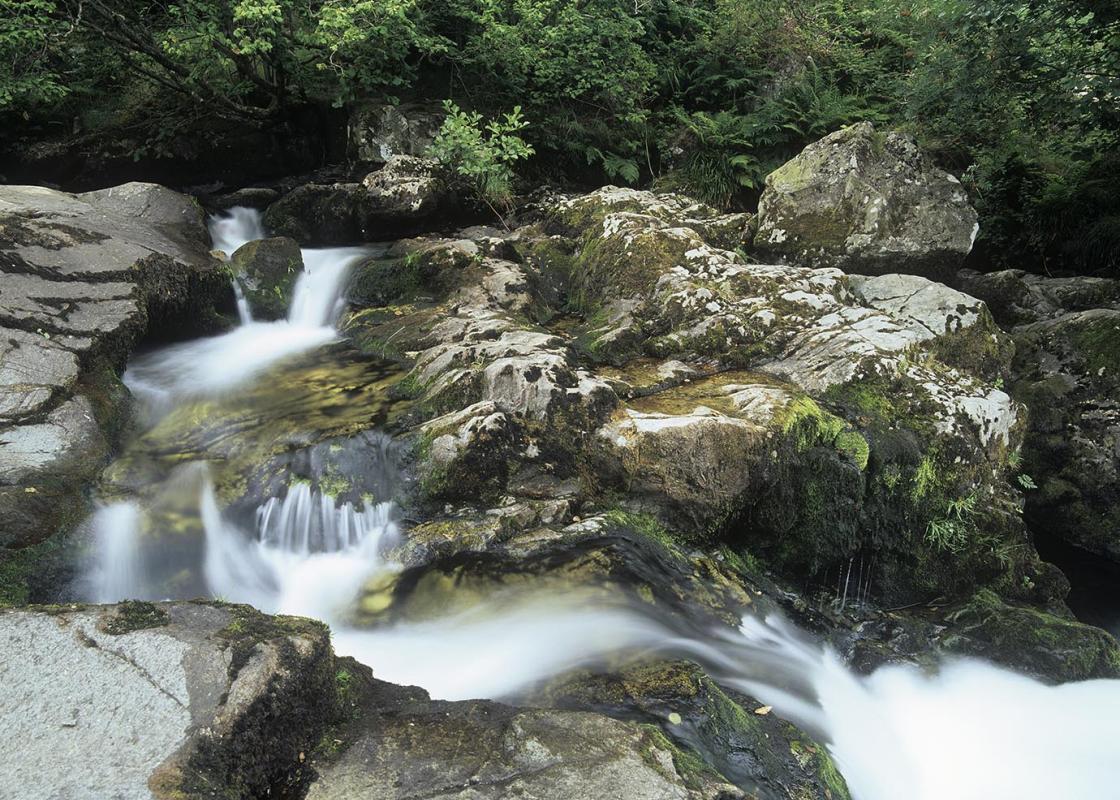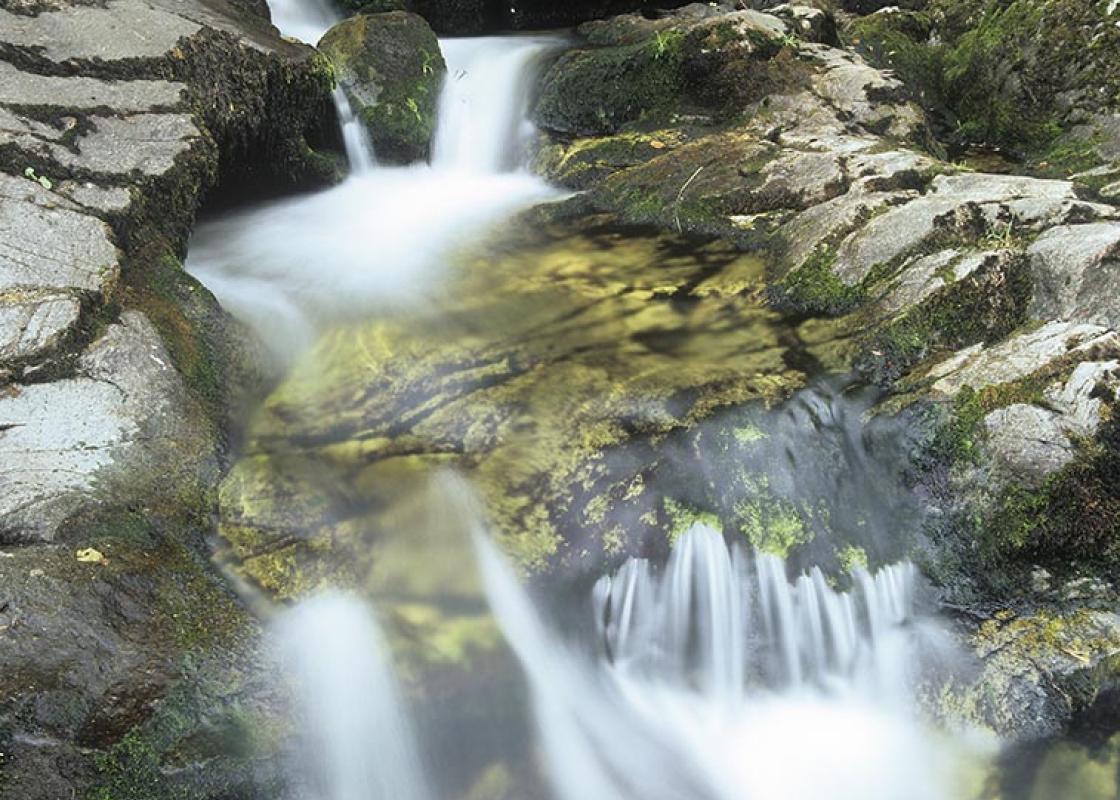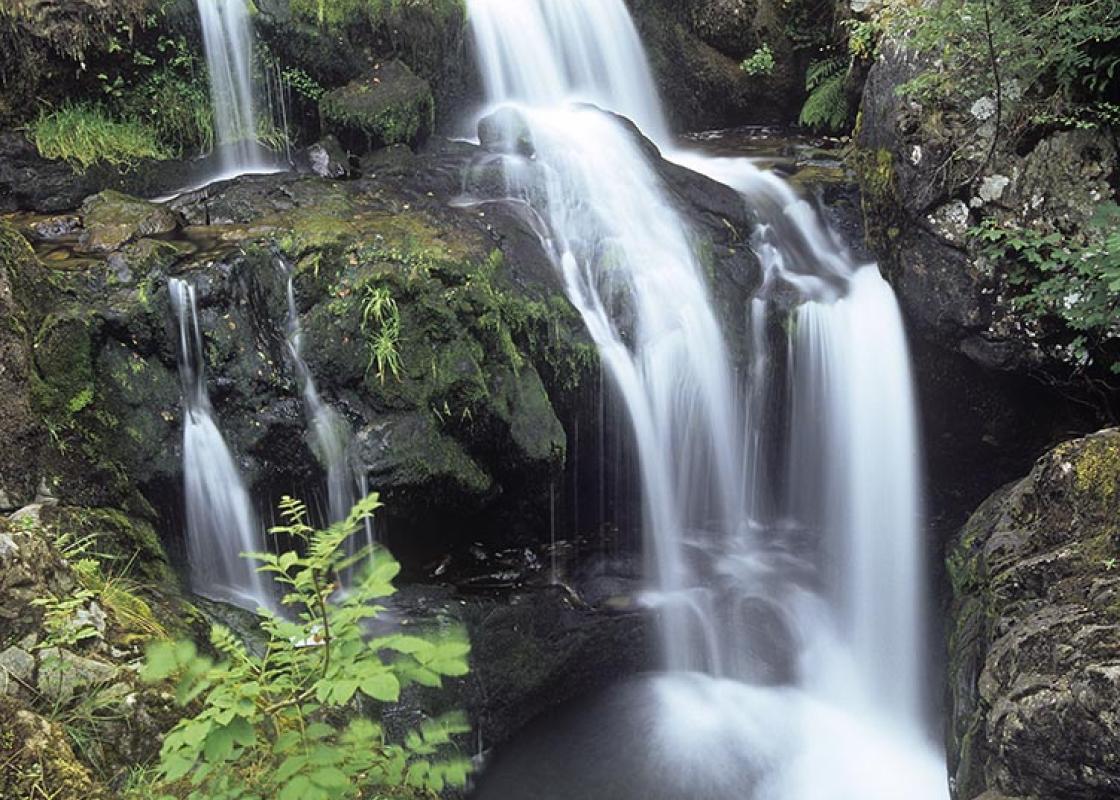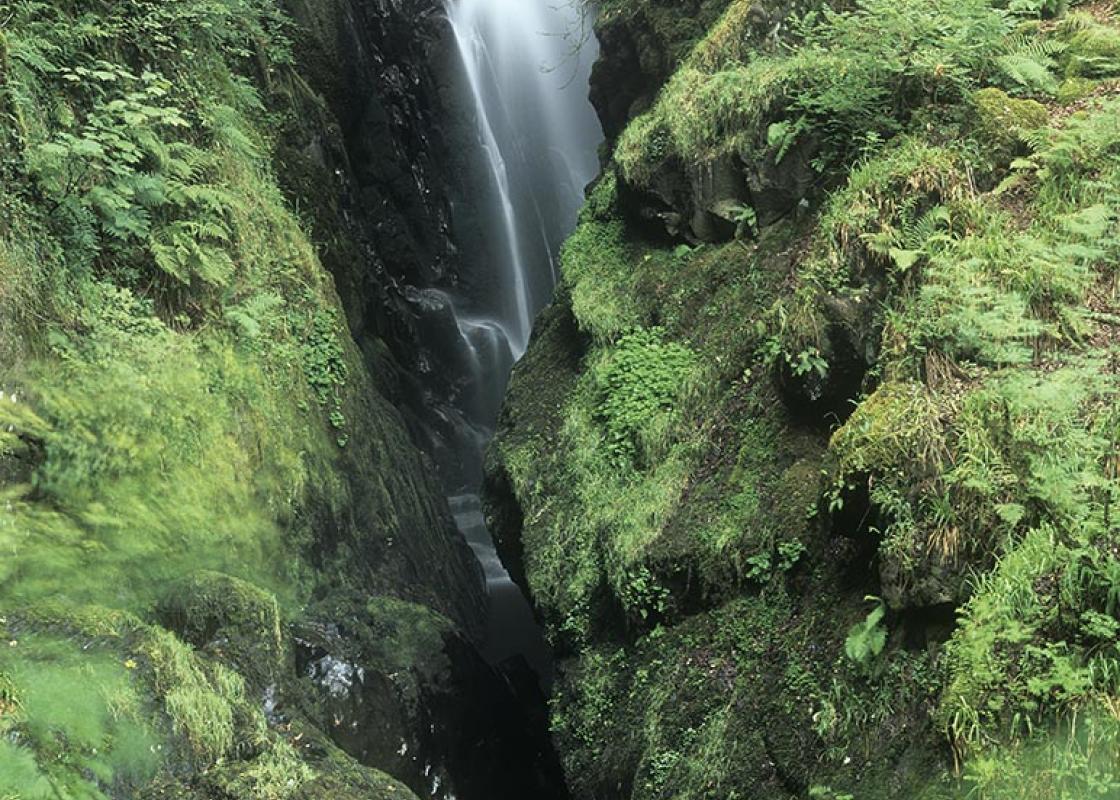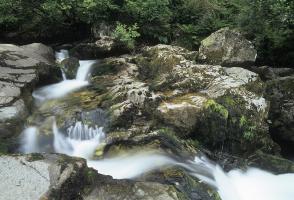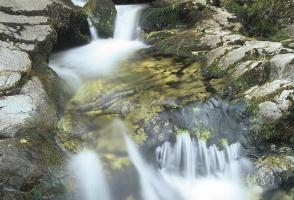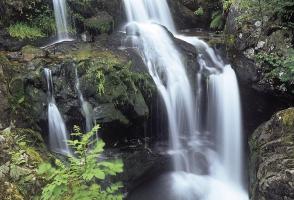
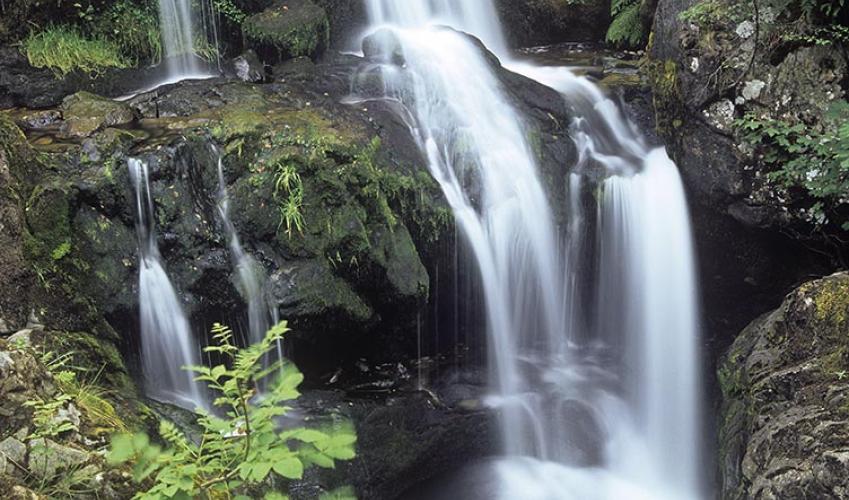
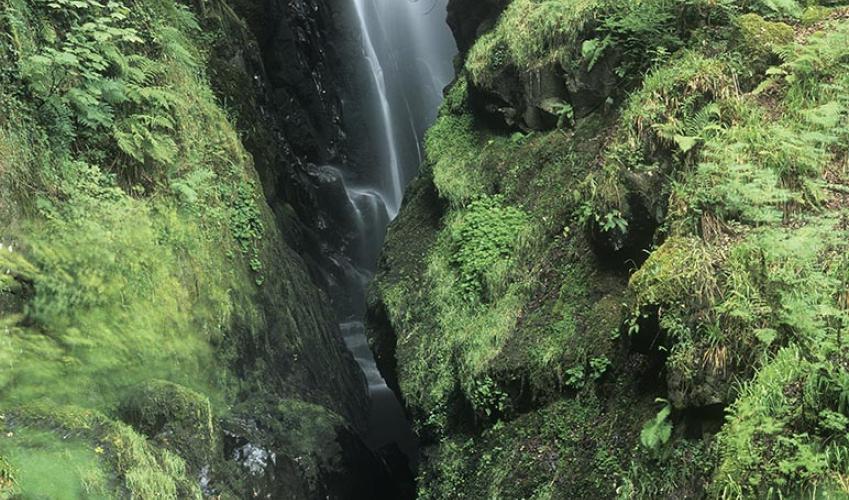
Waterfalls at Aira Force
Recommended by

Our view
"Ascend and descend the river gorge of Aira Force and High Force below the hamlet of Dockray."
Walk directions
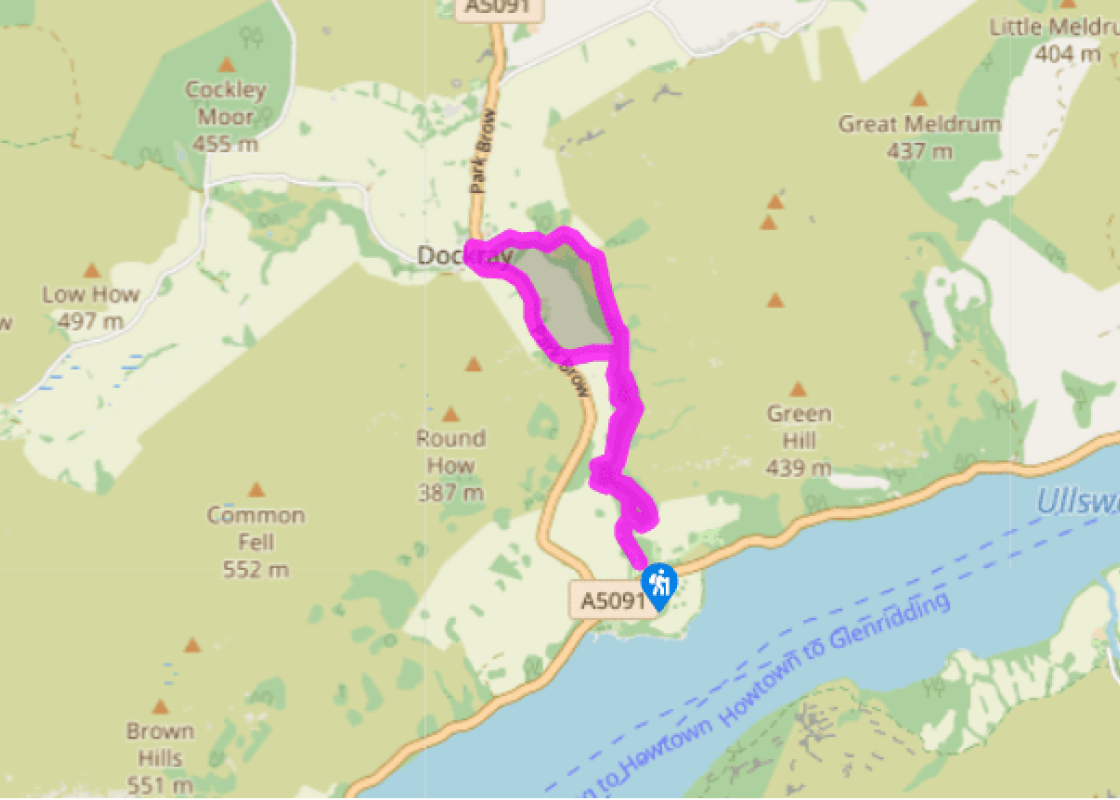
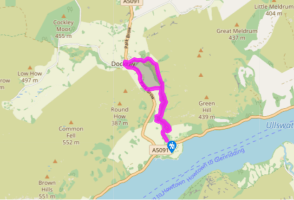
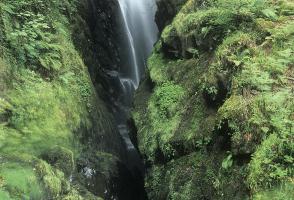
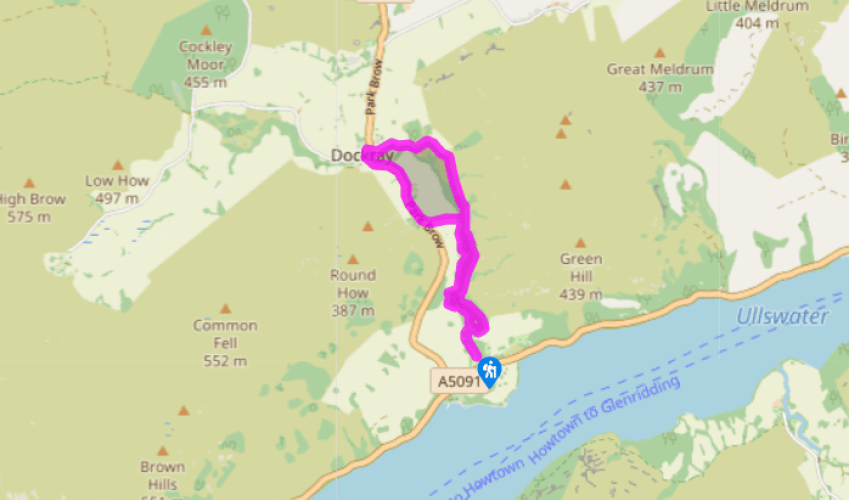
Head to the far end of the car park and follow the obvious path through the gap to the right of the National Trust shop. Bear right at an early fork in the path and enter the pinetum via a metal gate. This area is known as The Grove. Follow the path round to the right, over the footbridge, to cross Aira Beck. Climb the steps and fork left by the huge Sitka spruce to follow the terraced track up the east bank. At the next fork, the main route goes up the steep steps on the right, but first head left to gain the bridge at the base of Aira Force and its impressive view of the falls. At the top of the steps, keep left and you’ll soon see a stone arched bridge to your left, another great place to view the falls – this time looking down on them.
As you continue with the beck on your left, the character of the walk changes. It’s usually quieter and the path is significantly rougher. Soon after climbing to join a path from the right, ignore the steps descending left to a wooden footbridge.
View all directions
Additional information
Terrain
- Stony paths, steps and surfaced road
Landscape
- Pinetum, tree-lined river gorge, woods and open meadow
Dog friendliness
- Under very good control; narrow paths with steep drops, sheep pastures and open road
Parking
- National Trust's Aira Force pay-and-display car park, off A592
Toilets en route
- At Aira Force car park
About the walk
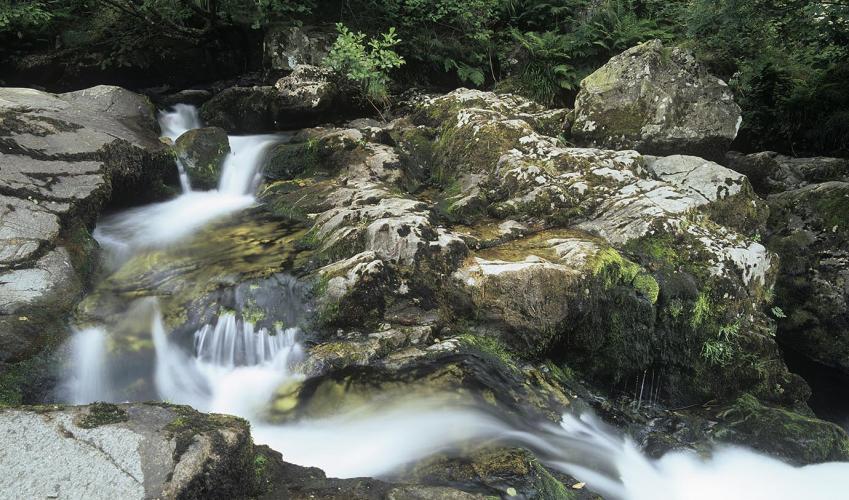
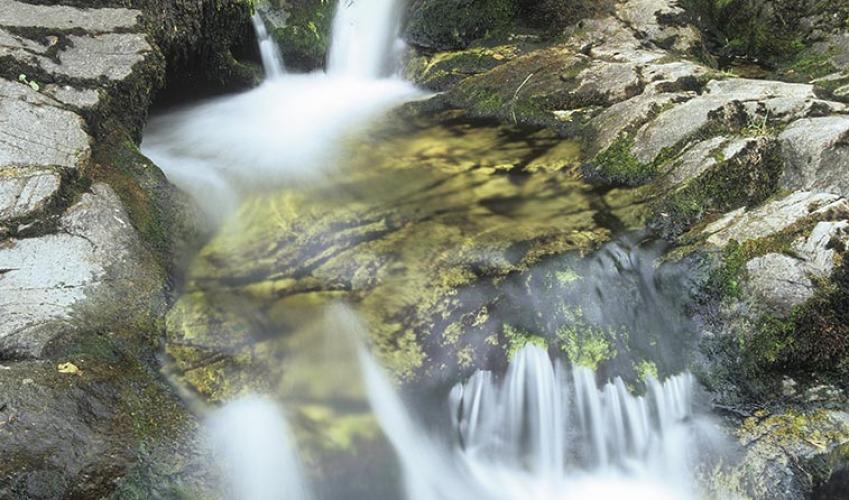
This circular walk climbs the tree-clad gorge of Aira Beck to pass two waterfalls before continuing to ascend through natural woodland and meadows to the hamlet of Dockray. The lower, larger waterfall, Aira Force, is the more famous of the two. It offers an impressive sight from the viewpoint stone...
Read more

Been on this walk?
Send us photos or a comment about this route. Or recommend a route of your own.

Walking in Safety
Read our tips to look after yourself and the environment when following this walk.
Get an AA guide
Explore our range of ‘50 Walks in’ guides - they’re the ideal companion for a ramble.
Been on this walk?
Send us photos or a comment about this route. Or recommend a route of your own.
Walking in Safety
Read our tips to look after yourself and the environment when following this walk.
Get an AA guide
Explore our range of ‘50 Walks in’ guides - they’re the ideal companion for a ramble.
About the area
Cumbria's rugged yet beautiful landscape is best known for the Lake District National Park that sits within its boundaries. It’s famous for Lake Windermere, England’s largest lake, and Derwent Water, ‘Queen of the English Lakes', but other lesser-known areas in the south, such as the Lune Valley and the coastal towns, are secret gems of wide cobbled streets and rolling hills.
Nearby places to stay
View all (8)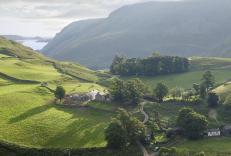




Nearby places to stay
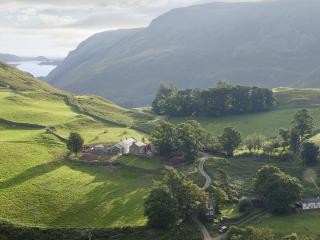
The Rowley Estates at Martindale
Hause Hall, the Cruik Barn and The Stables are in the heart of the northern Lake District National Park nestled in the lee of Hallin Fell above Lake Ullswater. Hause Hall is a five bedr...
Hause Hall, Cruik Barn & The Stables
Hause Hall, the Cruik Barn and The Stables are in the heart of the northern Lake District National Park nestled in the lee of Hallin Fell above Lake Ullswater. Hause Hall is a five bedr...
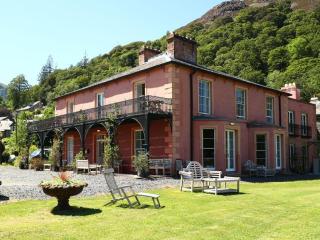
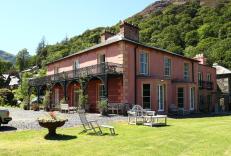
Glenridding Manor House
Glenridding House is a wonderful Grade-II listed Georgian lakeside villa which sits right on the shores of Ullswater. Used as a holiday home by Charles Darwin, this once derelict buildi...
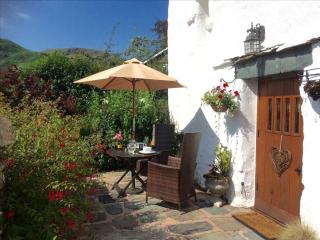
Wordsworth Barn
Generously appointed contemporary living space just for 2, Wordsworth Barn uses local materials, such as slate floors, Herdwick wool carpets while retaining its original character with ...
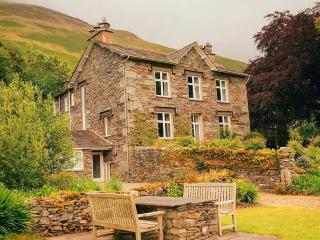
Broad How
Awaiting description...
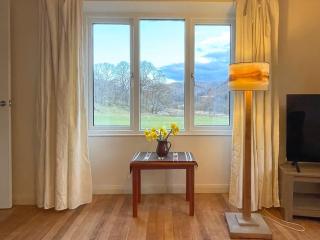
Cherry How
Awaiting description...
Broad How and Cherry How
Visitors return again and again to this beautiful, traditional stone house in Patterdale, at the southern end of Lake Ullswater. In the same family for nearly a century, it has been pro...
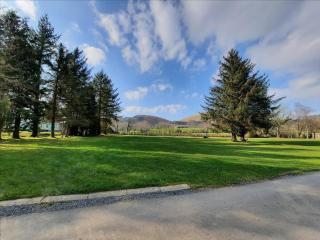
Ullswater Holiday Park
A pleasant rural site with its own nearby boat launching and marine storage facility that makes it ideal for those who love sailing. The family-owned and run park enjoys fell and lake v...
Places to eat nearby View all