Dublin Castle and Christ Church
 Our view
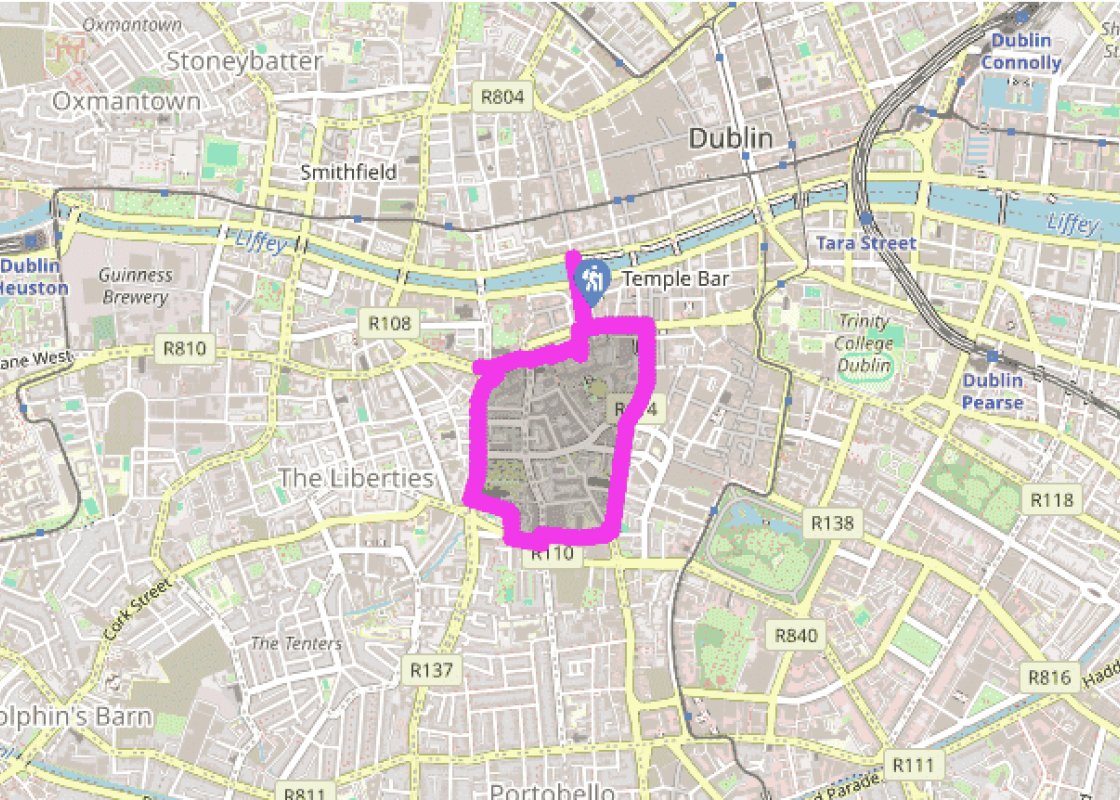
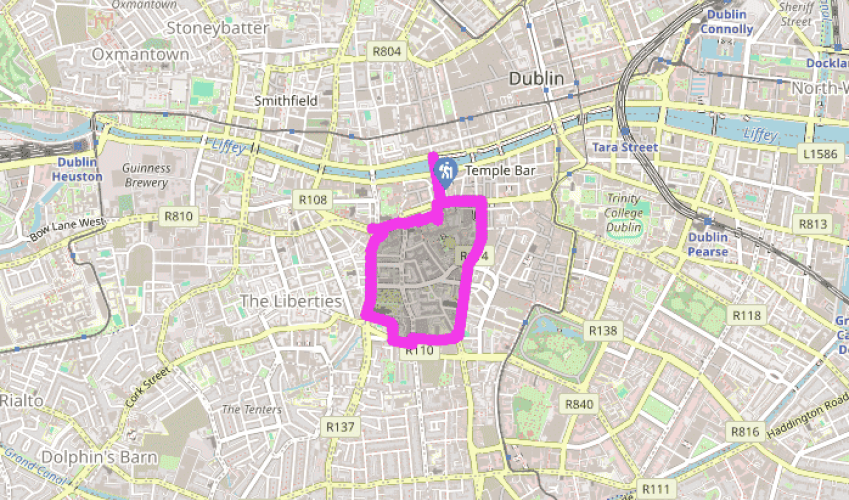
Cross the Liffey by Grattan Bridge, cross Wellington Quay on the south bank, and walk on down Parliament Street. The white pillars and copper-green rotunda dome of City Hall are right in front of you. Cross Cork Hill to enter. Like so many of Dublin’s grand public buildings, City Hall has served several masters. It was built between 1769 and 1779. Its architect was Thomas Pooley, whose design was better received than that proposed by the more famous James Gandon, architect of the Customs House and the Four Courts on the north side of the Liffey. It was originally intended to be Dublin’s Royal Exchange, but in 1852 Dublin Corporation took it over, and it is still the seat of the city council. Mundane as that may sound, the vaults beneath now house ‘Dublin’s City hall: The Story of The Capital’, a multimedia exhibition that highlights the city’s history. Look down as you enter the foyer below the rotunda at the mosaic floor, which bears Dublin’s Latin motto: ‘Obedientia civium urbis felicitas’ (‘Happy the city where citizens obey’) – an outstanding example of wishful thinking.
Leaving City Hall, turn left on Cork Hill and almost immediately left again to enter Dublin Castle. Virtually nothing remains of the original stronghold, though in the Undercroft you can see the scant remains of the Viking stronghold that preceded it. The castle grew under the Tudor and Stuart dynasties, but its present layout dates from the late 17th century. Until Irish independence, the castle was the residence of the British viceroy; thereafter, it passed into the hands of the Irish government, and the Lower Yard is used as government offices. The lavish State Apartments include the Throne Room, with a throne placed here by William of Orange (William III) in celebration of the victory of the Protestant cause at the Battle of the Boyne in 1690. Also within the State Apartments, St Patrick’s Hall, once the banqueting hall of the defunct royal order of the Knights of St Patrick, has stunning 18th-century painted ceilings. The round, battlemented Record Tower is the oldest part of the building and was used as a prison in Tudor times. Next to it, the Church of the Most Holy Trinity, built in 1814, is the work of Francis Johnson, who along with James Gandon is probably the best-known contributor to Dublin’s treasury of Georgian architecture. Look up as you leave by the Cork Hill entrance. Above the arch stands a statue of Justice, looking inward to the seat of English power and rather too symbolically turning her back on Dublin and Ireland.

Been on this walk?
Send us photos or a comment about this route. Or recommend a route of your own.

Walking in Safety
Read our tips to look after yourself and the environment when following this walk.
Get an AA guide
Explore our range of ‘50 Walks in’ guides - they’re the ideal companion for a ramble.
Been on this walk?
Send us photos or a comment about this route. Or recommend a route of your own.
Walking in Safety
Read our tips to look after yourself and the environment when following this walk.
Get an AA guide
Explore our range of ‘50 Walks in’ guides - they’re the ideal companion for a ramble.
Nearby places to stay
View all (3)
- Family rooms: 0

- En-suite rooms:
- Family rooms: