Georgian Dublin
 Our view
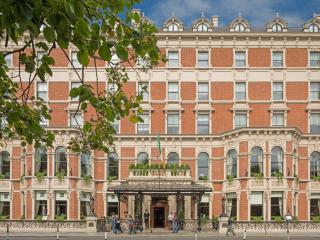
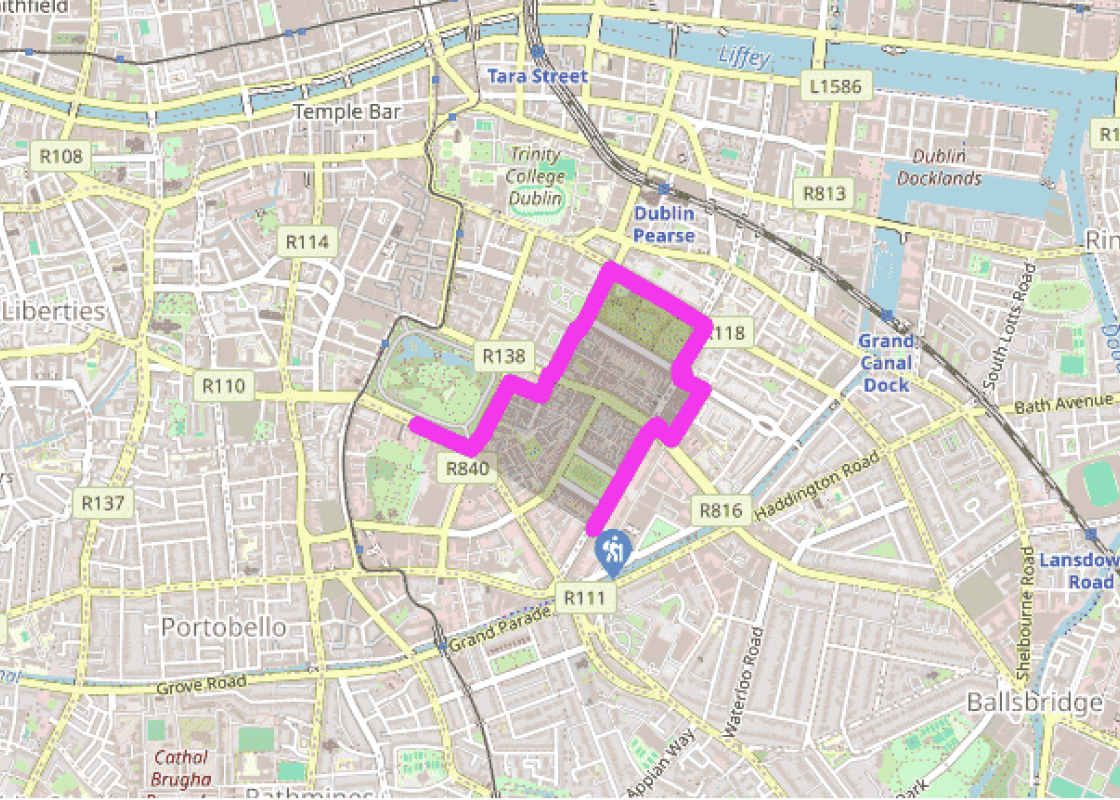
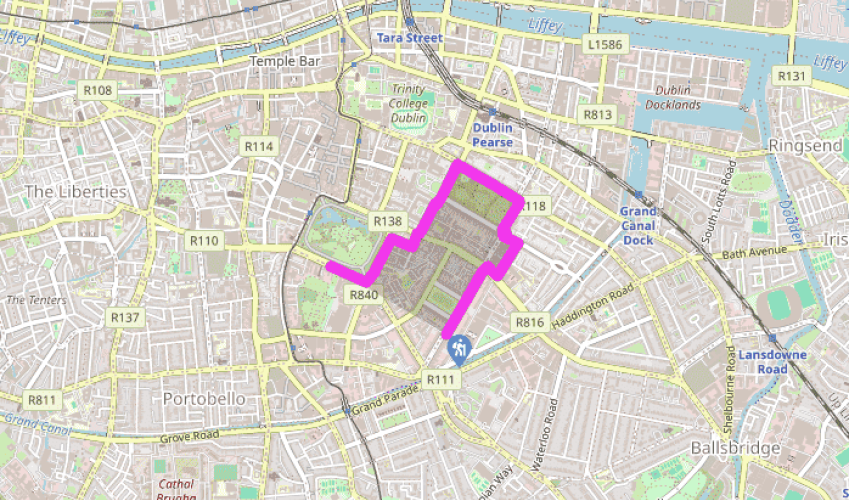
Fitzwilliam Square, a block east of St Stephen’s Green, is a convenient place to begin the walk. This small green space is surrounded on three sides by enviable 18th-century houses, most of which are now used as offices rather than private dwellings. Those that are private homes change hands for dizzying prices. From the east side of the square, walk up Fitzwilliam Street and turn right into Baggot Street Lower. With its terraced, elegantly proportioned houses of pale grey stone, Baggot Street is the epitome of Georgian Dublin. Typical of the period are the panelled doors, crowned by semi-circular fanlights and flanked by white-painted stucco pillars. Many retain their original polished brass doorknobs and knockers, and most are painted in bright colours that add a dash of whimsy to the staidly dignified elegance of this and other Georgian streets.
Cross over Baggot Street to the north side and walk up James’s Street East for one block to Mount Street Upper. Turn left, stay on the left-hand side, walk one very short block and turn left to 29 Fitzwilliam Street, at the corner of Mount Street Upper and Fitzwilliam Street Lower. No. 29 (the Georgian House Museum) offers a rare glimpse into the world of Georgian Dublin’s well-off bourgeoisie, with an interior furnished and decorated as it would have been during the years 1790 to 1820. Authentic in every detail, it houses period works of art, china and silverware, mirrors and paintings, as well as more mundane kitchen utensils and household equipment. Start in the basement and work your way through the living and dining rooms on the lower floors to the bedrooms, then the children’s nursery in the attic, for the full tour.

Been on this walk?
Send us photos or a comment about this route. Or recommend a route of your own.

Walking in Safety
Read our tips to look after yourself and the environment when following this walk.
Get an AA guide
Explore our range of ‘50 Walks in’ guides - they’re the ideal companion for a ramble.
Been on this walk?
Send us photos or a comment about this route. Or recommend a route of your own.
Walking in Safety
Read our tips to look after yourself and the environment when following this walk.
Get an AA guide
Explore our range of ‘50 Walks in’ guides - they’re the ideal companion for a ramble.
Nearby places to stay
View all (3)
- Family rooms: 0

- En-suite rooms:
- Family rooms: