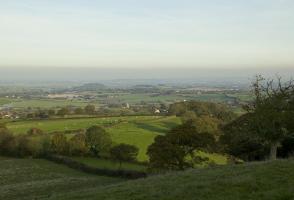
"An up-and-down walk in the glorious Quantock combes."
Walk directions
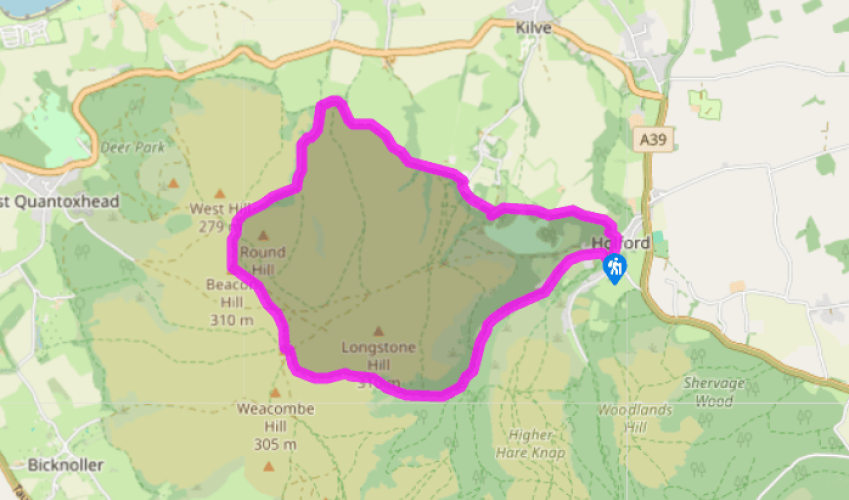
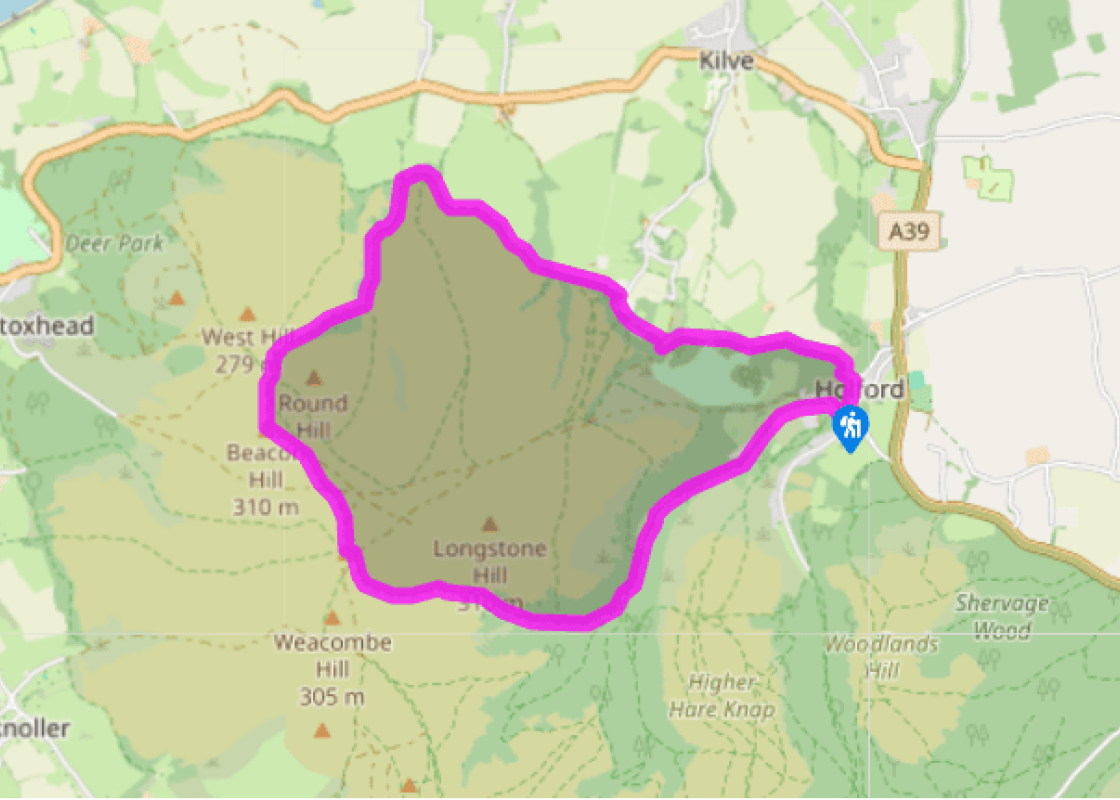
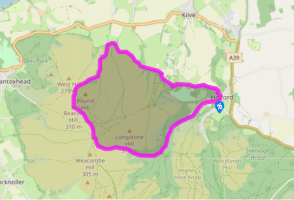
Two tracks leave the road beside the car park. Take the left-hand one, signed ‘Hodder’s Combe’. It becomes an earth track through woods, with Hodder's Combe Brook on its right. After 0.75 miles (1.2km) the small track fords the stream and forks. Take the right-hand option, entering a side valley. The path runs up the valley floor, crossing to the right-hand side of the stream – ignore a further side valley and path forking left. Go up gently through oakwoods floored with bilberry (locally known as 'whortleberry'), then mixed heather and bracken, to reach the Quantock ridge. As the ground eases, keep ahead over two crosstracks to Bicknoller Post.
Just behind the oak post turn right then keep slightly left and uphill on the widest of the tracks. This track becomes a double one, almost a 'dual carriageway'. Bear left off it to the trig point on Beacon Hill.
At the trig point bend half right to another marker post on the 'dual carriageway' track. A smaller path goes down directly ahead, beside a plantation, into Smith's Combe. The path weaves around, crossing the stream several times.
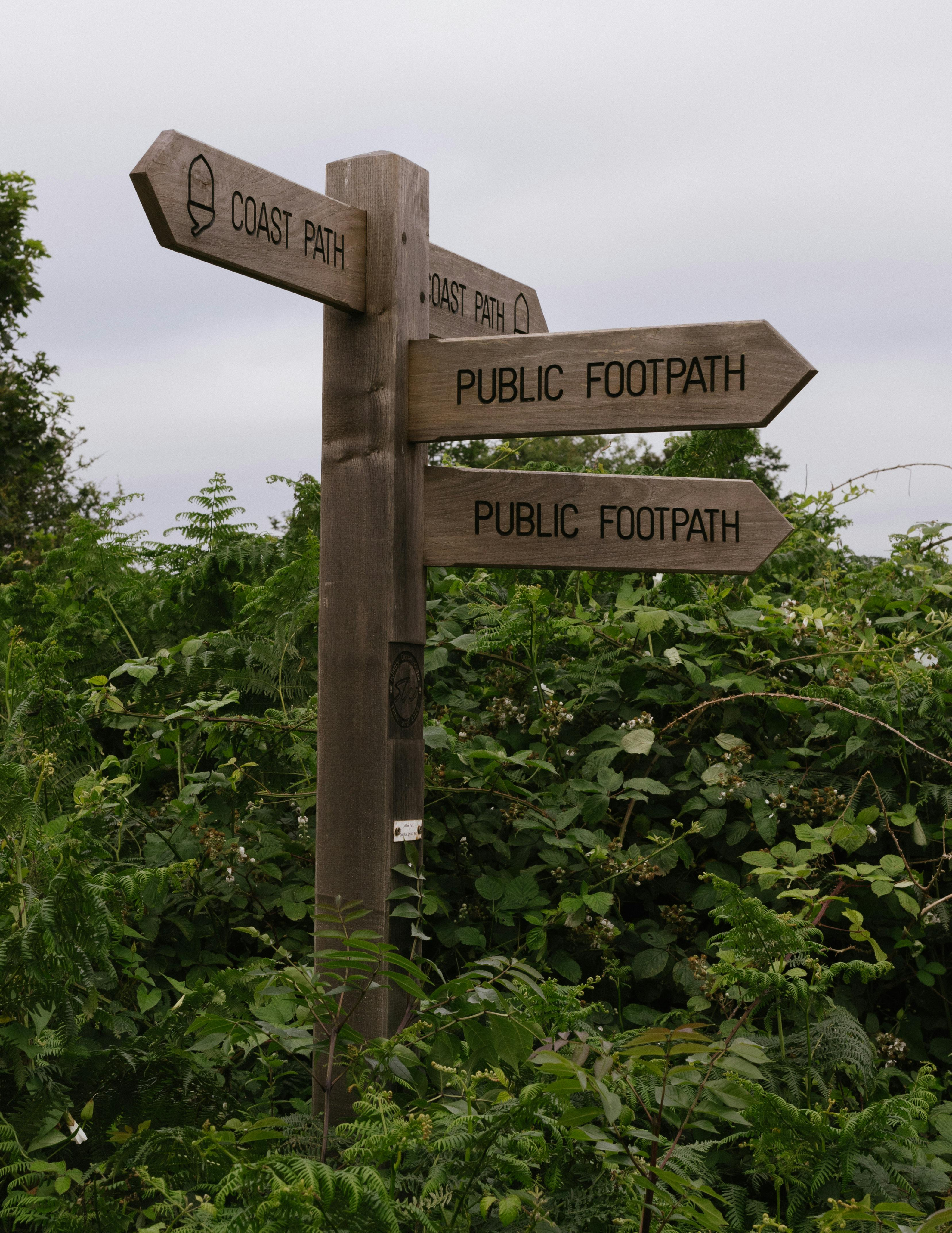
At the foot of the valley, with green fields below, is a 4-way 'Quantock Greenway' signpost: turn right ('Holford'), uphill at first. The path runs around the base of the hills, with a belt of trees below and then the green fields. At the first spur crest is another signpost: keep ahead for Holford. The path runs around the base of the hills, with a belt of trees below and then the green fields. It drops to cross two adjacent streams, Dens Combe. Bear left and continue with fence on left for 0.25 miles (400m) to reach a junction with a wide gate leading out on tarmac.
Don't go through the gate, but strike uphill to another 'Quantock Greenway' signpost. Keep left to pass above a rendered house on to a tarred lane. Follow it ahead below a couple of houses. The lane runs out past Alfoxton, with the walled garden of the grand house (once Wordsworth's) on the left and the stable block with its clock on the right. Continue down Alfoxton House drive and through the gates at the bottom.
Follow the lane for 650yds (594m) then, as it bends right, look out for a waymarker and railings a little way down in the trees. Below is a spectacular footbridge leading across into Holford. Turn right, and at the first junction turn right again, to the car park.
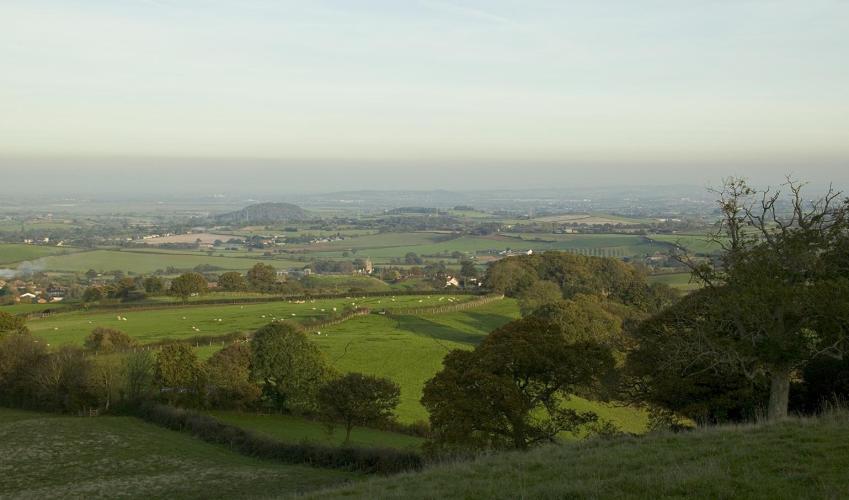
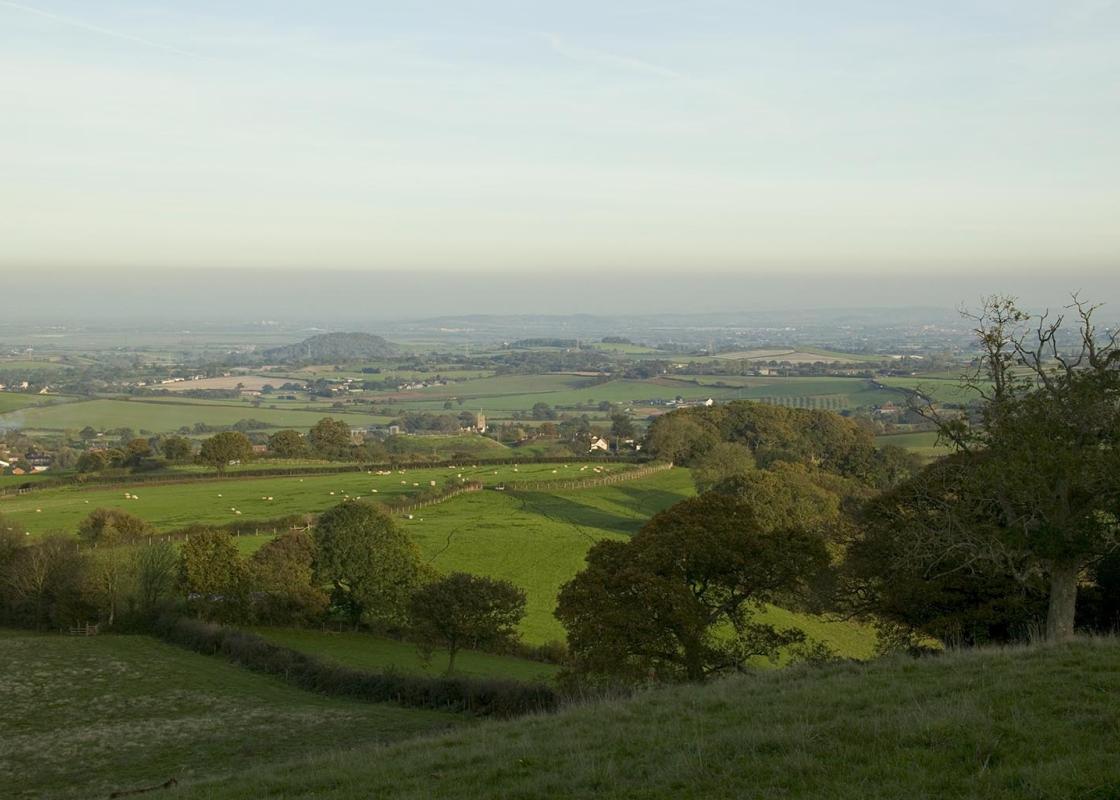
The great beauty of these hills, says Dorothy Wordsworth, is their wild simplicity. We often hear of the 'Lakes poets', but in fact Coleridge wrote most of his best-known works (Kubla Khan, Christabel) while he was living in Somerset, and his neighbour, Wordsworth, started his poetic career here as... well. Coleridge was the first to move to the Quantocks, invited by a friendly bookseller, from Nether Stowey, who had noticed a cottage to let at the bottom of his garden. A year later Wordsworth and his sister moved into the rather grand house of Alfoxton. A poetic revolution This took place in the heady years after the French Revolution, and the ultimate aim of the two friends was to set up a sort of poets' commune, gathering like-minded radicals for a group emigration to America. In the meantime, the two young men revolutionised English poetry. They were key players in the Romantic Revival, overthrowing the stilted formal verse of the previous hundred years, by creating Romantic poetry as a means of describing and expressing strong emotion. Amazingly, Coleridge's most celebrated work, The Rime of the Ancient Mariner, was written in the Quantocks at a time when his entire experience of sea voyaging was a crossing of the Severn by the Chepstow ferry. The poem was roughed out in the course of a walk taken by Coleridge, Wordsworth and Wordsworth's sister, Dorothy. They set out from Alfoxton at 4pm on a November afternoon in 1797; this was timed so that they could watch the dusk give way to moonlight over the Bristol Channel. After crossing the Quantocks they continued by the coast path, finally arriving at Dulverton four days later. Coleridge's mesmeric Christabel recalls the wooded combes of Holford. In this lime-tree bower my prison Coleridge himself was frustratingly trapped at home in Stowey after his wife Sara had spilt scalding milk on his foot. Meanwhile, his friends were following this walk up to Bicknoller Post and enjoying the view over the Bristol Channel from the Quantock Ridge.
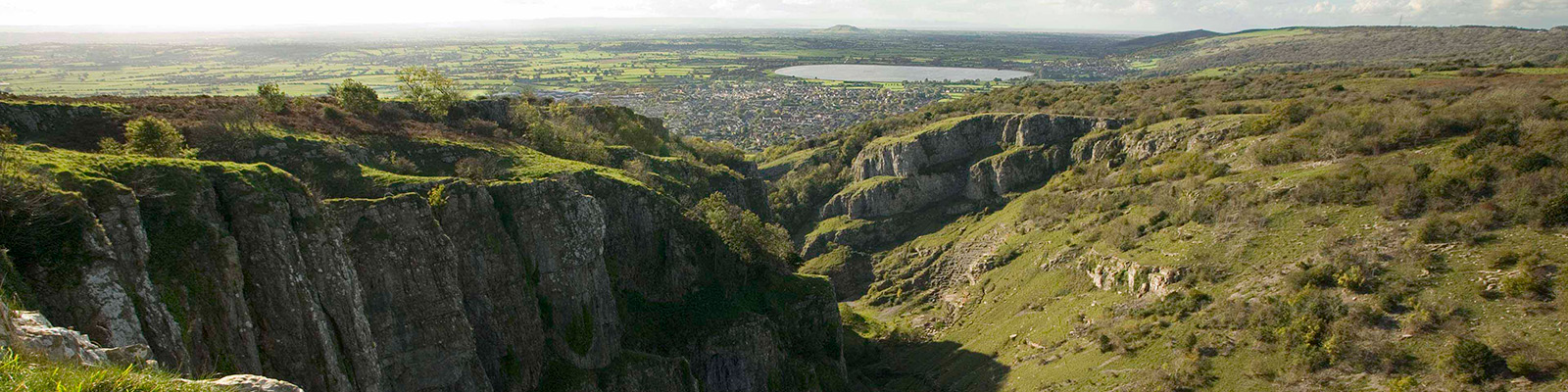
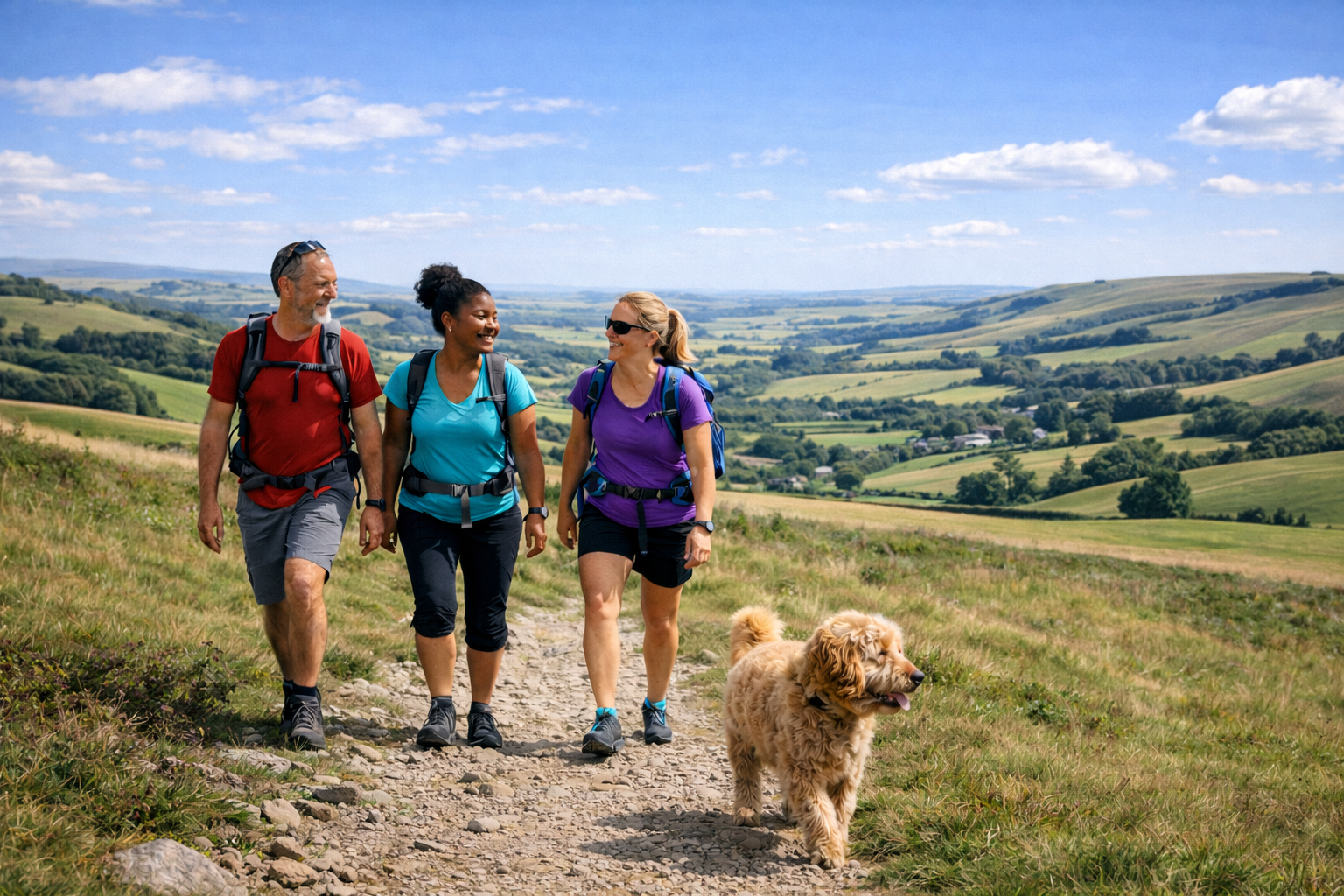
Somerset remains rural and unspoiled, and ever popular areas to visit are the limestone and red sandstone Mendip Hills rising to over 1,000 feet, and by complete contrast, to the south and southwest, the flat landscape of the Somerset Levels. Another popular spot, the Quantocks, once the haunt of poets Coleridge and Wordsworth, are noted for their gentle slopes, heather-covered moorland expanses and red deer.
"An up-and-down walk in the glorious Quantock combes."
Walk details
2hrs 40min
Difficulty:
Medium
Gradient:
Challenging
Distance:
5.5 miles (8.8kms)
Ascent:
1000ft (305m)
Walk directions
Two tracks leave the road beside the car park. Take the left-hand one, signed ‘Hodder’s Combe’. It becomes an earth track through woods, with Hodder's Combe Brook on its right. After 0.75 miles (1.2km) the small track fords the stream and forks. Take the right-hand option, entering a side valley. The path runs up the valley floor, crossing to the right-hand side of the stream – ignore a further side valley and path forking left. Go up gently through oakwoods floored with bilberry (locally known as 'whortleberry'), then mixed heather and bracken, to reach the Quantock ridge. As the ground eases, keep ahead over two crosstracks to Bicknoller Post.
1 of 6
Just behind the oak post turn right then keep slightly left and uphill on the widest of the tracks. This track becomes a double one, almost a 'dual carriageway'. Bear left off it to the trig point on Beacon Hill.
2 of 6
At the trig point bend half right to another marker post on the 'dual carriageway' track. A smaller path goes down directly ahead, beside a plantation, into Smith's Combe. The path weaves around, crossing the stream several times.
3 of 6
At the foot of the valley, with green fields below, is a 4-way 'Quantock Greenway' signpost: turn right ('Holford'), uphill at first. The path runs around the base of the hills, with a belt of trees below and then the green fields. At the first spur crest is another signpost: keep ahead for Holford. The path runs around the base of the hills, with a belt of trees below and then the green fields. It drops to cross two adjacent streams, Dens Combe. Bear left and continue with fence on left for 0.25 miles (400m) to reach a junction with a wide gate leading out on tarmac.
4 of 6
Don't go through the gate, but strike uphill to another 'Quantock Greenway' signpost. Keep left to pass above a rendered house on to a tarred lane. Follow it ahead below a couple of houses. The lane runs out past Alfoxton, with the walled garden of the grand house (once Wordsworth's) on the left and the stable block with its clock on the right. Continue down Alfoxton House drive and through the gates at the bottom.
5 of 6
Follow the lane for 650yds (594m) then, as it bends right, look out for a waymarker and railings a little way down in the trees. Below is a spectacular footbridge leading across into Holford. Turn right, and at the first junction turn right again, to the car park.
The great beauty of these hills, says Dorothy Wordsworth, is their wild simplicity. We often hear of the 'Lakes poets', but in fact Coleridge wrote most of his best-known works (Kubla Khan, Christabel) while he was living in Somerset, and his neighbour, Wordsworth, started his poetic career here as... well. Coleridge was the first to move to the Quantocks, invited by a friendly bookseller, from Nether Stowey, who had noticed a cottage to let at the bottom of his garden. A year later Wordsworth and his sister moved into the rather grand house of Alfoxton. A poetic revolution This took place in the heady years after the French Revolution, and the ultimate aim of the two friends was to set up a sort of poets' commune, gathering like-minded radicals for a group emigration to America. In the meantime, the two young men revolutionised English poetry. They were key players in the Romantic Revival, overthrowing the stilted formal verse of the previous hundred years, by creating Romantic poetry as a means of describing and expressing strong emotion. Amazingly, Coleridge's most celebrated work, The Rime of the Ancient Mariner, was written in the Quantocks at a time when his entire experience of sea voyaging was a crossing of the Severn by the Chepstow ferry. The poem was roughed out in the course of a walk taken by Coleridge, Wordsworth and Wordsworth's sister, Dorothy. They set out from Alfoxton at 4pm on a November afternoon in 1797; this was timed so that they could watch the dusk give way to moonlight over the Bristol Channel. After crossing the Quantocks they continued by the coast path, finally arriving at Dulverton four days later. Coleridge's mesmeric Christabel recalls the wooded combes of Holford. In this lime-tree bower my prison Coleridge himself was frustratingly trapped at home in Stowey after his wife Sara had spilt scalding milk on his foot. Meanwhile, his friends were following this walk up to Bicknoller Post and enjoying the view over the Bristol Channel from the Quantock Ridge.
Somerset remains rural and unspoiled, and ever popular areas to visit are the limestone and red sandstone Mendip Hills rising to over 1,000 feet, and by complete contrast, to the south and southwest, the flat landscape of the Somerset Levels. Another popular spot, the Quantocks, once the haunt of poets Coleridge and Wordsworth, are noted for their gentle slopes, heather-covered moorland expanses and red deer.