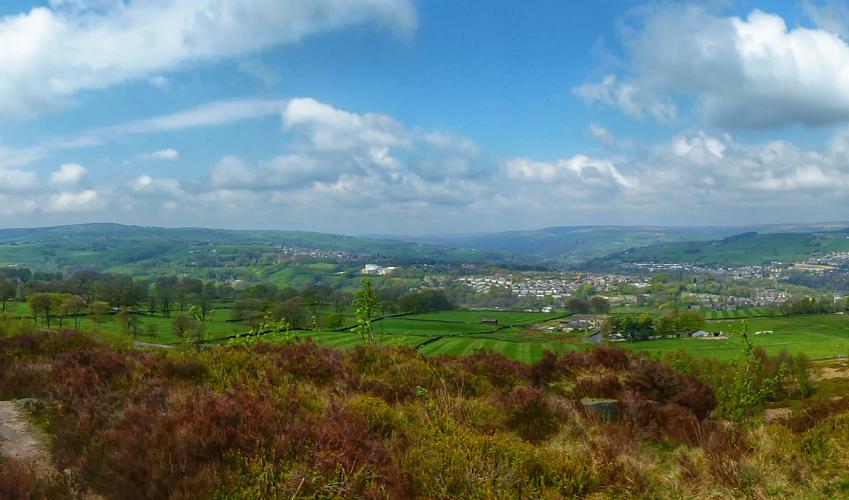
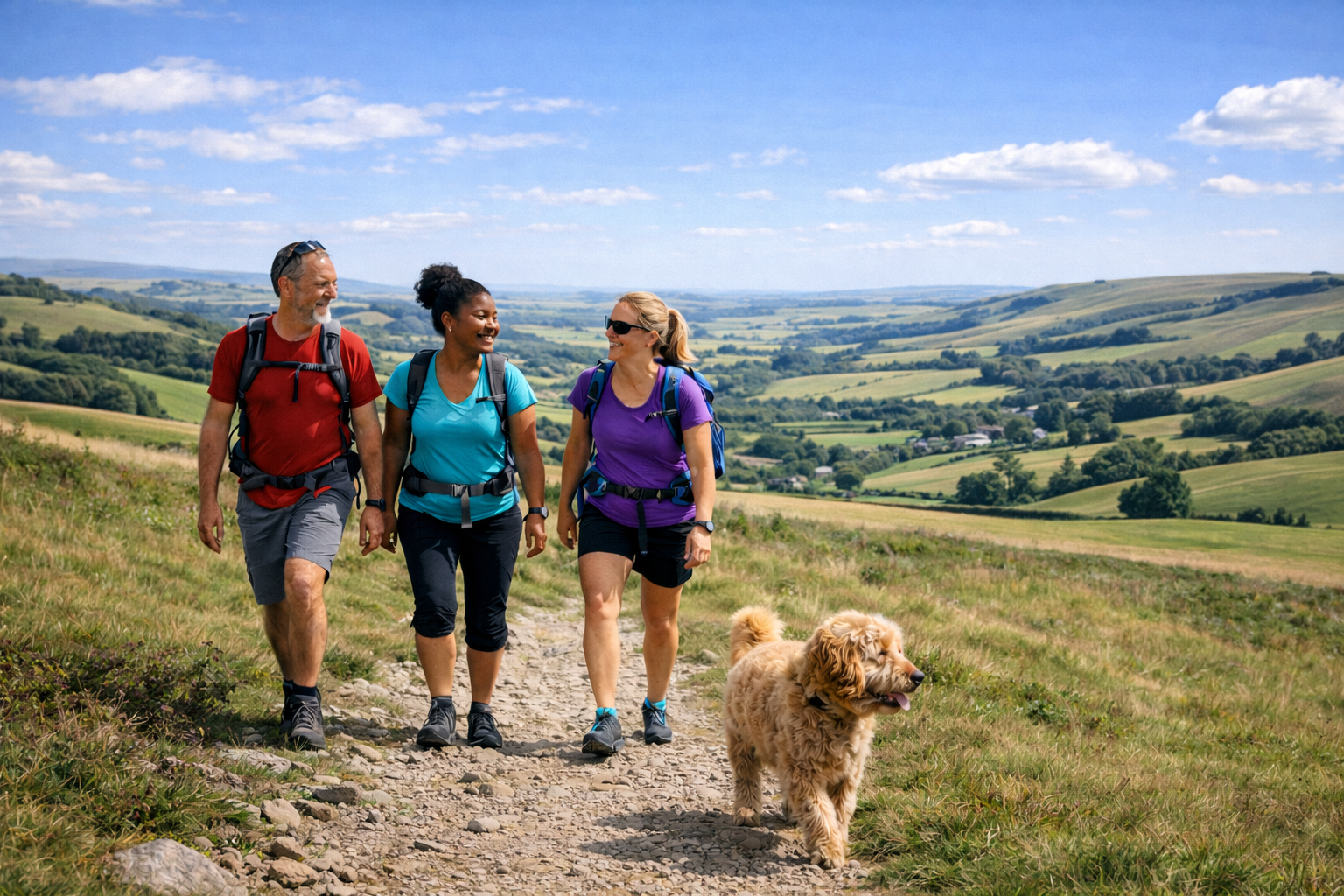
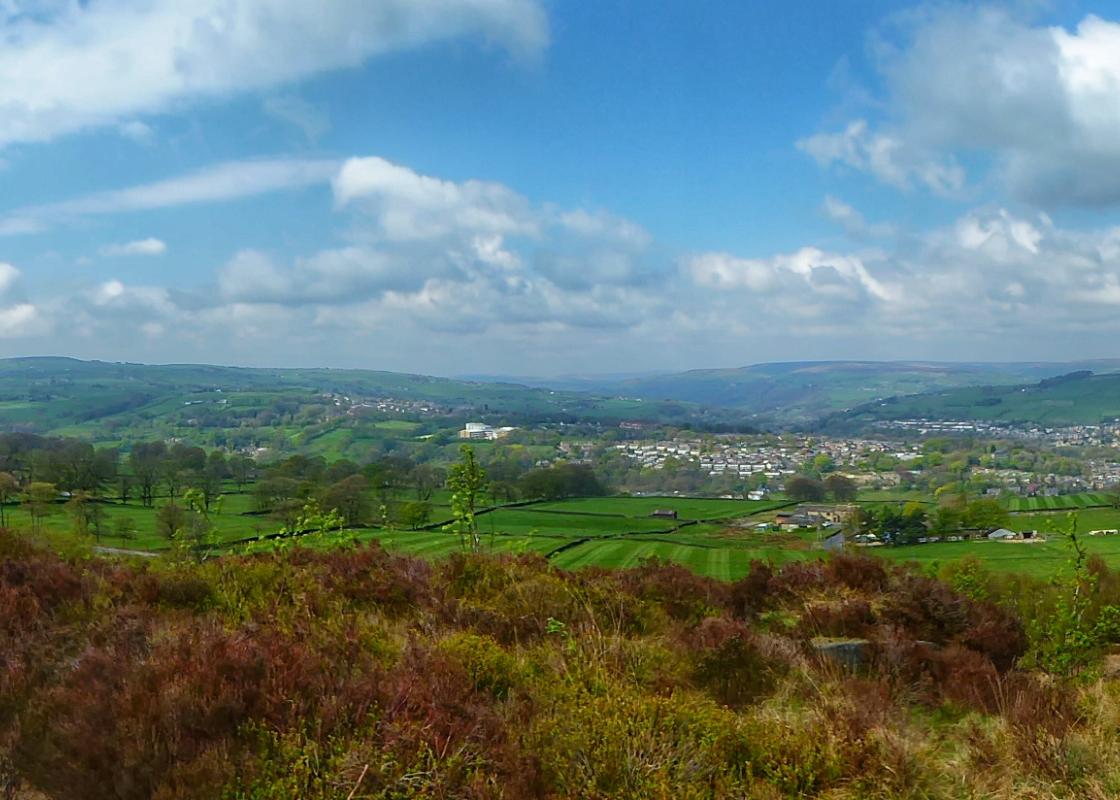
"Awash with colour in late summer, Norland Moor is an island of heather moorland in the midst of busy mill towns."
Walk directions
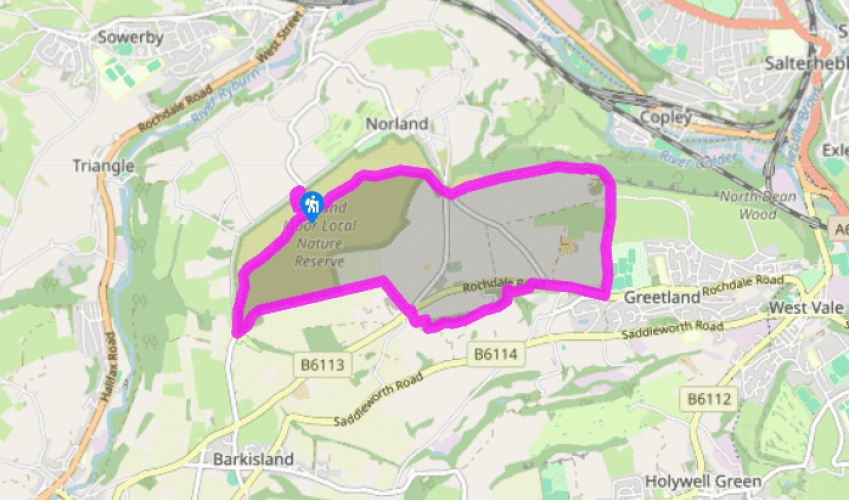
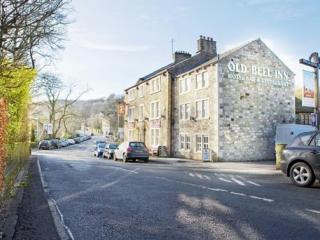
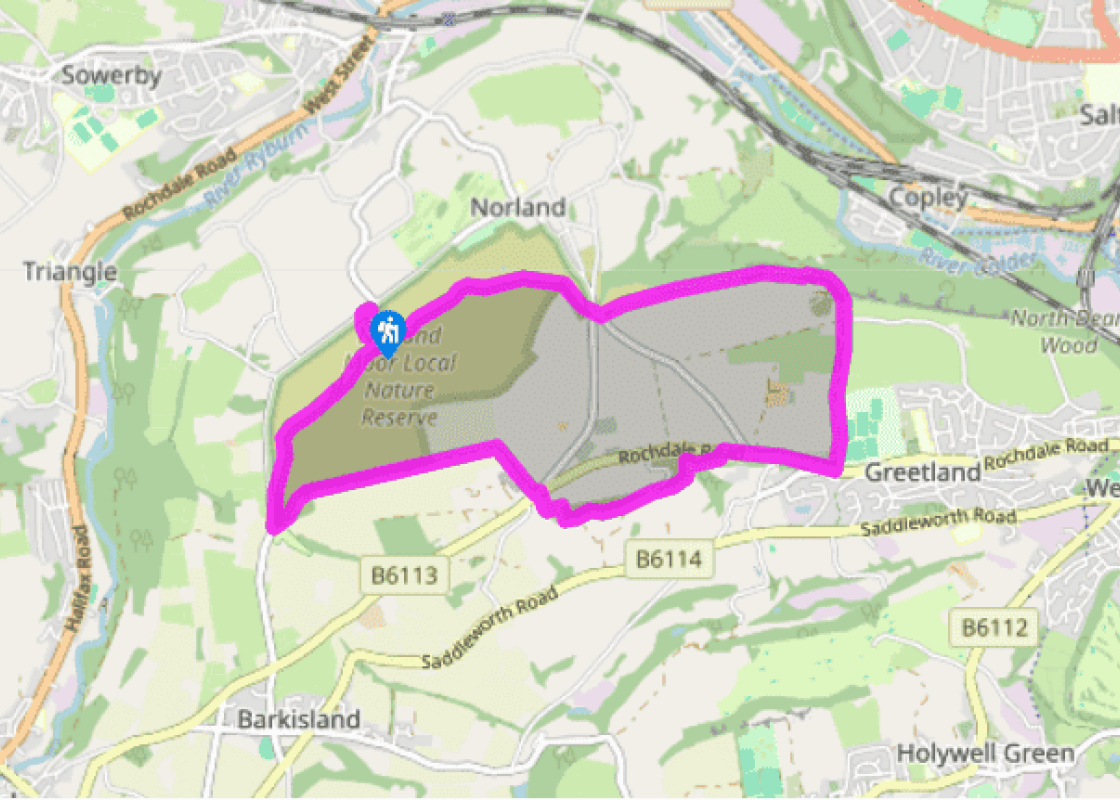
Walk uphill from the car park, bearing successively right near the top to follow a clear path along the edge of Norland Moor. Enjoy expansive views across the Calder Valley as you pass the gritstone outcrop known as Ladstone Rock. Keep straight ahead, now on a more substantial track which descends to run beside the road. Reaching the corner of a residential park, turn left beside the wall. Ignore a waymarked gate and bear left with the path, climbing across the slope of the heath to meet another wall corner higher up. Continue by the wall for 0.5 miles (800m), ignoring a junction and ultimately meeting a farm track. Follow it right to emerge beside the Spring Rock Inn.
Cross the road and continue on the narrowest of walled paths opposite. Extensive views open up as the path later goes right, down stone steps. Where the walled path ends, go left on a track. Keep ahead past cottages and again further on, as a lane joins from the right. After 200yds (183m), bear right at a fork, branching off left just before the gates of a house along a waymarked path into a small wood. The path soon descends to cross a stream on a stone-slab bridge, then bears right uphill to meet a walled track. Cross to the ongoing path, which follows a wall behind houses before turning out between them to meet the B6113.
Walk right, along the road to the outskirts of Greetland and turn left into Moor Bottom Lane. Continue ahead along this straight track for 0.5 miles (800m). Entering North Dean Wood, the track curves left to a fork. Take a marked path between the two branches and follow a wall along the upper edge of the woodland. Over a stile, keep right at the edge of a large field above the wood. Eventually, a developing track leads out through a gate onto a lane. Go right, past its junction with Norland Road to a sharp right-hand bend.
Turn left on a stony track across Norland Moor. At a junction beside a pylon, bear left on a path following the line of overhead cables. Ignoring side paths, keep ahead, eventually joining a prominent path from the right along the edge. Shortly after passing a railed enclosure, bear off right by a marker post, to drop to the path by which you first ascended from the car park.
Norland Moor and North Dean Woods are close to the start of the Calderdale Way, a 50-mile (80km) circuit of the borough of Calderdale. There are panoramic views straight away, as the waymarked walk accompanies the edge of Norland Moor. The route was inaugurated during the 1970s to link some of the... best Pennine landscapes and historical sites – moors, mills, gritstone outcrops, wooded cloughs, hand weaving hamlets and industrial towns – into an invigorating walk. Norland Moor is a 253-acre (102ha) tract of heather moorland overlooking Sowerby Bridge and both the Calder and Ryburn valleys. Criss-crossed by paths, it is popular with local walkers; driven by old quarry workings, it is a reminder that here in West Yorkshire you are seldom far from a site of industry. Originally a part of the Savile estates, the moor was bought for £250 after a public appeal in 1932. It still has the status of a common. Part of its attraction is to find such splendid walking country so close to the busy towns in the valley. Ladstone Rock is a gritstone outcrop with a distinctive profile that stares out over the Ryburn Valley from the edge of Norland Moor. If you believe the stories, human sacrifices were carried out on Ladstone Rock by blood-thirsty druids, and convicted witches were thrown off it. The name may derive from Celtic roots, meaning to cut or to kill. There is a tradition in the South Pennines of carving inspirational quotations into such rocks. And here on Ladstone Rock, amongst the names, dates and expressions of undying love, is a small metal plaque inscribed with a short psalm from the Bible. As you leave the nature reserve of North Dean Woods behind, you get good views across the valley to Sowerby Bridge and the outskirts of Halifax. Dominating the view is a curious edifice known as Wainhouse Tower (and also tellingly, as Wainhouse Folly). It was built by John Wainhouse, who had inherited his uncle’s dyeworks. His first plan was to build a tall chimney that would help to disperse the noxious fumes from the dyeworks. But then he decided to add a spiral staircase, inside the chimney, leading up to an ornate viewing platform at the top. By the time the tower was actually built, in the 1870s, the original purpose seems to have been forgotten. To climb to the full height of the tower, 253ft (77m), you need to tackle more than 400 steps. The tower is opened up to the public, but on just a few occasions each year – generally on bank holidays. If Wainhouse failed to make a chimney, then he succeeded in creating a distinctive landmark.
Everybody knows that Yorkshire has some special landscapes. The Dales and the Moors first spring to mind, but what about West Yorkshire? That’s Leeds and Bradford isn’t it? Back-to-back houses and blackened mills… Certainly if you had stood on any of the hills surrounding Hebden Bridge a hundred years ago, and gazed down into the valley, all you would have seen was the pall of smoke issuing from the chimneys of 33 textile mills.
"Awash with colour in late summer, Norland Moor is an island of heather moorland in the midst of busy mill towns."
Walk details
2hrs
Difficulty:
Easy
Gradient:
Gentle
Distance:
5 miles (8kms)
Ascent:
722ft (220m)
Walk directions
Walk uphill from the car park, bearing successively right near the top to follow a clear path along the edge of Norland Moor. Enjoy expansive views across the Calder Valley as you pass the gritstone outcrop known as Ladstone Rock. Keep straight ahead, now on a more substantial track which descends to run beside the road. Reaching the corner of a residential park, turn left beside the wall. Ignore a waymarked gate and bear left with the path, climbing across the slope of the heath to meet another wall corner higher up. Continue by the wall for 0.5 miles (800m), ignoring a junction and ultimately meeting a farm track. Follow it right to emerge beside the Spring Rock Inn.
1 of 4
Cross the road and continue on the narrowest of walled paths opposite. Extensive views open up as the path later goes right, down stone steps. Where the walled path ends, go left on a track. Keep ahead past cottages and again further on, as a lane joins from the right. After 200yds (183m), bear right at a fork, branching off left just before the gates of a house along a waymarked path into a small wood. The path soon descends to cross a stream on a stone-slab bridge, then bears right uphill to meet a walled track. Cross to the ongoing path, which follows a wall behind houses before turning out between them to meet the B6113.
2 of 4
Walk right, along the road to the outskirts of Greetland and turn left into Moor Bottom Lane. Continue ahead along this straight track for 0.5 miles (800m). Entering North Dean Wood, the track curves left to a fork. Take a marked path between the two branches and follow a wall along the upper edge of the woodland. Over a stile, keep right at the edge of a large field above the wood. Eventually, a developing track leads out through a gate onto a lane. Go right, past its junction with Norland Road to a sharp right-hand bend.
3 of 4
Turn left on a stony track across Norland Moor. At a junction beside a pylon, bear left on a path following the line of overhead cables. Ignoring side paths, keep ahead, eventually joining a prominent path from the right along the edge. Shortly after passing a railed enclosure, bear off right by a marker post, to drop to the path by which you first ascended from the car park.
Norland Moor and North Dean Woods are close to the start of the Calderdale Way, a 50-mile (80km) circuit of the borough of Calderdale. There are panoramic views straight away, as the waymarked walk accompanies the edge of Norland Moor. The route was inaugurated during the 1970s to link some of the... best Pennine landscapes and historical sites – moors, mills, gritstone outcrops, wooded cloughs, hand weaving hamlets and industrial towns – into an invigorating walk. Norland Moor is a 253-acre (102ha) tract of heather moorland overlooking Sowerby Bridge and both the Calder and Ryburn valleys. Criss-crossed by paths, it is popular with local walkers; driven by old quarry workings, it is a reminder that here in West Yorkshire you are seldom far from a site of industry. Originally a part of the Savile estates, the moor was bought for £250 after a public appeal in 1932. It still has the status of a common. Part of its attraction is to find such splendid walking country so close to the busy towns in the valley. Ladstone Rock is a gritstone outcrop with a distinctive profile that stares out over the Ryburn Valley from the edge of Norland Moor. If you believe the stories, human sacrifices were carried out on Ladstone Rock by blood-thirsty druids, and convicted witches were thrown off it. The name may derive from Celtic roots, meaning to cut or to kill. There is a tradition in the South Pennines of carving inspirational quotations into such rocks. And here on Ladstone Rock, amongst the names, dates and expressions of undying love, is a small metal plaque inscribed with a short psalm from the Bible. As you leave the nature reserve of North Dean Woods behind, you get good views across the valley to Sowerby Bridge and the outskirts of Halifax. Dominating the view is a curious edifice known as Wainhouse Tower (and also tellingly, as Wainhouse Folly). It was built by John Wainhouse, who had inherited his uncle’s dyeworks. His first plan was to build a tall chimney that would help to disperse the noxious fumes from the dyeworks. But then he decided to add a spiral staircase, inside the chimney, leading up to an ornate viewing platform at the top. By the time the tower was actually built, in the 1870s, the original purpose seems to have been forgotten. To climb to the full height of the tower, 253ft (77m), you need to tackle more than 400 steps. The tower is opened up to the public, but on just a few occasions each year – generally on bank holidays. If Wainhouse failed to make a chimney, then he succeeded in creating a distinctive landmark.
Everybody knows that Yorkshire has some special landscapes. The Dales and the Moors first spring to mind, but what about West Yorkshire? That’s Leeds and Bradford isn’t it? Back-to-back houses and blackened mills… Certainly if you had stood on any of the hills surrounding Hebden Bridge a hundred years ago, and gazed down into the valley, all you would have seen was the pall of smoke issuing from the chimneys of 33 textile mills.