Around Cutsdean and Ford
"The origins of the Cotswolds, once the focus of England's most valued export"
Walk directions
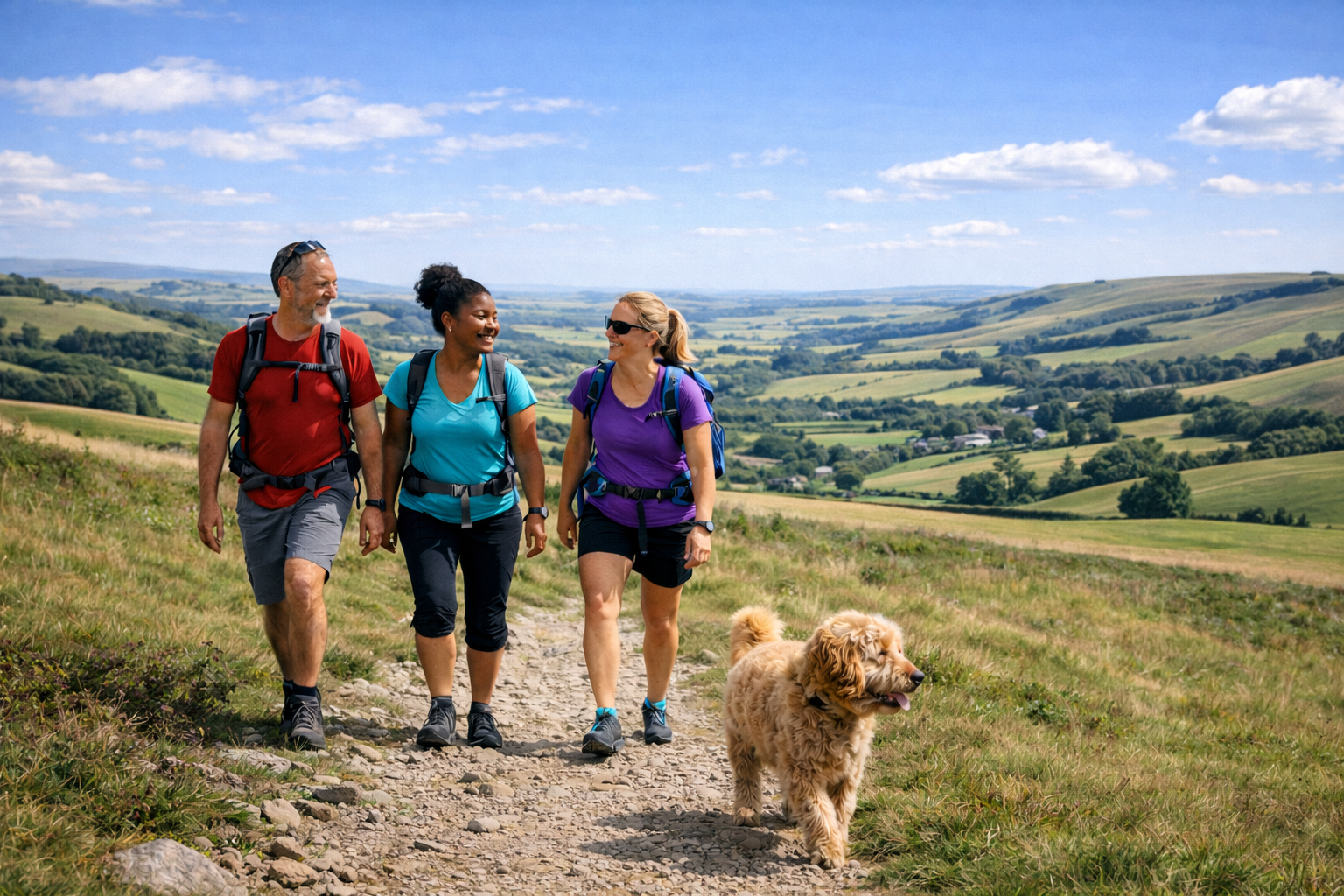
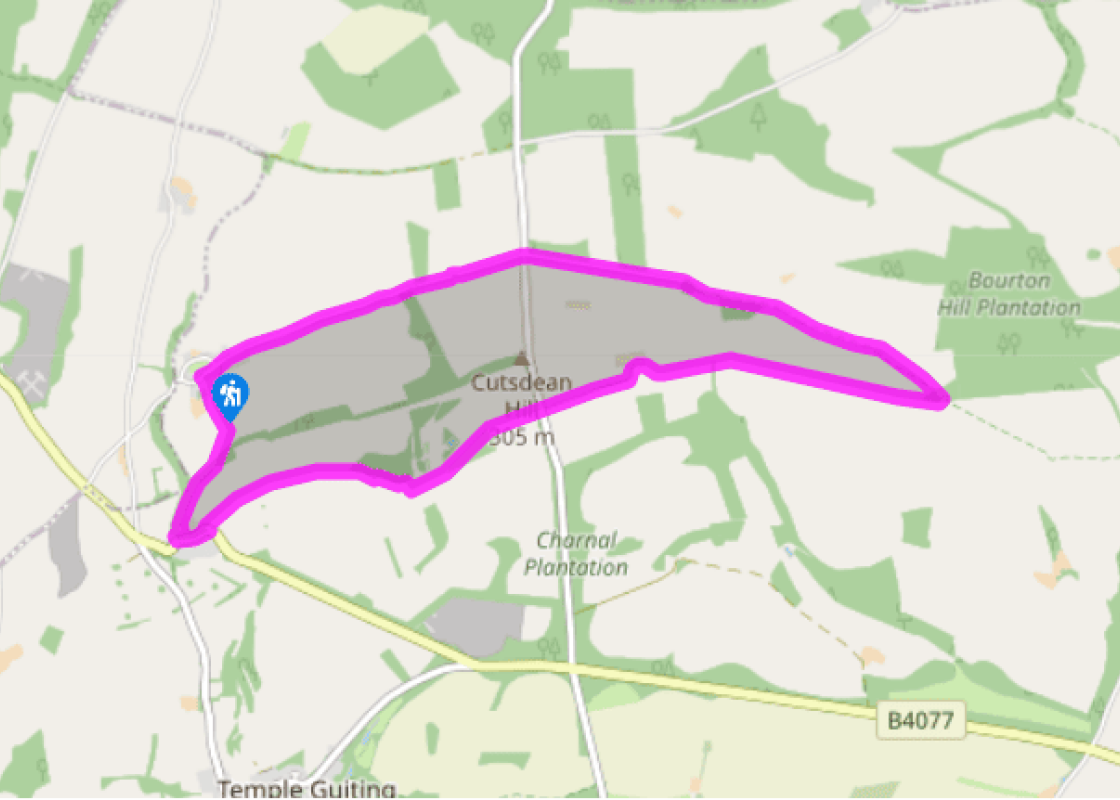
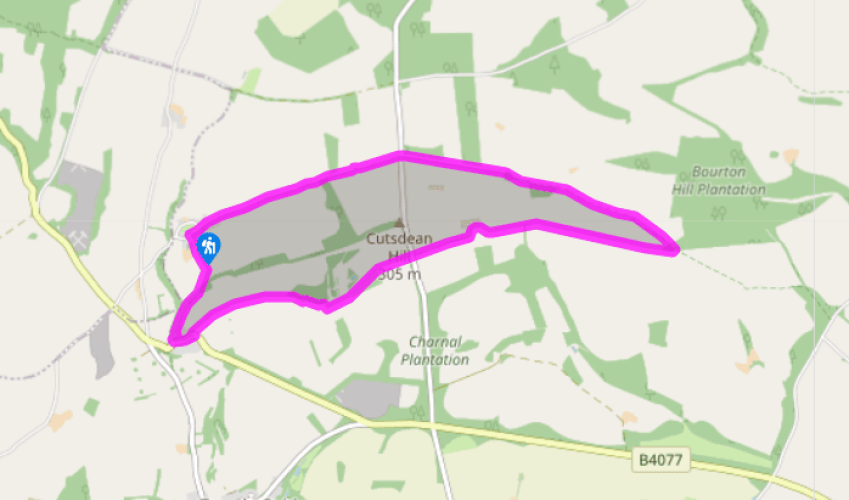
Walk up either of the two streets in the village centre. The church is partly hidden behind houses back to your right, and on the left is a telephone box. After the roads converge, go on past Stoneley. Continue uphill on this straight country road for just over a mile (1.6km), until you come to a T-junction with another road.
Cross this to enter another lane past a ‘No Through Road’ sign, at the margin of woodland. Beyond a second wood, where the track veers left towards a house, go straight on along a stony track.
Continue along the track, passing through a gate, until you reach woodland to the right. Shortly after the woods, go through a gate, ignoring a footpath to the left at the brow of the hill. Instead, follow the path along a stone wall to your left, and keep to the path. Then, halfway across a large field (look for the marker post on the left) the path goes diagonally right over the brow of a slope to head for a plantation.
Emerging beyond the plantation, turn immediately right at a track junction and right again, the plantation is now on your right. Follow this track for 1.5 miles (2.4km), passing through Fordhill Farm, all the way to a road.
Across the road, go through a gate signed ‘Jackdaws Castle’, and follow a tarmac lane that runs to the left of gallops used for training racehorses. Keep straight on where the track forks left into a neighbouring field.
Soon after passing the stables of Jackdaws Castle on your right, turn sharp right at a footpath sign across the gallops area (watch out for horses) to join a tarmac track, where you turn left. The track descends gently for 0.75 miles (1.2km), with the gallops and greensward to your left. Keep descending until you reach the bottom, via a stile, and arrive at the village of Ford. The welcoming Plough Inn is directly in front of you.
Turn right, along the road and at a bend in the road turn right again to cross a driveway, to a stile. Cross the stile and walk along a grassy path, with a post and rail fence to your right, and a stream in a valley to your left. Pass through a gate and follow the path ahead as it leaves the fence and then descends through the copse to a kissing gate.
Go through the gate into a field, and then go slightly right across it. Go down a bank, across a boggy area via a raised boardwalk, and up the bank on the other side to a kissing gate. Cross into a field and turn left along the side of the field towards Cutsdean. Pass to the right of the church, which sits back across a wall to your left. At the edge of the village come to a kissing gate. Go through this to join a path. This emerges onto the main street through the village, and your starting point.
Additional information
Terrain
- Tracks, fields and lane, several stiles
Landscape
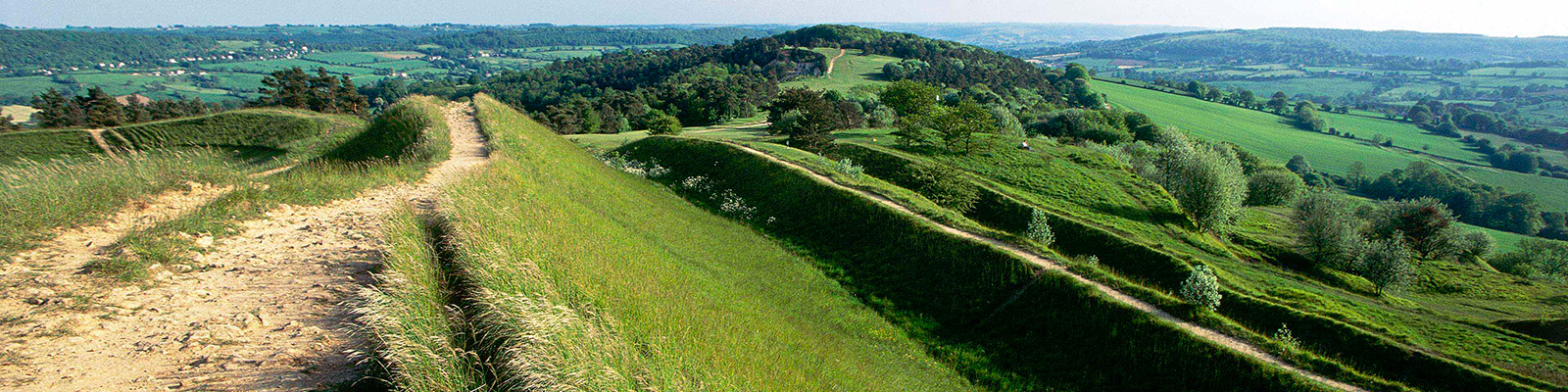
- Open wold, farmland, village
Dog friendliness
- Best on leads – lots of livestock, as well as horses
Parking
- On street in Cutsdean village centre
Toilets en route
- None on route
About the walk
One theory about the origin of the name ‘cotswold’ names Cutsdean as the source. Today, it is a small and pretty village on the high wolds above the beginnings of the River Windrush. However, it may once have been the seat of an Anglo-Saxon chief by the name of ‘Cod’. His domain would have been his... ‘dene’, and the hilly region in which his domain lay, his ‘wolds’. This is plausible, even if there is no verifiable record of a King Cod. Another explanation concerns the sheep that still graze many hillsides in the Cotswolds, a ‘cot’ referring to a sheep pen and ‘wolds’ being the hills that support them. (In Old English a ‘cot’ is also a small dwelling or cottage.) Whatever the truth of the matter, the sheep remain, even if the species that in the Middle Ages produced the finest wool in Europe dwindled to the point of extinction. The ancestors of the so-called Cotswold Lion probably arrived with the Romans, who valued the sheep for their milk and their long, dense wool. The nature of the Cotswolds was perfect for these sheep – the limestone soil produces a calcium-rich diet, good for strong bone growth, and the open, wind-blasted wolds suited this heavy-fleeced breed, able to graze all year long on herbs and grasses. The hills teemed with Cotswold sheep; at one point the Cotswold wool trade accounted for half of England’s income. It is believed that the medieval Cotswold sheep differed a little from its modern counterpart. Its coat was undoubtedly long and lustrous, but it may have been slightly shorter than that of its descendants. Why, then, did the fortunes of this miraculous animal plummet? To some extent this is a misconception, since serious decline occurred only with the move to arable farming in the Cotswolds in the mid-20th century. Demand for the wool was still strong in the 18th and 19th centuries and the Cotswold was also prized for its meat and its cross-breeding potential. However, the market for long-stapled wool began to decline in favour of finer wool, and crop growing became more attractive to local farmers. Incredibly, by the 1960s, there remained only some 200 animals. It was suddenly clear that a living piece of English history was on the verge of extinction. The Cotswold Breed Society was reconvened and steps taken to ensure the sheep’s survival.
Read more
Been on this walk?
Send us photos or a comment about this route. Or recommend a route of your own.
Walking in Safety
Read our tips to look after yourself and the environment when following this walk.
Get an AA guide
Explore our range of ‘50 Walks in’ guides - they’re the ideal companion for a ramble.
Been on this walk?
Send us photos or a comment about this route. Or recommend a route of your own.
Walking in Safety
Read our tips to look after yourself and the environment when following this walk.
Get an AA guide
Explore our range of ‘50 Walks in’ guides - they’re the ideal companion for a ramble.
About the area
Gloucestershire is home to a variety of landscapes, including the Cotswolds, a region of gentle hills, valleys and gem-like villages that roll through the county. To their west is the Severn Plain, watered by Britain’s longest river and characterised by orchards and farms marked out by hedgerows that blaze with mayflower in the spring; beyond the Severn are the Forest of Dean and the Wye Valley.
Nearby places to stay
View all (8)
Hotel
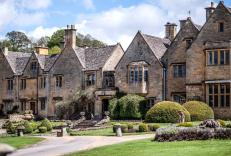
Buckland Manor
★★★★
"Strikes all the right notes for a relaxing getaway...."
- Family rooms: 1
- Free TV
- WiFi available
Inn
The Lion Inn
★★★★
"Beautifully laid out rooms with lots of interesting design details...."
- Rooms 9
Guest Accommodation
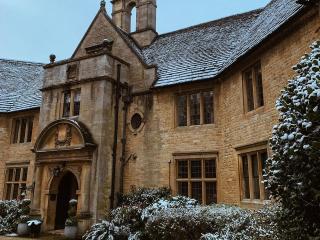
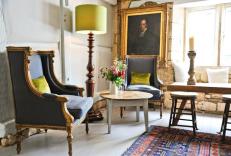
Abbots Grange Manor House Hotel
★★★★★
"Sumptuous lounges with original wood panelled walls create a relaxing ambience...."
- Rooms 9
- Satellite TV
- Free TV
- Wifi
Nearby places to stay
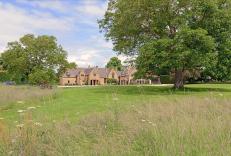
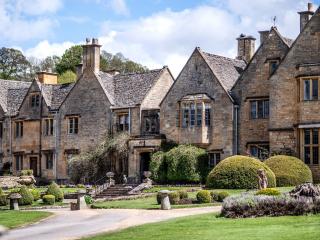
Buckland Manor
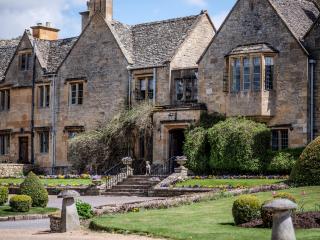
Buckland Manor is a grand 13th-century manor house, surrounded by well-kept and beautiful gardens that feature a stream and waterfall. Everything at this hotel is geared to encourage re...
★★★★ Rating
The Lion Inn
The Lion Inn, a 15th-century coaching inn situated in the picturesque town of Winchcombe is perfectly positioned for walkers on the 'Cotswold Way' or for simply exploring the local area...
★★★★ Rating
Abbots Grange Manor House Hotel
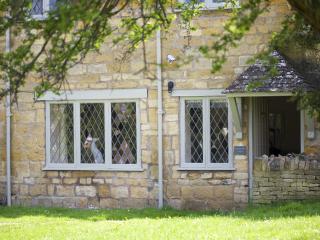
A warm welcome awaits at Abbots Grange, a 14th-century monastic manor house believed to be the oldest dwelling in Broadway. A Grade II listed building, it stands in eight acres of groun...
★★★★★ Rating
Broadway Cottages
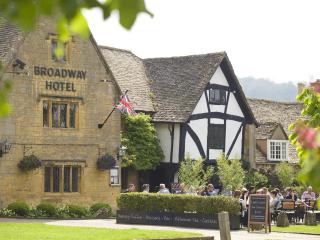
Bumble Bee Cottage is a one-bedroom Cotswold cottage centrally located in the village, with a cosy, contemporary feel and private garden. On the first floor, there's a super-king-size b...
★★★★★ Rating
The Broadway Hotel
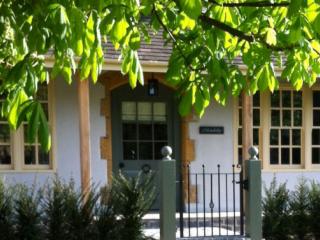
The Broadway Hotel is a half-timbered Cotswold-stone property, built in the 15th century as a retreat for the Abbots of Pershore. It combines modern, attractive decor with original char...
★★★ Rating
Manderley House
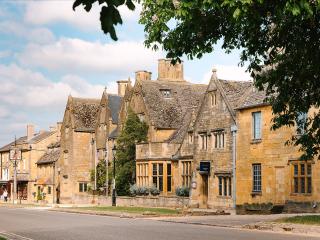
Manderley is a Cotswold cottage, in a prime location on Broadway’s village green. Bedroom 1 has a king-sized bed with a luxurious shower room, while bedroom 2, with king-size or twin be...
★★★★★ Rating
Broadway Cottages- Manderley
Manderley is a Cotswold cottage, in a prime location on Broadway’s village green. Bedroom 1 has a king-sized bed with a luxurious shower room, while bedroom 2, with king-size or twin be...
★★★★★ Rating
The Lygon Arms Hotel
Located in the heart of Broadway, this historic property has been welcoming guests for over 600 years. The Lygon Arms now offers an array of deeply comfortable lounges and small intimat...
★★★★ Rating
Places to eat nearby View all