Riverside in the Eastleaches
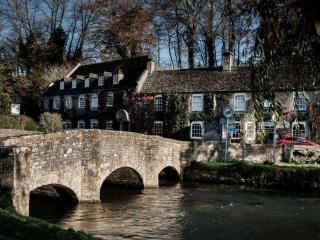
"Two churches, just a stone's throw apart across a narrow stream."
Walk directions
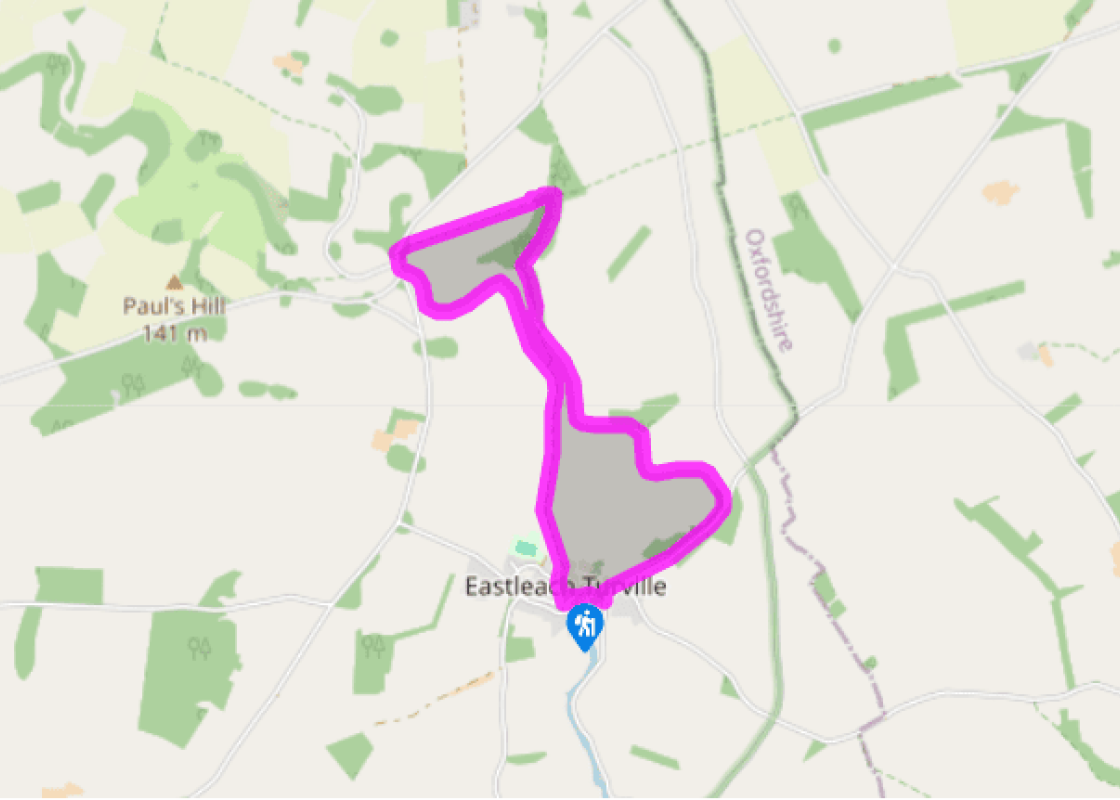
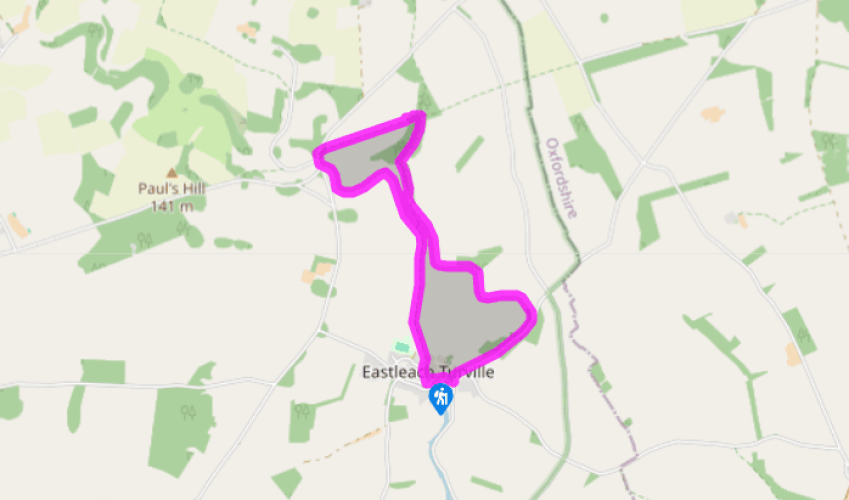
From the memorial cross in Eastleach Turville, walk along the road with the river on your right. After a few paces, locate a path on your right to cross the clapper bridge and follow the path into the churchyard of Eastleach Martin. Pass to the right of the church and emerge at a road.
Turn left and then turn right at a junction, finally taking the lower road in the direction of Holwell. Walk on for perhaps 600yds (549m) to where the road begins to rise steeply. Turn left here, pass through a gate into a field, and follow an obvious grassy track at the base of a slope for 0.5 miles (800m).
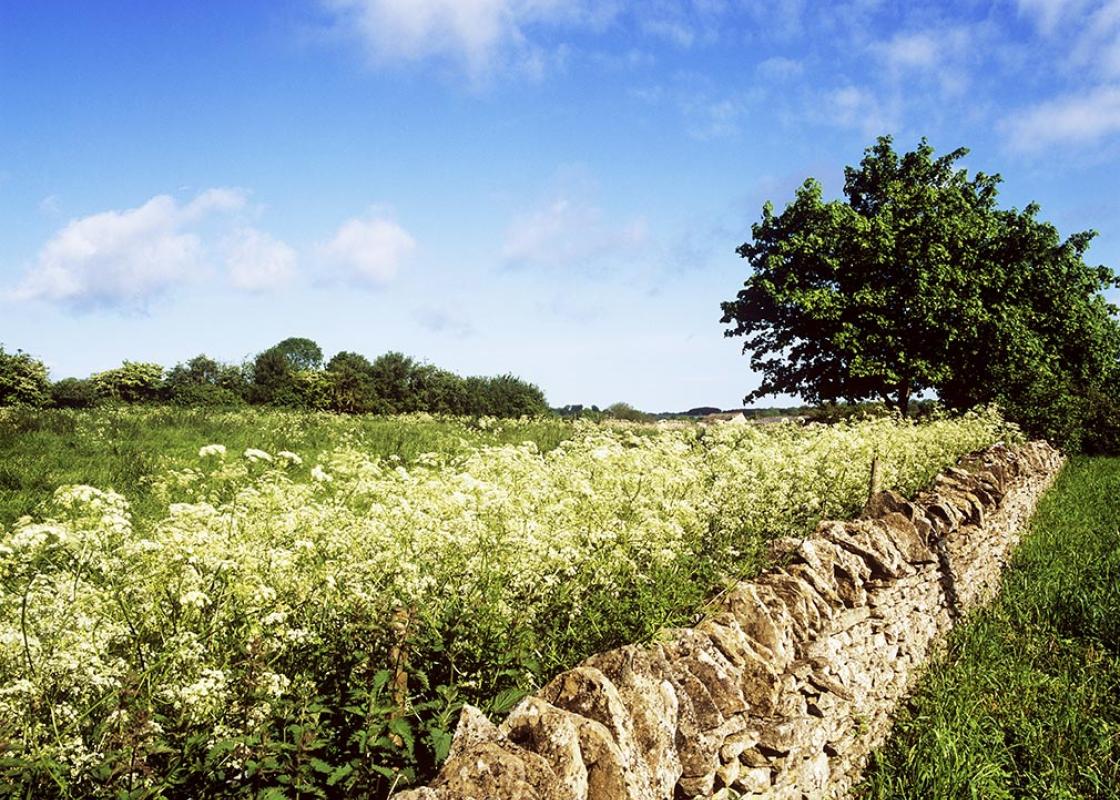
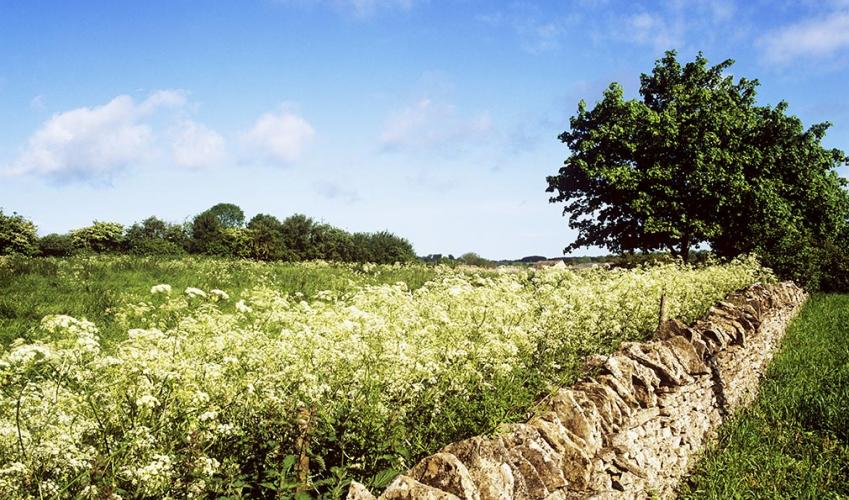
This will bring you to a gate at the corner of Sheephouse Plantation. Go through the gate and continue ahead, with the woods to your right. Continue to a gate at a field – do not go through this, but veer left with the field and a dry-stone wall to your right. Soon you will reach a small area of scrubby trees; turn right here over a stile into a field and turn left.
Continue, passing through gates, until you come to a gated bridge on your left. Do not cross this, but continue forward towards a small gate at the edge of woodland. Go through and follow a woodland path until you reach a crossroads of tracks.
Turn left and follow the track up out of the woods and across a field until you come to a road at the bottom of the slope. Turn left here, cross Sheep Bridge opposite the cattle grid on your right and, just before a turning to the right, go left into a field.
Bear right along the valley bottom, then left and right again. This will bring you to a gate. Go through it onto a track, and soon pass the gated bridge again. Go through a gate and follow the wall on your right as it curves up to another gate, then stay on the same line through gates until you reach the gate into the last field bordering Eastleach Turville.
Walk diagonally across this field, heading for a gate just to the right of a prominent horse chestnut tree. Join the lane here, and keep left at the fork to return to the starting point at the memorial cross.
Additional information
Terrain
- Tracks and lanes, valley paths and woodland
Landscape
- Villages, open wold, narrow valley and streams
Dog friendliness
- Sheep country – dogs on lead at all times
Parking
- On-street parking in Eastleach Turville
Toilets en route
- None on route
About the walk
Eastleach Turville and Eastleach Martin, sitting cheek by jowl in a secluded valley, carry an air of quiet perfection. And yet these two Cotswold villages are quite distinctive, and each has a parish church (though one is now redundant). St Andrews in Eastleach Turville faces St Michael and St... Martin’s across the narrow River Leach. Their origins lie in the development of the parish system from the earliest days of the Anglo-Saxon Church. The English parish has its origins in the shifting rivalries of Saxon England, for the one thing that united the various Saxon kingdoms was the Church. The first ‘parishes’ were really the Anglo-Saxon kingdoms. Christianity, the new power in the land, not only saved souls but also secured alliances. The Pope’s aim was to invest more bishops to act as pastors who would try to convert people, but at the same time their appointments were useful politically, helping to smooth the way as larger kingdoms absorbed their smaller neighbours. The number of appointments would also depend on local factors. Wessex, for example, was divided into shires and so a bishop was appointed for each one. Later the Normans appointed archdeacons, whose job was to ensure that church buildings were maintained for worship. Over the centuries the assorted conventions and appointments that had accumulated through usage coalesced into a hierarchical English Church. For a long time, however, control was not tight. Missionaries, for example, would occasionally land from Ireland and found their own churches, quite independently of anyone else. Rulers and local landholders were certainly influential in the development of the parish system, but many parishes also derived from the gradual disintegration of the local ‘minster’, a central church on consecrated ground that controlled a group of client chapels. As population and congregations grew, the chapels themselves became new parish churches, with rights equal to those of the minster. This included the right to bury the dead in their own graveyard, and the administration of births and marriages. With the passage of time and the establishment of a single English kingdom, the parish diminished to something akin to its modern size. By the 10th century, the parish had become the accepted framework for enforcing the payment of tithes, the medieval equivalent of an income tax. By the 12th century, much of the modern diocesan map of England was established. So, in the Eastleaches all these developments mean you find two parish churches virtually side by side. With politics, power and bureaucracy all playing a part, it’s likely that the pastoral needs of the community were quite low on the list.
Read more
Been on this walk?
Send us photos or a comment about this route. Or recommend a route of your own.

Walking in Safety
Read our tips to look after yourself and the environment when following this walk.
Get an AA guide
Explore our range of ‘50 Walks in’ guides - they’re the ideal companion for a ramble.
Been on this walk?
Send us photos or a comment about this route. Or recommend a route of your own.
Walking in Safety
Read our tips to look after yourself and the environment when following this walk.
Get an AA guide
Explore our range of ‘50 Walks in’ guides - they’re the ideal companion for a ramble.
About the area
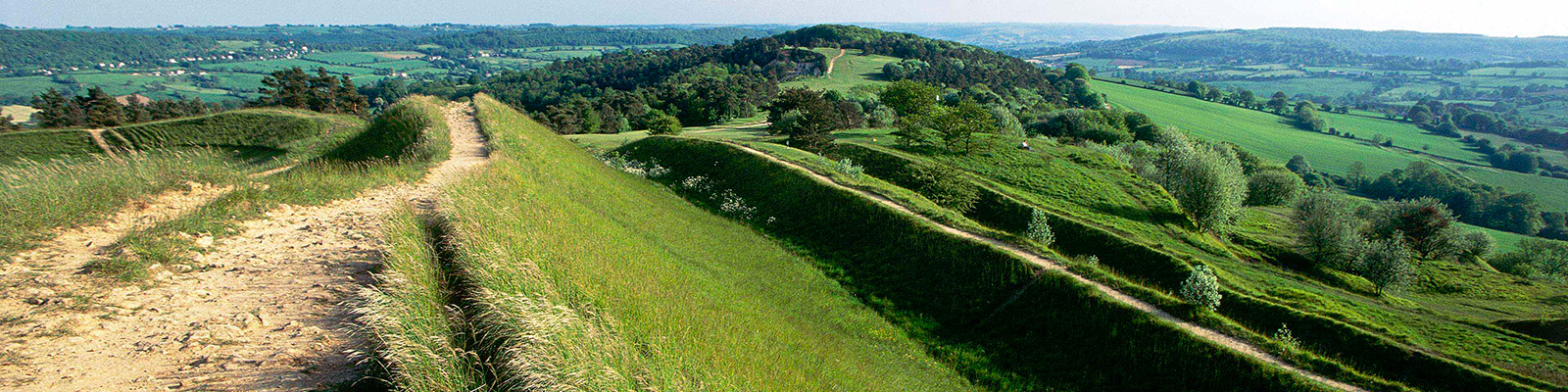
Gloucestershire is home to a variety of landscapes, including the Cotswolds, a region of gentle hills, valleys and gem-like villages that roll through the county. To their west is the Severn Plain, watered by Britain’s longest river and characterised by orchards and farms marked out by hedgerows that blaze with mayflower in the spring; beyond the Severn are the Forest of Dean and the Wye Valley.
Nearby places to stay
View all (8)
Self-Catering
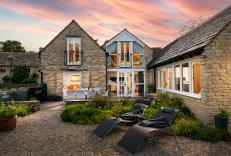
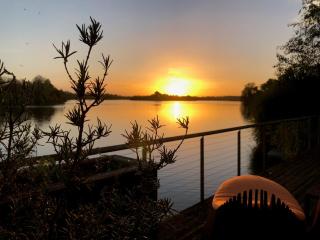
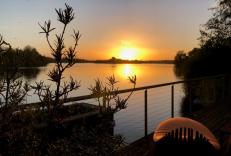
Lake House at Lakes by Yoo
★★★★★
"Guests able to sit out and enjoy the sunset over the lake from the decking...."
- Total units: 1
- Private garden
- Lawn area
- Garden furniture
Self-Catering
Lake House at Lakes by Yoo
★★★★★
"Guests able to sit out and enjoy the sunset over the lake from the decking...."
- Private garden
- Lawn area
- Garden furniture
- BBQ on site
Self-Catering
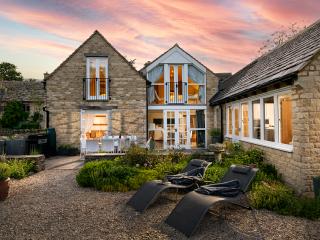
The Chestnuts - Eco Chic Cottages
★★★★★
"Ideal base for exploring the highlights of the Cotswolds complete with inglenook log burner...."
- Total units: 1
- Private garden
- Garden furniture
- BBQ on site
Nearby places to stay
Lake House at Lakes by Yoo
A perfect retreat overlooking the finest British countryside, this is a haven for anybody that is looking to really detach themselves from the hustle and bustle of their busy lives whil...
★★★★★ Rating
Lake House at Lakes by Yoo
A perfect retreat overlooking the finest British countryside, this is a haven for anybody that is looking to really detach themselves from the hustle and bustle of their busy lives whil...
★★★★★ Rating
The Chestnuts - Eco Chic Cottages

The Chestnuts sits in the Cotswold village of Shilton, close to historic Burford and Lechlade-on-Thames; an ideal base for exploring all the highlights of the Cotswolds, Oxford, Stratfo...
★★★★★ Rating
The Chestnuts
The Chestnuts sits in the Cotswold village of Shilton, close to historic Burford and Lechlade-on-Thames; an ideal base for exploring all the highlights of the Cotswolds, Oxford, Stratfo...
★★★★★ Rating
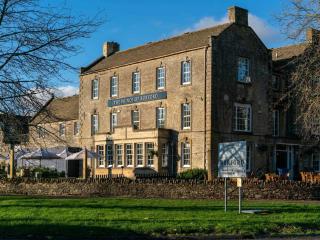
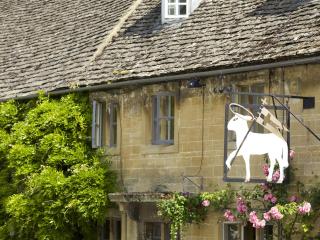
Prince of Burford
Prince of Burford is a refurbished former 18th-century coaching inn, located in Burford; the "Gateway to the Cotswolds", making this an ideal base for exploring one of the UK's most pop...
★★★★ Rating
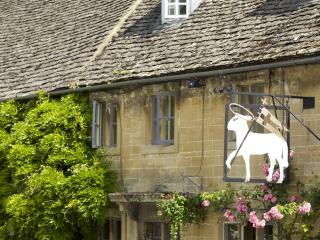
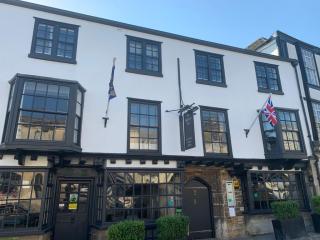
The Lamb Inn
The Lamb is an enchanting old inn just a short walk from the centre of this delightful Cotswold village. You'll find an abundance of character and charm in the cosy lounge with log fire...
★★★ Rating
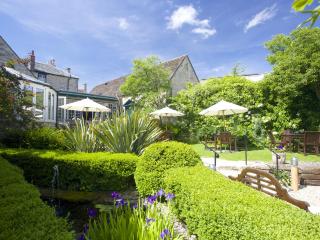
The Highway Inn
Built in 1480, The Highway Inn has had many guises over the years and first welcomed overnight travellers in the early 1920s. Following a refurbishment, it now provides guests with mode...
★★★★ Rating
The Bay Tree Hotel
The Bay Tree Hotel's modern decorative style combines seamlessly with features from this delightful inn's long history. Bedrooms are tastefully furnished and some have four-poster or ha...
★★★★ Rating
Places to eat nearby View all