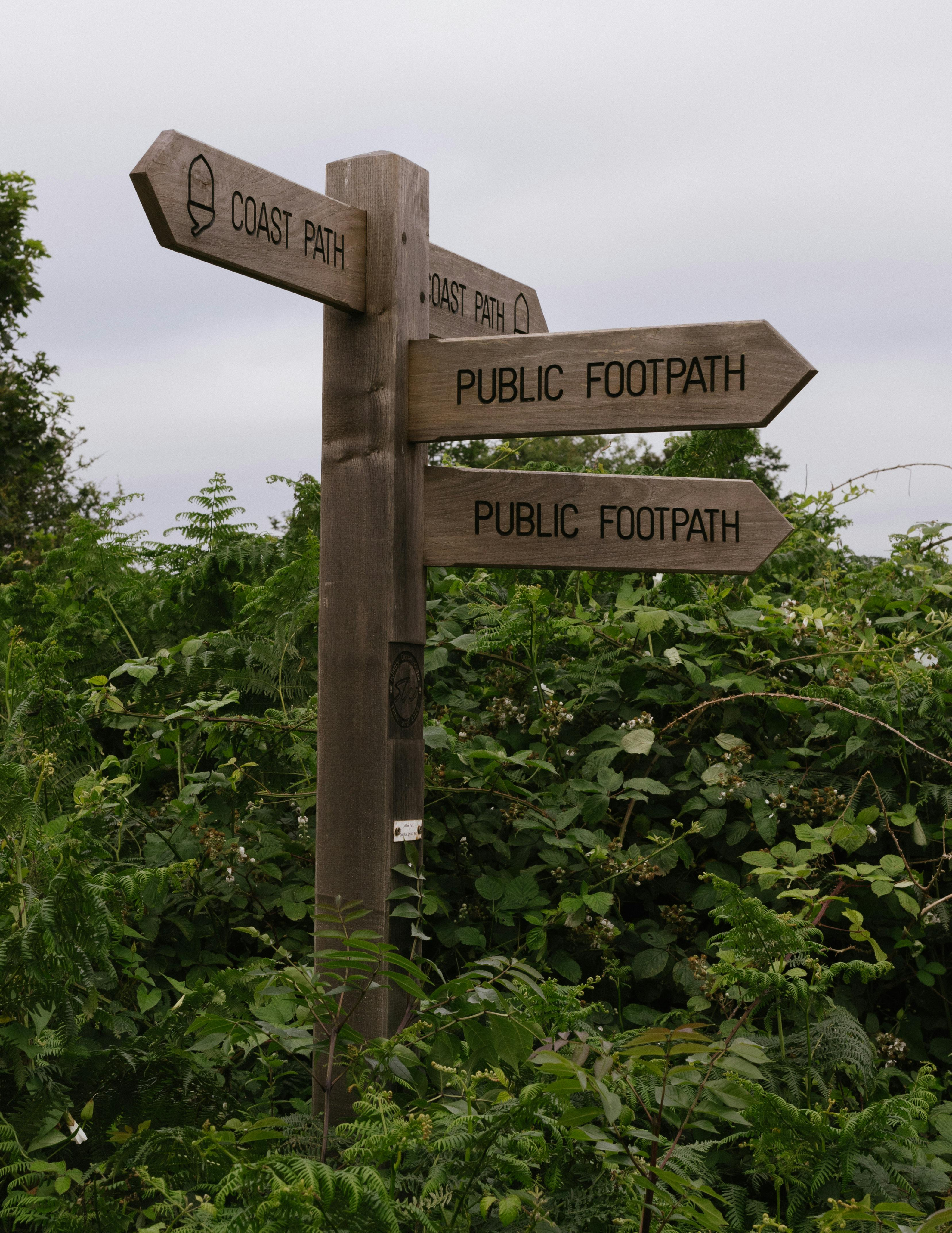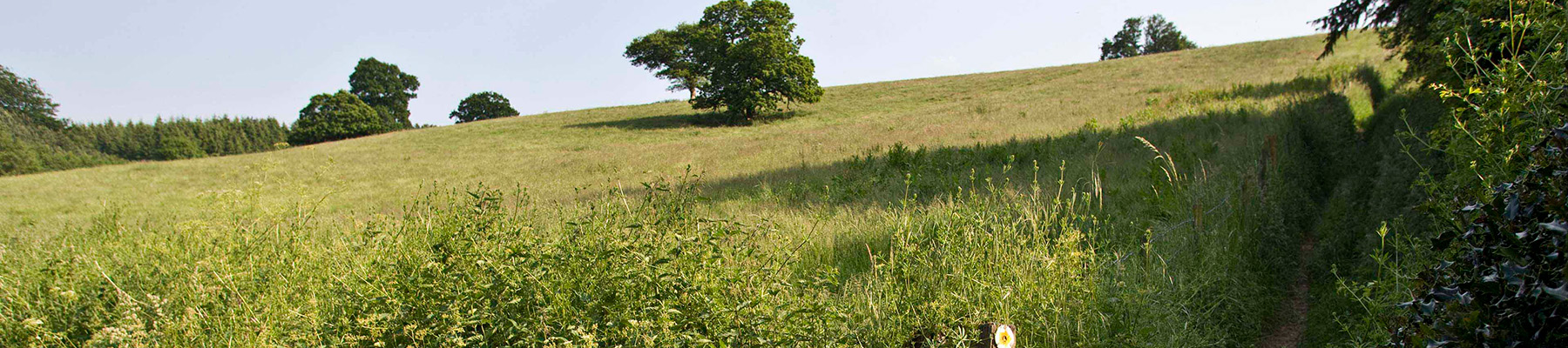
"A stroll to wharfs and wildlife along the Saxon Shore Way."
Walk directions
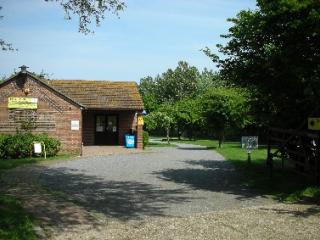
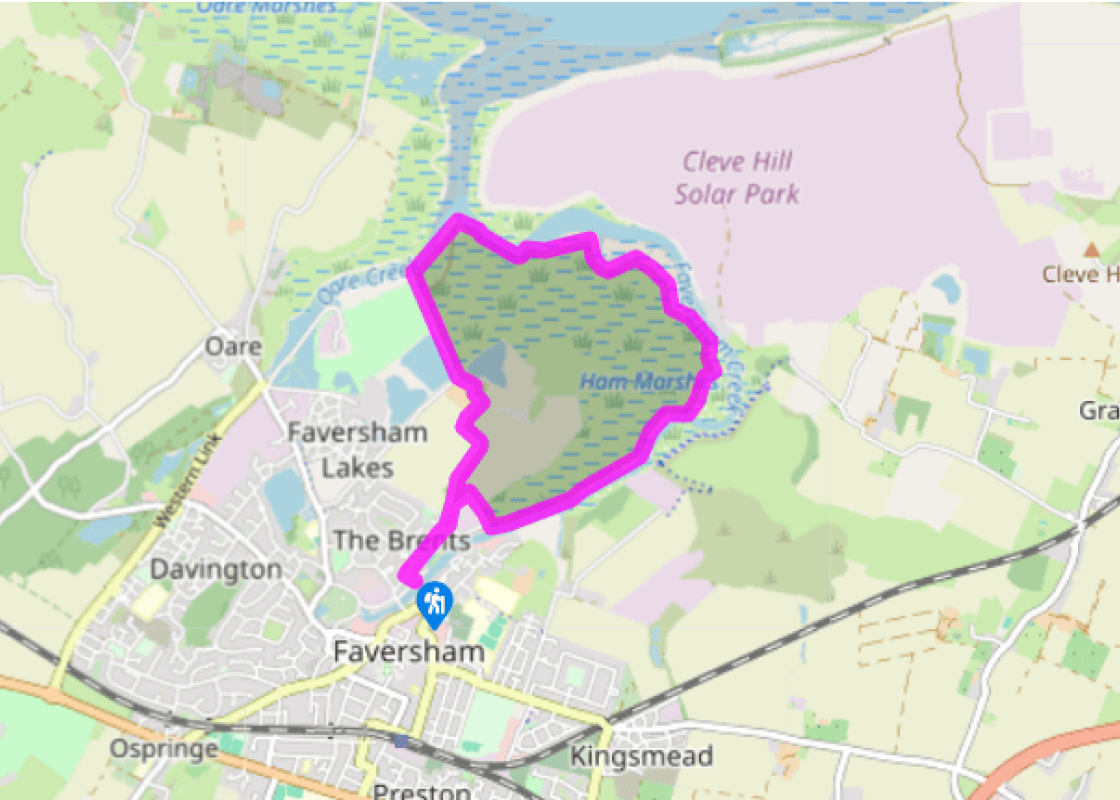
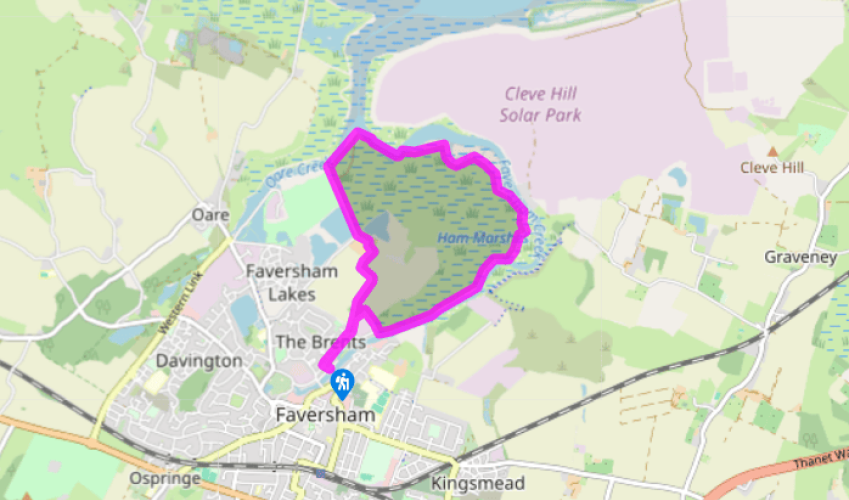
From Front Brents car park, walk past the Albion Taverna along Faversham Creek. On the opposite bank you’ll pass a scene of wharfs and warehouses and modern marina-style housing, with the flying spire of St Mary of Charity visible above the rooflines. Display boards announce you are now on the Two Creeks Circular Walk. Follow the well-made path as far as you can along the waterfront, then head briefly inland, detouring around new housing on your right. Follow the path along a concrete wall beside industrial buildings, ignoring any adjoining paths bearing off to your left. Turn right at the far end of the buildings and walk beside a couple of arable fields through a kissing gate back to the creek.
Climb onto the raised bank and turn left along the Saxon Shore Way, past moored boats and a handsome old warehouse (Oyster Bay House). The route is straightforward. Keeping the creek on your right, simply follow the embankment path over the marshes in a broad left-handed arc past drainage ditches, mudflats and inland lagoons. You will go through a couple of kissing gates and pass information boards with details on local wildlife. On the opposite bank you’ll notice the farm at Nagden, but otherwise there's nothing but wildlife and views towards the Swale Estuary beyond a line of pylons ahead of you.

As you swing round to the left, pass a couple of adjoining paths on your left. Keep on the main raised track, close to the creek. Eventually a scattering of buildings appears at Hollowshore ahead, where the Faversham and Oare creeks meet before running out to the Swale.
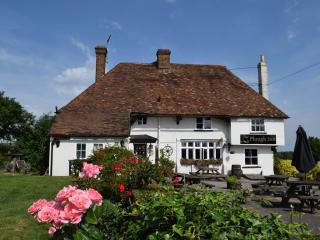
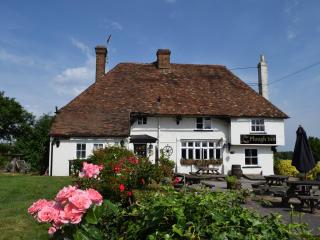
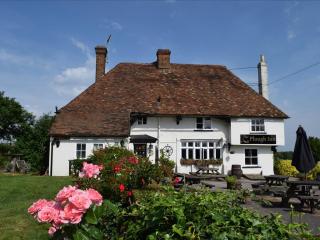
Follow the path to the Shipwright’s Arms (an atmospheric pit-stop for lunch, or at least a drink). Then take the surfaced access drive from the pub past the boatyard on your right. When you reach a T-junction, turn left and follow the lane past old gravel ponds.
As the road bends right, bear left up the surfaced track towards Ham Farm. Beyond the farm buildings you will pick up a footpath. Follow it as it zig-zags round field margins, first right, then left, then right again. Eventually you will find yourself back at the buildings of The Brents, where you can rejoin the Saxon Shore Way and return to the starting point.
If you enjoy moody marshes, a walk around Faversham Creek is definitely for you. It isn’t conventionally pretty, but somehow these mournful waterlands beneath great wide skies stay in the mind’s eye long after more conventional postcard scenery fades. A ten-minute stroll along the Saxon Shore Way... from the middle of one of Kent’s finest historic towns leads to a scene of total solitude. On the way you’ll see something of Faversham’s maritime history, passing restored sailing barges and yachts moored by old wharfs and warehouses. It’s a marvellous place for spotting wildlife – these marshes are alive with unusual plants and birds. ‘Bricks, beer, boots, boats and bombs,’ rattle off the staff at the Fleur-de-Lis Heritage Centre when you ask them what Faversham is all about. These are some of the town’s former industries (the bombs referring to the gunpowder works). Sadly, most of these economic lifelines are no more, though the famous Kentish Shepherd Neame brewery has been going strong in Faversham since 1698. You can take a tour of the works on Bridge Street, and sample some of its wares afterwards. The historic quarters of this enjoyable old town are crammed with Georgian and medieval buildings. The Heritage Centre, which shares premises with the tourist office in a 15th-century inn on Preston Street, is the best place to get an overview of the town’s history and the trades that made it prosper.
Kent is home to the White Cliffs of Dover, an English icon that marks the point where the Kent Downs AONB stretches from the Surrey Hills down to the sea. Visitors can explore historic parklands, including Knole Park and Sir Winston Churchill’s former home at Chartwell, or beautiful nature reserves, such as the coppiced woodlands of Denge Wood and Earley Wood and the ancient fine chalk woodland of Yockletts Bank.
"A stroll to wharfs and wildlife along the Saxon Shore Way."
Walk details
1hr 45min
Difficulty:
Easy
Gradient:
Flat
Distance:
4 miles (6.4kms)
Ascent:
79ft (24m)
Walk directions
From Front Brents car park, walk past the Albion Taverna along Faversham Creek. On the opposite bank you’ll pass a scene of wharfs and warehouses and modern marina-style housing, with the flying spire of St Mary of Charity visible above the rooflines. Display boards announce you are now on the Two Creeks Circular Walk. Follow the well-made path as far as you can along the waterfront, then head briefly inland, detouring around new housing on your right. Follow the path along a concrete wall beside industrial buildings, ignoring any adjoining paths bearing off to your left. Turn right at the far end of the buildings and walk beside a couple of arable fields through a kissing gate back to the creek.
1 of 5
Climb onto the raised bank and turn left along the Saxon Shore Way, past moored boats and a handsome old warehouse (Oyster Bay House). The route is straightforward. Keeping the creek on your right, simply follow the embankment path over the marshes in a broad left-handed arc past drainage ditches, mudflats and inland lagoons. You will go through a couple of kissing gates and pass information boards with details on local wildlife. On the opposite bank you’ll notice the farm at Nagden, but otherwise there's nothing but wildlife and views towards the Swale Estuary beyond a line of pylons ahead of you.
2 of 5
As you swing round to the left, pass a couple of adjoining paths on your left. Keep on the main raised track, close to the creek. Eventually a scattering of buildings appears at Hollowshore ahead, where the Faversham and Oare creeks meet before running out to the Swale.
3 of 5
Follow the path to the Shipwright’s Arms (an atmospheric pit-stop for lunch, or at least a drink). Then take the surfaced access drive from the pub past the boatyard on your right. When you reach a T-junction, turn left and follow the lane past old gravel ponds.
4 of 5
As the road bends right, bear left up the surfaced track towards Ham Farm. Beyond the farm buildings you will pick up a footpath. Follow it as it zig-zags round field margins, first right, then left, then right again. Eventually you will find yourself back at the buildings of The Brents, where you can rejoin the Saxon Shore Way and return to the starting point.
If you enjoy moody marshes, a walk around Faversham Creek is definitely for you. It isn’t conventionally pretty, but somehow these mournful waterlands beneath great wide skies stay in the mind’s eye long after more conventional postcard scenery fades. A ten-minute stroll along the Saxon Shore Way... from the middle of one of Kent’s finest historic towns leads to a scene of total solitude. On the way you’ll see something of Faversham’s maritime history, passing restored sailing barges and yachts moored by old wharfs and warehouses. It’s a marvellous place for spotting wildlife – these marshes are alive with unusual plants and birds. ‘Bricks, beer, boots, boats and bombs,’ rattle off the staff at the Fleur-de-Lis Heritage Centre when you ask them what Faversham is all about. These are some of the town’s former industries (the bombs referring to the gunpowder works). Sadly, most of these economic lifelines are no more, though the famous Kentish Shepherd Neame brewery has been going strong in Faversham since 1698. You can take a tour of the works on Bridge Street, and sample some of its wares afterwards. The historic quarters of this enjoyable old town are crammed with Georgian and medieval buildings. The Heritage Centre, which shares premises with the tourist office in a 15th-century inn on Preston Street, is the best place to get an overview of the town’s history and the trades that made it prosper.
Kent is home to the White Cliffs of Dover, an English icon that marks the point where the Kent Downs AONB stretches from the Surrey Hills down to the sea. Visitors can explore historic parklands, including Knole Park and Sir Winston Churchill’s former home at Chartwell, or beautiful nature reserves, such as the coppiced woodlands of Denge Wood and Earley Wood and the ancient fine chalk woodland of Yockletts Bank.