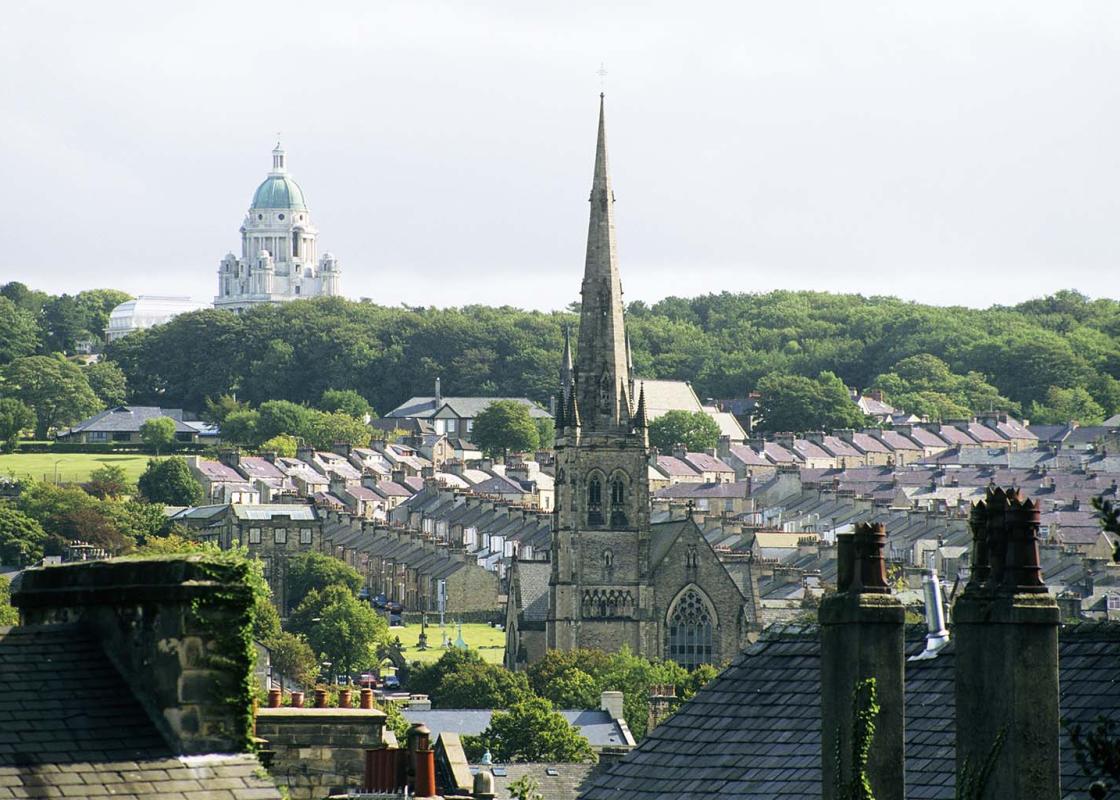
Time-honoured Lancaster

Recommended by
Our view
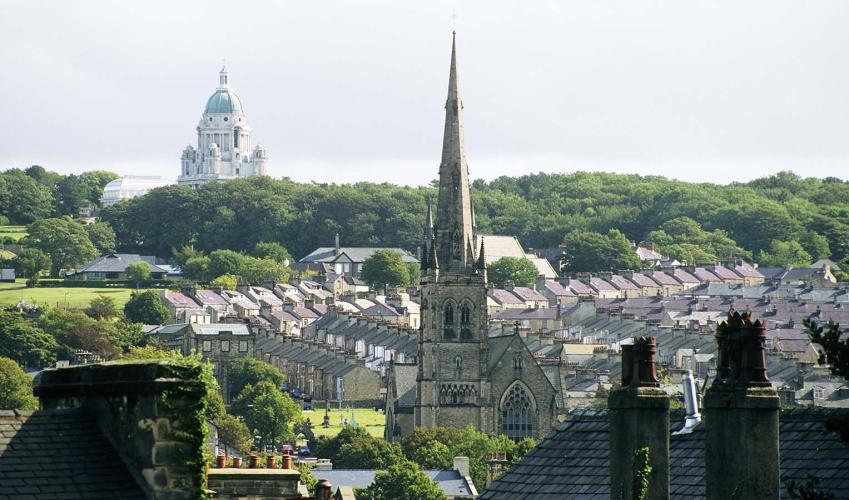
"A castle, historic waterfront and attractive streets in Lancashire's finest town"
Walk directions

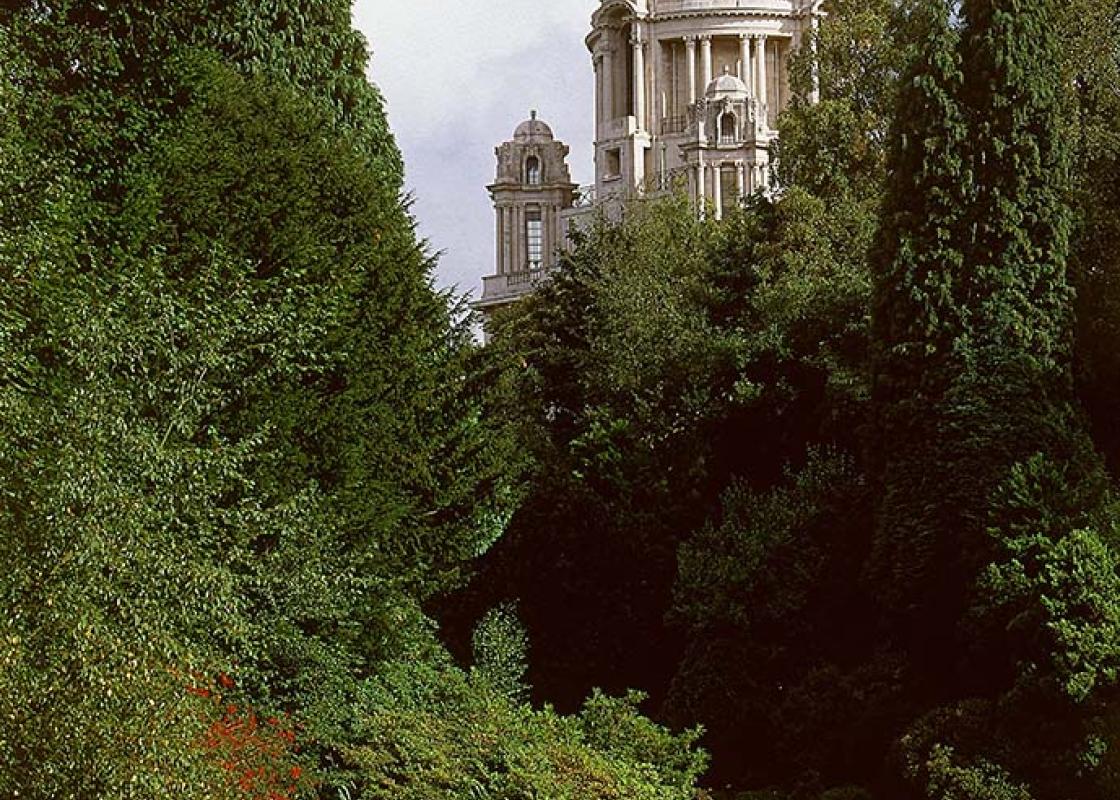
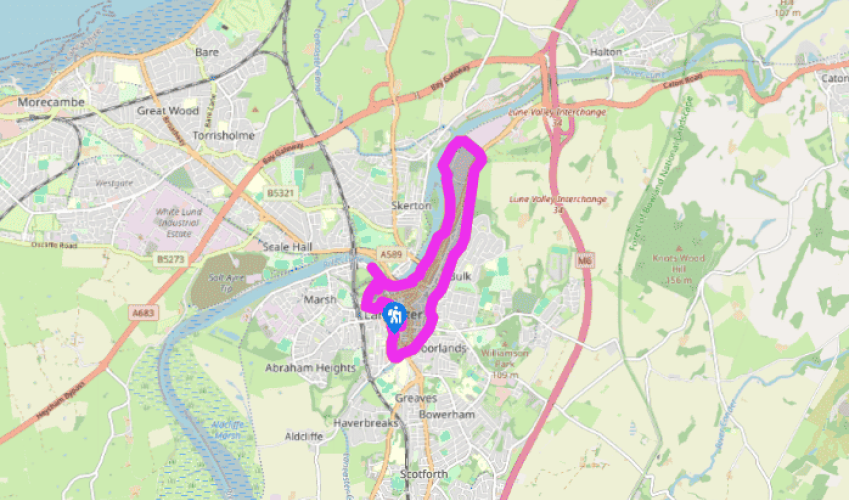
Leave the car park into an attractive cobbled square off the main road, where the Judge's Lodgings overlook the Covell Cross. Walk ahead up Castle Hill and across the green to the castle. No longer used as a prison, visitors can now enter through the imposing John O' Gaunt Gate.

The route, however, continues left of the entrance along a walkway skirting the castle. Descending steps, walk through a gateway into the Priory precincts, where a brief detour right in front of the church offers a fine city view. Return to follow the path, known as Vicarage Lane, below the tower. Beyond the churchyard, a path off right detours to the sparse remains of the Roman bath house.

Resume along Vicarage Lane, dropping across a cycleway and emerging onto St George's Quay at the bottom. The Maritime Museum can be found 200yds (183m) to the left.

After visiting, return along St George's Quay, branching left before a former railway bridge onto the Millennium Bridge. On the bridge, turn right and then left along a footpath/cycleway. Approaching the main road, wind right and then left through the underpass, emerging into Green Ayre. Bear left and follow the river upstream, shortly passing beneath Skerton Bridge. Carry on for another mile (1.6km), to the Lune Aqueduct, which carries the Lancaster Canal high above the river. A stepped path on the right climbs to the canal.

View all directions
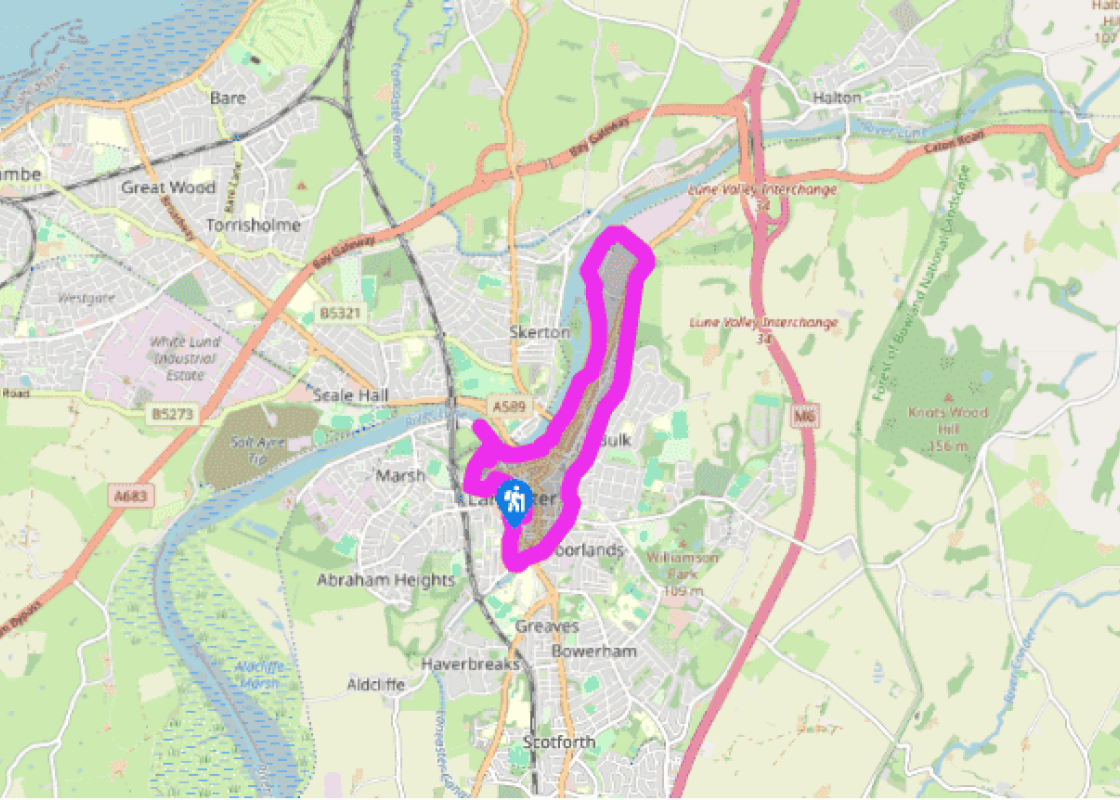
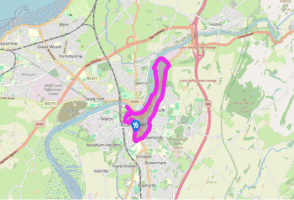
Location
Additional information
  Terrain  - City streets, paths with setts, canal towpath, no stiles
  Landscape  - Basically urban, but with open spaces by river and along canal
  Dog friendliness  - Under control on towpath and riverside park, elsewhere on lead
  Parking  - Parksafe at Mitre House, northbound on one-way system
  Toilets en route  - At car park and in city centre
About the walk
Although Lancashire is now administered from Preston, Lancaster is still considered the county town and was elevated to city status in 1937 on the coronation of George VI. First settled by the Romans with a fort on Castle Hill overseeing a port and river ford, it was subsequently the site of an...
Read more
Been on this walk placeholder

Been on this walk?

Send us photos or a comment about this route. Or recommend a route of your own.

Walking in Safety placeholder

Walking in Safety

Read our tips to look after yourself and the environment when following this walk.

Get an AA guide placeholder

Get an AA guide

Explore our range of ‘50 Walks in’ guides - they’re the ideal companion for a ramble.

About the area
Lancashire was at the centre of the British cotton industry in the 19th century, which lead to the urbanization of great tracts of the area. The cotton boom came and went, but the industrial profile remains.
Area image

Time-honoured Lancaster

Recommended by
Our view
"A castle, historic waterfront and attractive streets in Lancashire's finest town"
Dog friendly Family friendly
Location
Nearest postcode:
Additional information
  Terrain - City streets, paths with setts, canal towpath, no stiles
  Landscape - Basically urban, but with open spaces by river and along canal
  Dog friendliness - Under control on towpath and riverside park, elsewhere on lead
  Parking - Parksafe at Mitre House, northbound on one-way system
  Toilets en route - At car park and in city centre
About the walk
Although Lancashire is now administered from Preston, Lancaster is still considered the county town and was elevated to city status in 1937 on the coronation of George VI. First settled by the Romans with a fort on Castle Hill overseeing a port and river ford, it was subsequently the site of an...
Read more
Been on this walk placeholder

Been on this walk?

Send us photos or a comment about this route. Or recommend a route of your own.

Walking in Safety placeholder

Walking in Safety

Read our tips to look after yourself and the environment when following this walk.
Get an AA guide placeholder

Get an AA guide

Explore our range of ‘50 Walks in’ guides - they’re the ideal companion for a ramble.
About the area
Area image
Lancashire
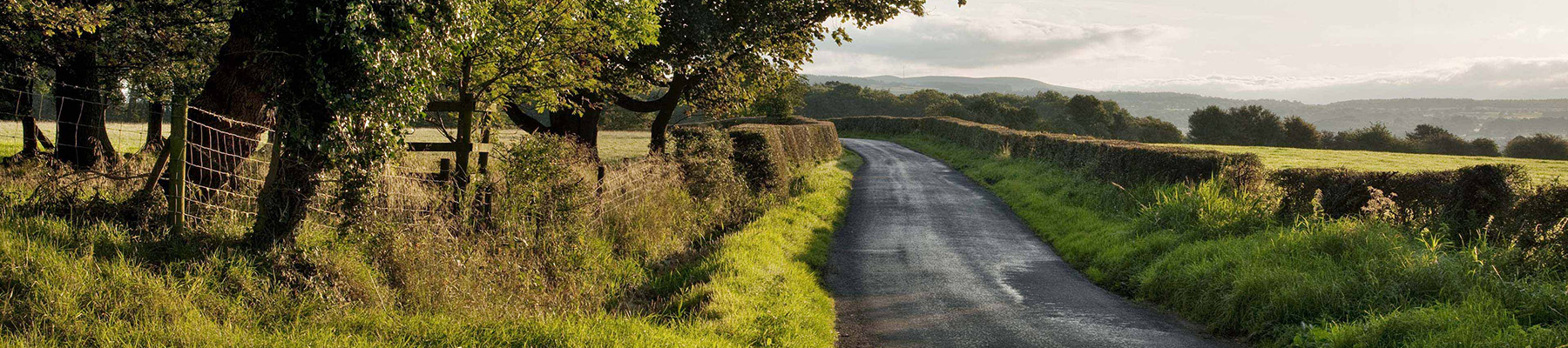
Lancashire was at the centre of the British cotton industry in the 19th century, which lead to the urbanization of great tracts of the area. The cotton boom came and went, but the industrial profile remains.