
Elmley Castle

Recommended by
Walk directions

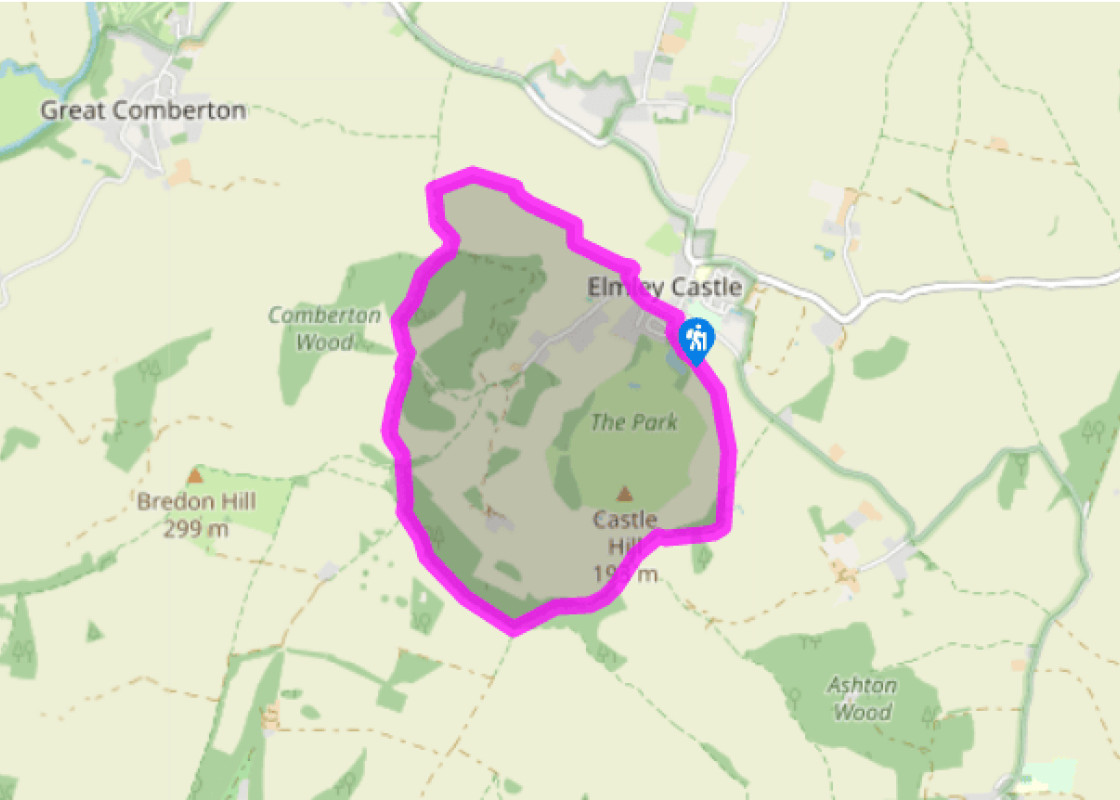
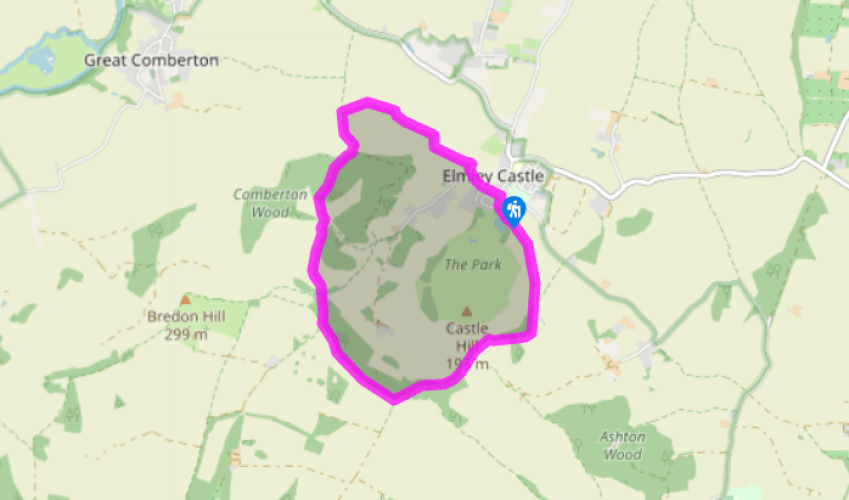
Facing the churchyard of St Mary the Virgin, with the Queen Elizabeth Inn on your right, go right, past the end of the pub. Pass several black-and-white houses, some of which are thatched. At a sharp left bend take a fingerpost to the right, passing beside a farm building. Turn sharp left at the end of this building, using gates to cross a concreted area; leave the farm through two more gates. Follow the right-hand field-edge. In the third field, after 40yds (37m), turn three-quarters right at a redundant stile, soon regaining your line. To the right is Bricklehampton Hall. Continue for three fields, crossing some quite rickety stiles and plank bridges over ditches. Reach a metal kissing gate to a track and turn left at Point 2 to walk uphill.

Once in woodland, briefly follow a level forestry road and fork left in 200yds (182m) to maintain line up through Cames Coomb. Cross the flat open meadow, Even Hill, to an obvious gate in stock fencing. Continue the climb along the well-trodden path, past Doctor’s Wood, through a gate. Beyond, veer left then right through a green hollow to a wooden gate into woodland. Don’t enter the wood but veer right then left to follow a stony track uphill beside woodland. In 110yds (100m), at a single post waymarker take the bridleway left to skirt the wood, not the route following the Wychavon Way.

View all directions
Location
Additional information
  Terrain  - Meadows and woodland paths
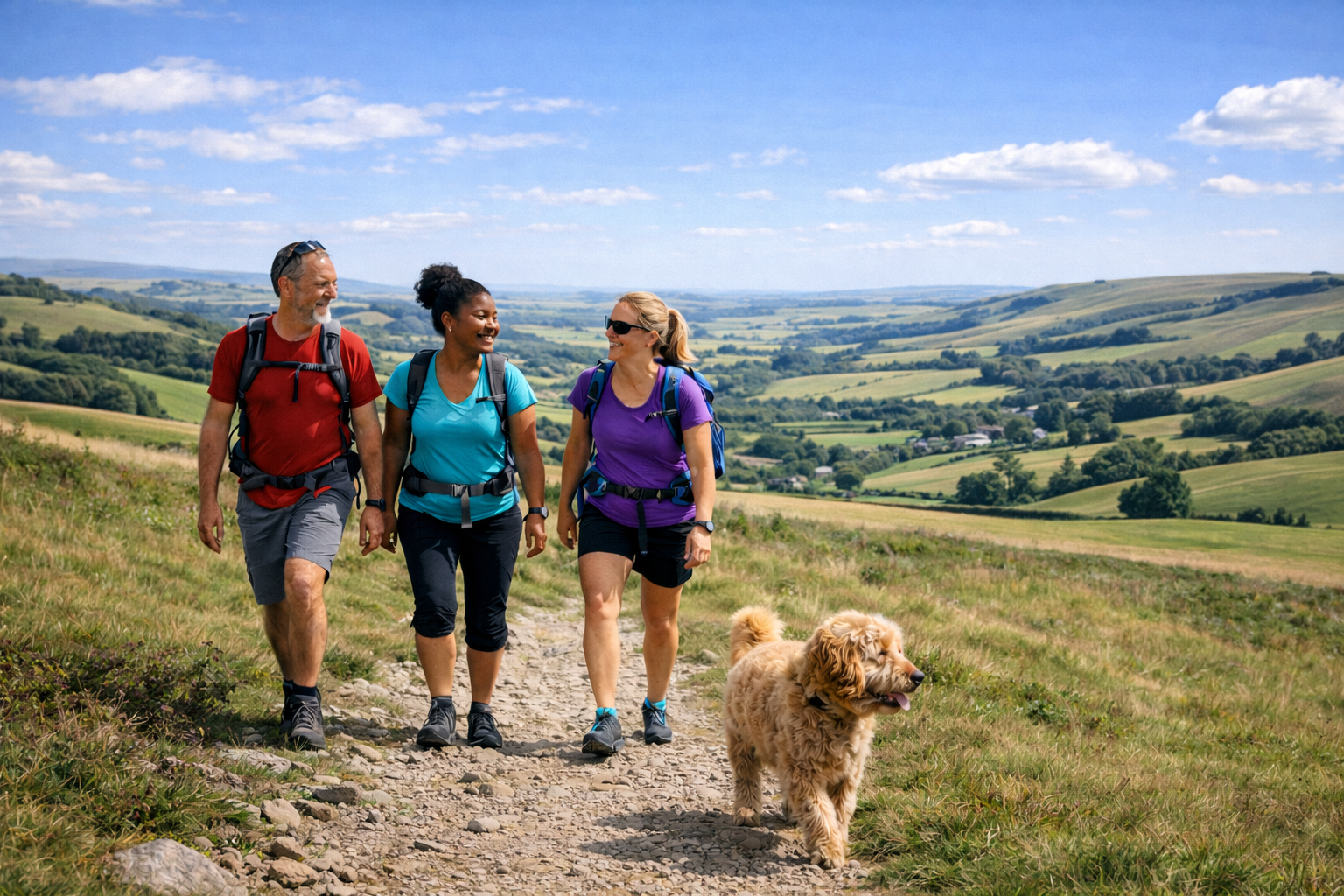
  Landscape  - Farmland, woodland and panoramic views
  Dog friendliness  - Lots of opportunities for off-lead walks; on lead around livestock
  Parking  - On-road in Elmley Castle or Elmley Castle Picnic Place 219yds (200m) from start
  Toilets en route  - None on route
About the walk
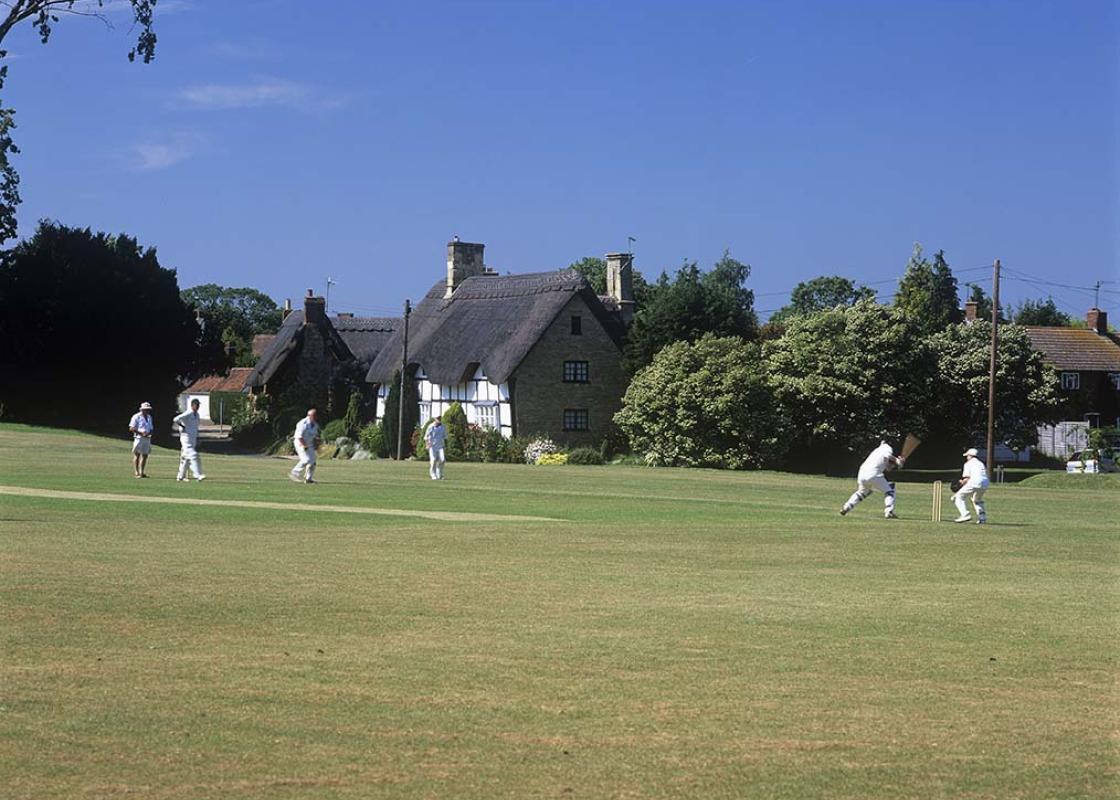
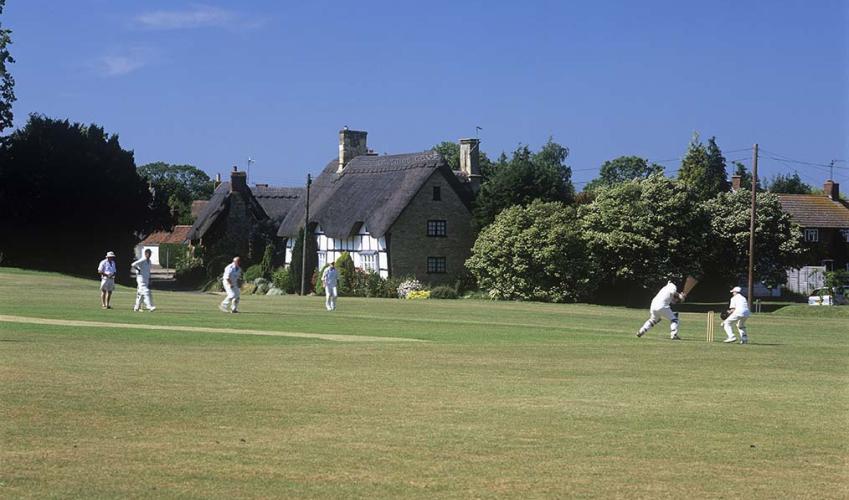
Elmley Castle is a particularly attractive village that sits at the foot of the northern slopes of Bredon Hill. It has many black and white half-timbered buildings and old brick cottages, clustered around a cricket pitch. A tiny, channelled stream flows along the main street. The name of the...
Read more
Been on this walk placeholder

Been on this walk?

Send us photos or a comment about this route. Or recommend a route of your own.
Walking in Safety placeholder

Walking in Safety

Read our tips to look after yourself and the environment when following this walk.
Get an AA guide placeholder

Get an AA guide

Explore our range of ‘50 Walks in’ guides - they’re the ideal companion for a ramble.
About the area
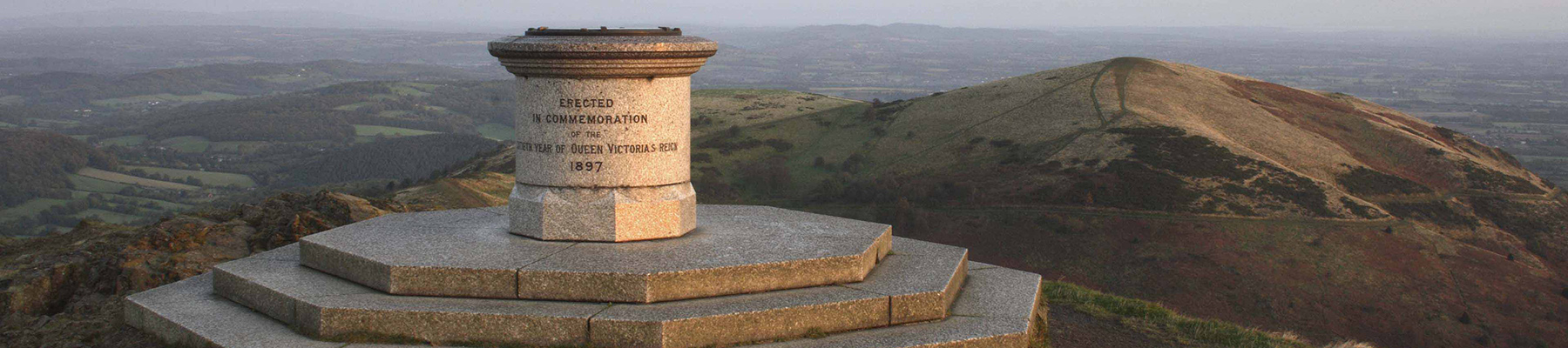
Worcestershire is a county of rolling hills, save for the flat Vale of Evesham in the east and the prominent spine of the Malverns in the west. Nearly all of the land is worked in some way; arable farming predominates – oilseed rape, cereals and potatoes – but there are concentrated areas of specific land uses, such as market gardening and plum growing.
Area image

Elmley Castle

Recommended by
Dog friendly
Location
Nearest postcode:
Additional information
  Terrain - Meadows and woodland paths
  Landscape - Farmland, woodland and panoramic views
  Dog friendliness - Lots of opportunities for off-lead walks; on lead around livestock
  Parking - On-road in Elmley Castle or Elmley Castle Picnic Place 219yds (200m) from start
  Toilets en route - None on route
About the walk
Elmley Castle is a particularly attractive village that sits at the foot of the northern slopes of Bredon Hill. It has many black and white half-timbered buildings and old brick cottages, clustered around a cricket pitch. A tiny, channelled stream flows along the main street. The name of the...
Read more
Been on this walk placeholder

Been on this walk?

Send us photos or a comment about this route. Or recommend a route of your own.

Walking in Safety placeholder

Walking in Safety

Read our tips to look after yourself and the environment when following this walk.

Get an AA guide placeholder

Get an AA guide

Explore our range of ‘50 Walks in’ guides - they’re the ideal companion for a ramble.

About the area
Area image
Worcestershire
Worcestershire is a county of rolling hills, save for the flat Vale of Evesham in the east and the prominent spine of the Malverns in the west. Nearly all of the land is worked in some way; arable farming predominates – oilseed rape, cereals and potatoes – but there are concentrated areas of specific land uses, such as market gardening and plum growing.