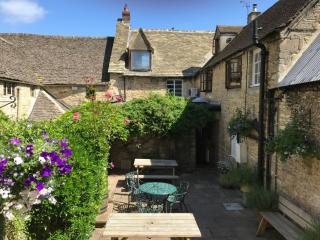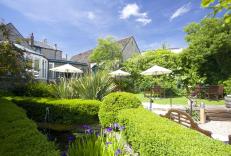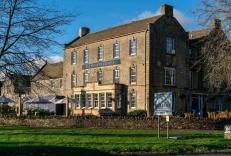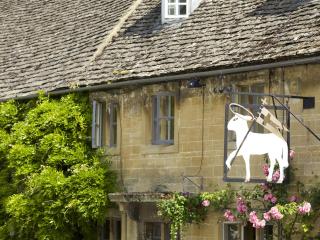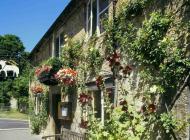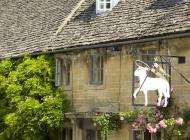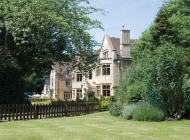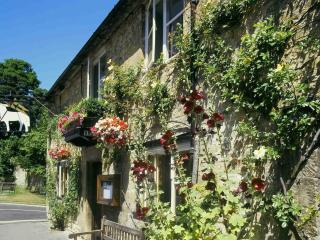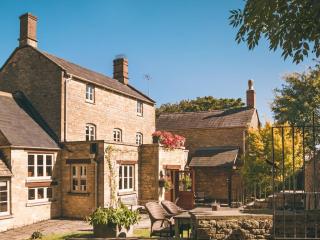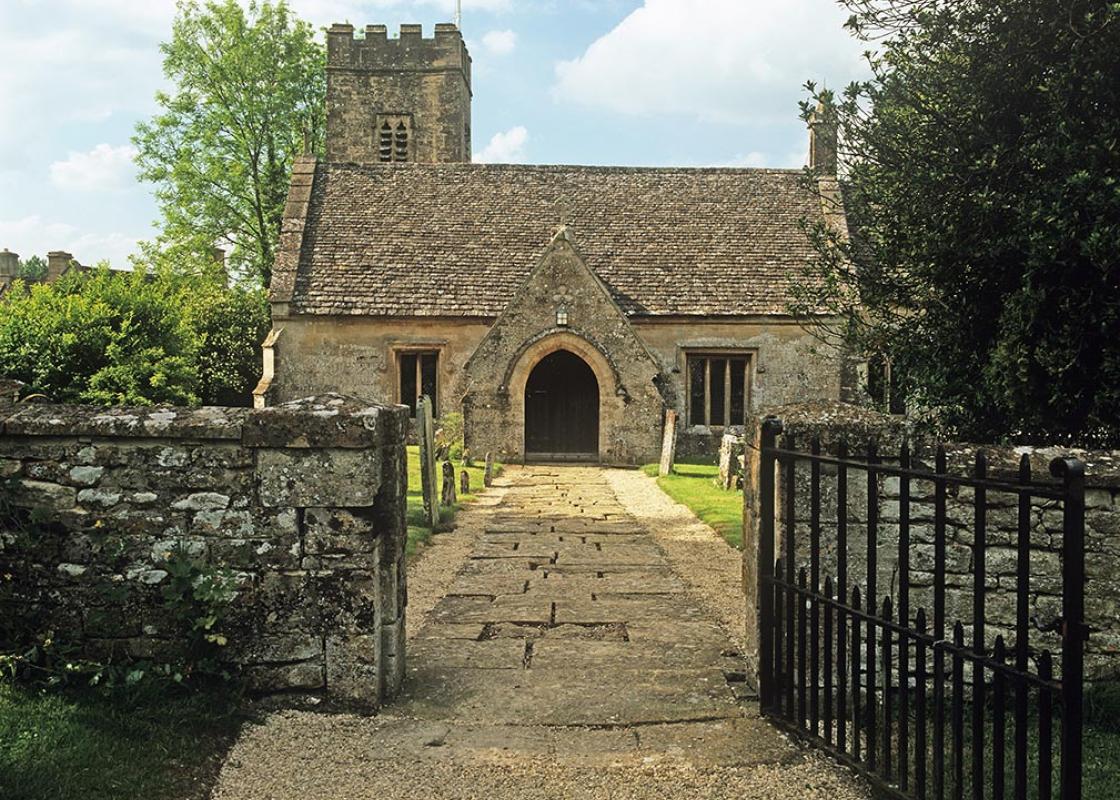
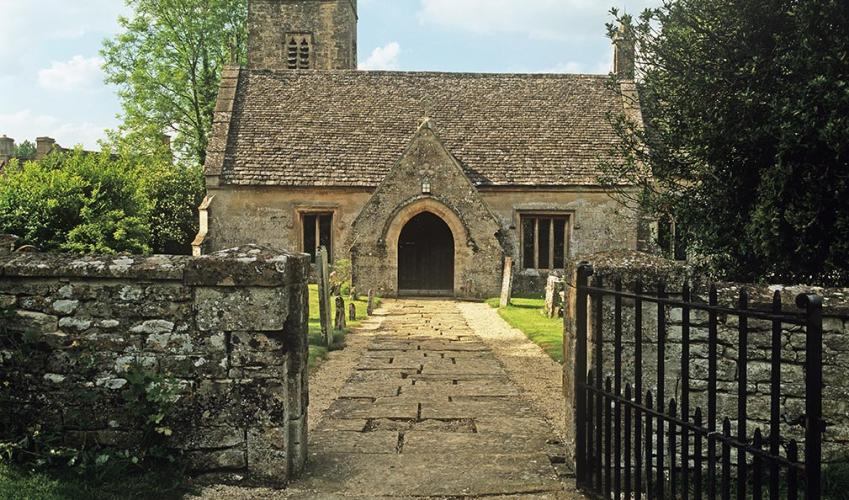
The limestone buildings of the Windrush Valley
"Cotswold stone – the building blocks of the region's beauty"
Walk directions
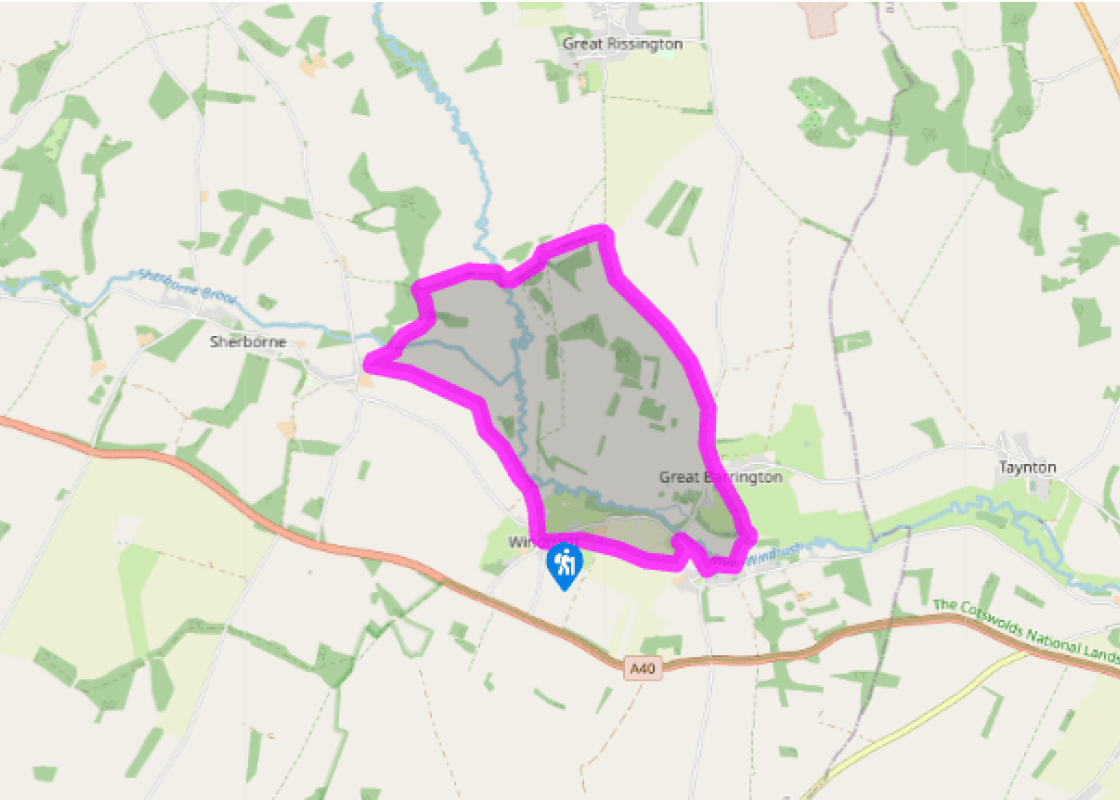
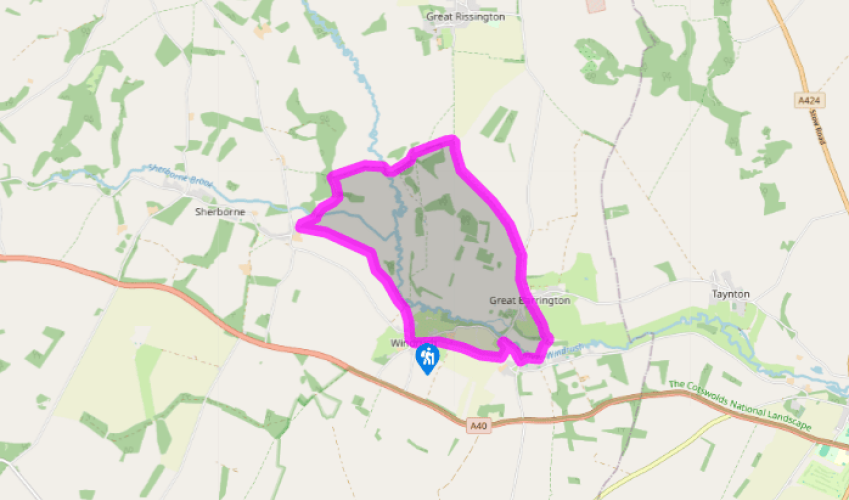
Walk out of the village, keeping to the left of the church. After about 100yds (91m), turn right opposite No. 27 through a gate into a field. Go across this field to the other side, keeping to the left.
Go through the right-hand gate and continue across three fields until you emerge in a large field at a wide grass strip (careful here, as it is used by horses and their riders with the houses of Little Barrington opposite. Cross two-thirds of the field, then turn left and head for the hedge at the bottom to the right of the cricket field.
Go through a gap on the left for a short path to the road. Ahead is The Fox Inn. Turn right, with the pub car park on your left, enter Little Barrington and turn left along a ‘No Through Road’. Pass Sundial Cottage on your left, the lane soon narrowing to a path. Where the path becomes a lane again, go left across a bridge, then further on cross three footbridges as you pass around the right-hand boundary of Barrington Mill. Walk up a hedged lane, eventually emerging in Great Barrington at a war memorial cross. Take the road in front of you, signed ‘Little Rissington and Bourton-on-the-Water’.
Where the stone park wall to Barrington Park on your left ends, go left onto a track and immediately right through a gate. Stay on this track for a little over 1 mile (1.6km) until, after climbing out of a dry valley, you come to a junction of tracks with large hedges and a waymark post before you.
Turn sharp left and follow this track to the valley bottom. Where it turns hard left, go straight on and enter scrubby woodland. Follow the waymarks onto a path through trees. Cross the bridge over the River Windrush and follow a grassy track for two fields (ignoring waymarked paths off left and right) until, just before Century Wood, you turn left over a bridge with a stile at each end into a field. Follow the margin of the woods. Go through a kissing gate into a field and turn slightly right to the far corner. Through a gate, cross a footbridge and, after 50 paces, go through a gate on the right and bear left.
Go through a gate on the far side. Cross the track straight ahead and after a few paces turn left at a gate. Go over into the next field and cross it, going straight ahead, with a hedge close on your right. Go through several fields.
Go through a kissing gate and on the far side of an open field go through a gap into another field, with a stone wall on your right. Continue over a stone stile and through several fields, passing a stone barn on the way. Finally, pass a derelict farm building to your left-hand side, shortly before you arrive at a gate by a lane.
Opposite, go up and over a stone stile. Follow the perimeter of the next field as it goes right, ignoring a footpath into a field at the corner immediately on your left. Walk instead beside a stone wall and go over a stone stile onto a narrow track which leads into Windrush village.
Additional information
Terrain
- Fields, tracks and pavement, many stiles
Landscape
- Streams, fields, open country and villages
Dog friendliness
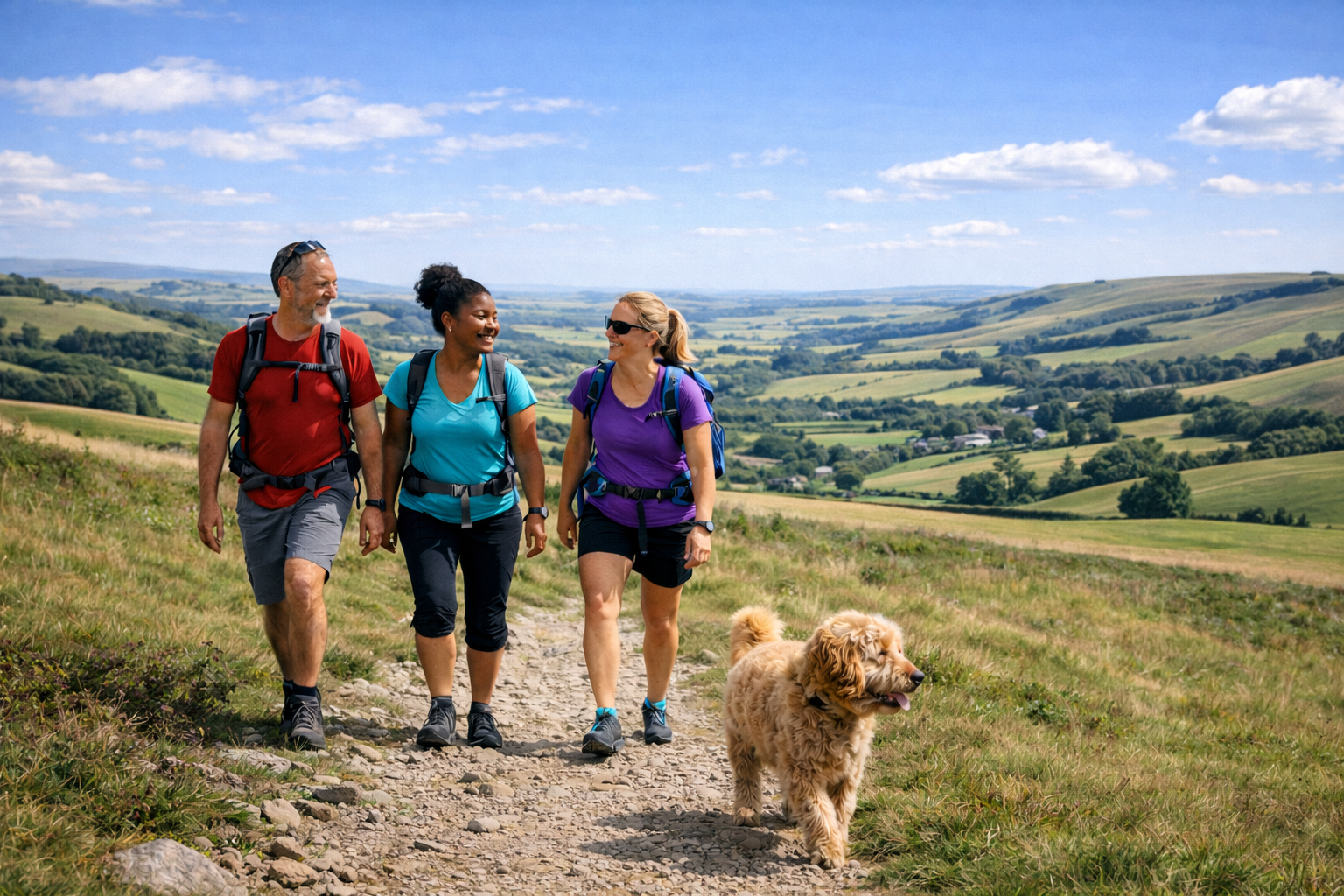
- Some care required but can probably be off lead for long stretches without livestock
Parking
- On-street parking in Windrush
Toilets en route
- None on route
About the walk
The Cotswolds, characterised by villages of gilded stone, lie mainly in Gloucestershire. Stone is everywhere here – walk across any field and shards of oolitic limestone lie about the surface like bits of fossilised litter. This limestone, for so long an obstacle to arable farming, is a perfect... building material. In the past almost every village was served by its own quarry, a few of which are still worked today. Golden hue limestone is a sedimentary rock, made largely of material derived from living organisms that thrived in the sea that once covered this part of Britain. The rock is therefore easily extracted and easily worked; some of it will actually yield to a handsaw. However, it is for its golden hue, due to the presence of iron oxide, that it is most famous. The composition of the stone dictates the use to which it will be put. Some limestone, with a high proportion of grit, is best suited to wall building or to hut building. Some outcrops are in very thin layers and are known as ‘presents’ because they provide almost ready-made material for roof-slates. When the stone needs a little help it is left out in the winter so that frost freezes the moisture trapped between layers, forcing them apart. The stone can then be shaped into slates and hung on a wooden roof trellis by means of a simple nail. The smallest slates are placed at the top of the roof, the largest at the bottom. Because of their porous nature they have to overlap, and the roof is built at a steep pitch so that the rain runs off quickly. There are four basic types of traditional stone construction to be seen in the Cotswolds – dry-stone, mortared rubble, dressed stone and ashlar. Dry-stone, without any mortar, is used in the many boundary walls you’ll see as you walk around the region. Mortared rubble, on the other hand, depends on the use of lime pointing in order to stay upright. You’ll see its use in many of the simpler buildings or as a cheaper backing to buildings faced with better stone. Dressed stone refers to the craft of chopping and axing stone to give it a more polished and tighter finish. This is used in higher order buildings and houses. Ashlar is the finest technique, where the best stone is expertly sawn and shaped into perfectly aligned blocks that act either as a facing on rubble, or, more rarely, make up the entire wall. Ashlar was used in the region’s finer houses and, occasionally, in barns. The quarries here, to the west of Burford, provided building material for London’s St Paul’s Cathedral and several Oxford colleges
Read more
Been on this walk?
Send us photos or a comment about this route. Or recommend a route of your own.

Walking in Safety
Read our tips to look after yourself and the environment when following this walk.
Get an AA guide
Explore our range of ‘50 Walks in’ guides - they’re the ideal companion for a ramble.
Been on this walk?
Send us photos or a comment about this route. Or recommend a route of your own.
Walking in Safety
Read our tips to look after yourself and the environment when following this walk.
Get an AA guide
Explore our range of ‘50 Walks in’ guides - they’re the ideal companion for a ramble.
About the area
Gloucestershire is home to a variety of landscapes, including the Cotswolds, a region of gentle hills, valleys and gem-like villages that roll through the county. To their west is the Severn Plain, watered by Britain’s longest river and characterised by orchards and farms marked out by hedgerows that blaze with mayflower in the spring; beyond the Severn are the Forest of Dean and the Wye Valley.
Nearby places to stay
View all (8)
Hotel
The Lamb Inn
★★★
"Quirky and quaint old inn that just oozes charm...."
- Family rooms: 1
- Free TV
- WiFi available
Hotel
The Bay Tree Hotel
★★★★
"A home away from home with a long history...."
- Family rooms: 2
- Free TV
- WiFi available
Nearby places to stay
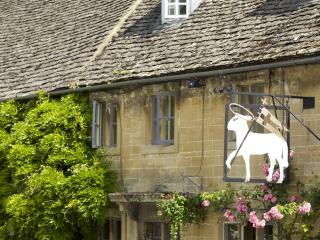
The Lamb Inn
The Lamb is an enchanting old inn just a short walk from the centre of this delightful Cotswold village. You'll find an abundance of character and charm in the cosy lounge with log fire...
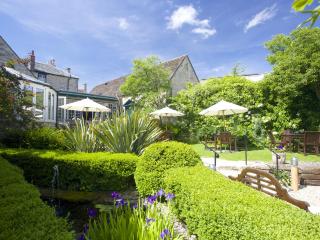
★★★ Rating
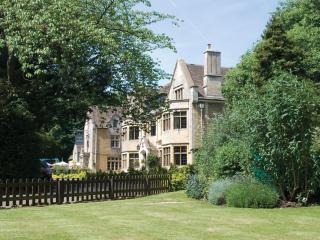
The Bay Tree Hotel
The Bay Tree Hotel's modern decorative style combines seamlessly with features from this delightful inn's long history. Bedrooms are tastefully furnished and some have four-poster or ha...
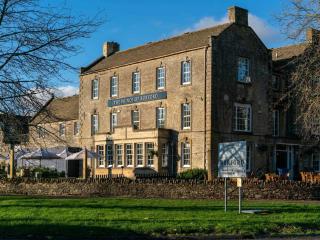
★★★★ Rating
Prince of Burford
Prince of Burford is a refurbished former 18th-century coaching inn, located in Burford; the "Gateway to the Cotswolds", making this an ideal base for exploring one of the UK's most pop...
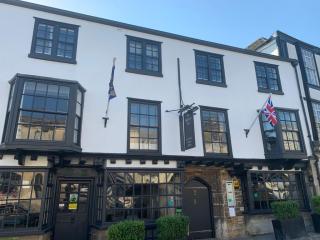
★★★★ Rating
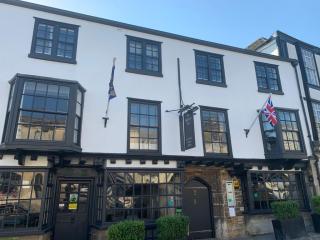
The Highway Inn
Built in 1480, The Highway Inn has had many guises over the years and first welcomed overnight travellers in the early 1920s. Following a refurbishment, it now provides guests with mode...
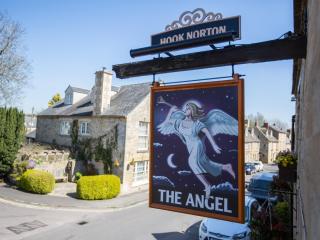
★★★★ Rating
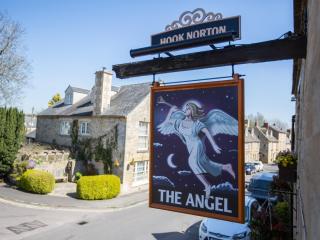
The Angel at Burford
Just off the high street in the picturesque market town of Burford, The Angel is a 16th-century coaching inn with beamed ceilings and open fires. Guests can dine well in the restaurant,...
★★★★ Rating
Craigmoor Cottage
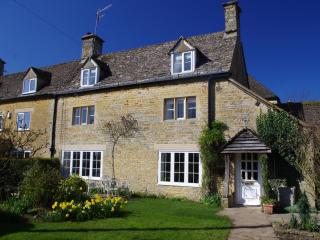
Craigmoor Cottage is a large, newly renovated and uniquely refurbished, traditional Cotswold stone cottage built around 1800; located at the heart of Bourton-on-the-Water with pedestria...
★★★★★ Rating
Craigmoor Cottage
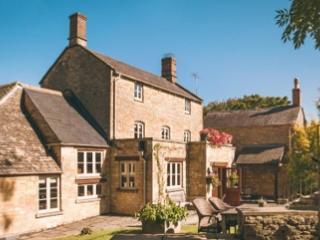
Craigmoor Cottage is a large, newly renovated and uniquely refurbished, traditional Cotswold stone cottage built around 1800; located at the heart of Bourton-on-the-Water with pedestria...
★★★★★ Rating
The Feathered Nest Country Inn
Located in the picturesque Cotswold village of Nether Westcote with rolling views over the Evenlode Valley, The Feathered Nest offers a cosy base from which to explore the pretty countr...
★★★★★ Rating
Places to eat nearby View all