"A disused branch line makes a fine path above the mosses, before a woodland return passes a medieval mansion."
Walk directions
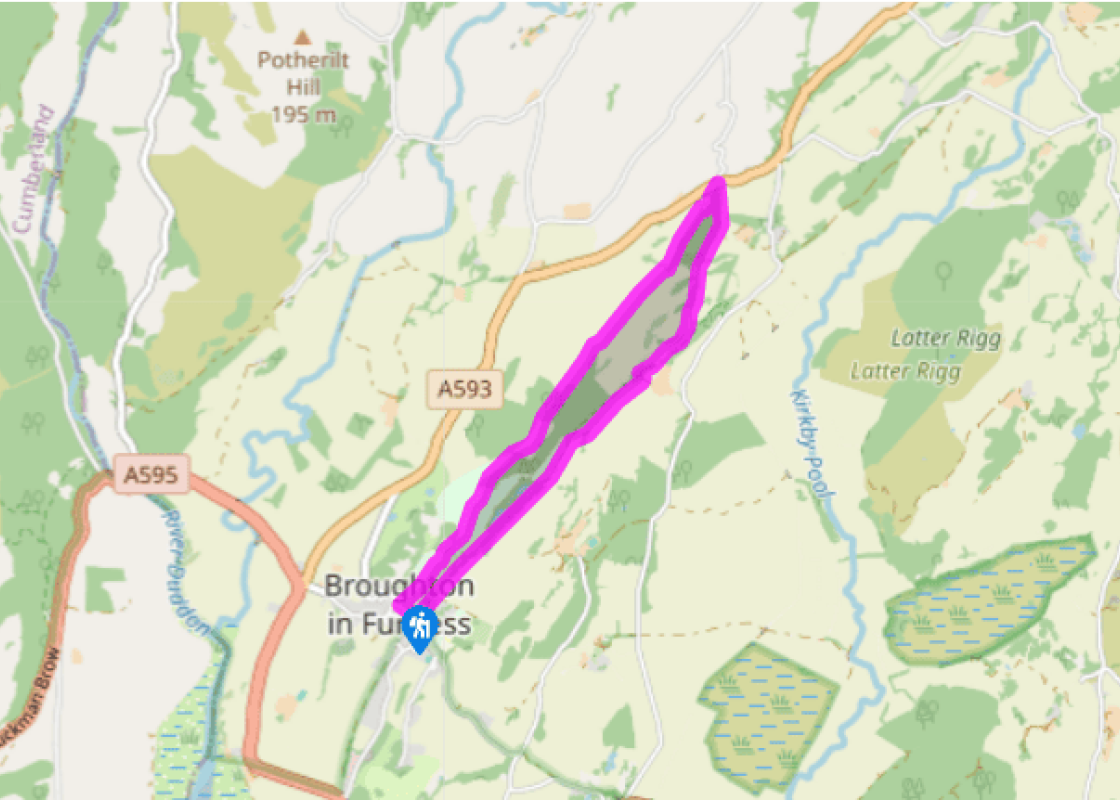
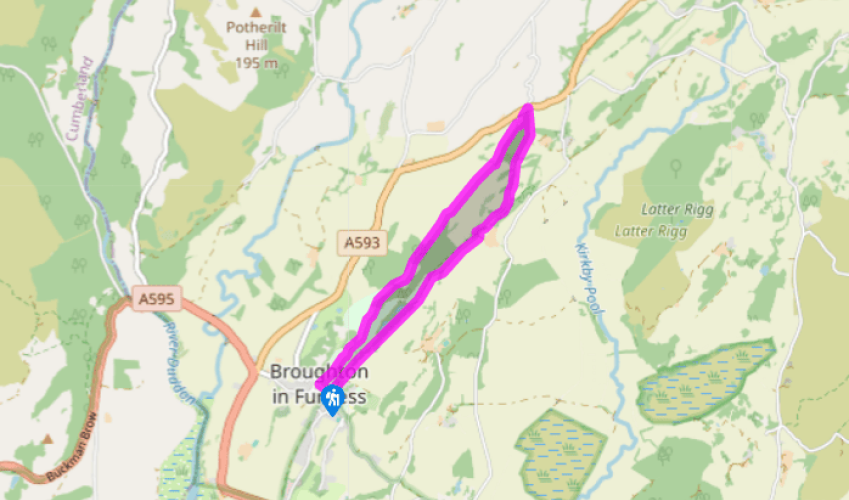
Leave the Square by the road beside the Manor Arms, Market Street. Walk down the left-hand side, passing a garage, to an opening on the left and a bridleway sign for Woodlands. Turn left here and join the trackbed of the former Coniston branch railway. Beyond a barrier, the path takes you through a cutting before crossing more open country. After about half a mile (800m) you’ll find a tarn on the left with a bench. Continue for another half mile (800m) until you cross a bridge over a farm track.
Just beyond, look for a wicket gate on the left. Go through it, cross the farm track and pick out a gate on the opposite side. Take the enclosed path, raking upwards. Follow this through several gates, mostly uphill but with a few dips. The path tucks in around a wall on the right above Moss Side farm and campsite. Beyond another gate the rising path, alongside a small beck, passes a treehouse before emerging almost at the main road (A593).
Don’t go onto the main road, but turn immediately left down the access track to a house. Signposts direct you around the bottom of the garden and over a stile. Stay on the left-hand edge of the field beyond, cross a stile and follow a fence on the left until it turns a corner. A few paces further on, bear right on a green path hemmed in by gorse and bracken. Soon the path bears left to a step stile in a stone wall. Bear right to a grassy ridge marked by the remains of an old hedgerow. Maintain this direction past a stile then descend towards woodland. Crossing a dip you may find it easier to duck to the other side of the hedge to avoid a boggy patch. Rise to a stile by a sheepfold and continue with a hedge now on your left to the woods.
Go through the turnstile and descend to a gate and stile. Follow the righthand edge of the next field to a wall gap, then follow the left-hand edge over a slight rise. Descend, soon bearing left through a gap in the trees along a green break. As the parkland opens out, aim for the left side of the wall encircling the grounds of Broughton Tower. Keep ahead around this boundary to a gate and turnstile into some woods.
Stay on this path past a children’s playground and football pitch to reach a gate. Go through this and continue straight ahead to return to the Square.
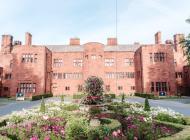
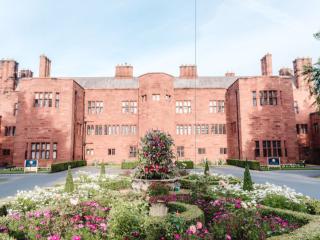
Standing in the noble little square at the centre of Broughton-in-Furness, you may feel there was once some importance to this old Lancashire market town that seems to have since vanished. There are Georgian town houses and a fine obelisk commemorating the Golden Jubilee of George III. Close by you... should spot the ancient fish slabs that once allowed the fishermen from Haverigg to lay out their catch, and the stocks, where the constable might detain petty thieves or swindlers. This Georgian heyday was a product of the local woodlands – swill basket making (baskets made from thin strips of woven oak) in particular – which, along with the early wood-based industrial processes for the locally occurring iron ore, ensured a prosperous bloom for what is still a fairly remote corner of Lakeland. Furness Railway In the 1850s the town became the fortuitous junction between an expanding Furness Railway, spreading out from the brand new industrial town of Barrow to the south, and the Whitehaven Railway from the north, bringing Lord Lowther’s coal to Furness’s ironworks. A branch line up the valley to Coniston’s extensive copper mines quickly followed and for a brief period Broughton must have felt like it was at the fulcrum of the new industrial west. But industrial wealth is fickle, and little seemed to stick in Broughton itself. Broughton Tower, which had been given the 18th-century version of a garden makeover to create the fine parkland seen at the end of this walk, had additional wings attached to its 14th-century core. The railway to Coniston fared little better. Mining traffic tailed off and the tourist trade became the mainstay, connecting with the Furness Railway’s own pier and the steam yacht Gondola, plying its elegant way across Coniston Water. Amalgamation with the London, Midland and Scottish Railway in 1923, then nationalisation under British Railways in 1948, failed to address the decline in rail traffic though, and by 1958 it had gone the way of many rural branch lines. It closed for good in 1962 and the tracks were lifted the following year. The 21st century finds Broughton a quiet, attractive country town. The old railway line makes for a fine walking and cycling route, and Broughton Tower has been converted into executive flats. The Square is always busy and the town’s market charter is still read out every year. The stocks however, remain unoccupied.
Cumbria's rugged yet beautiful landscape is best known for the Lake District National Park that sits within its boundaries. It’s famous for Lake Windermere, England’s largest lake, and Derwent Water, ‘Queen of the English Lakes', but other lesser-known areas in the south, such as the Lune Valley and the coastal towns, are secret gems of wide cobbled streets and rolling hills.
"A disused branch line makes a fine path above the mosses, before a woodland return passes a medieval mansion."
Walk details
1hr 30min
Difficulty:
Medium
Gradient:
Moderate
Distance:
3.75 miles (6kms)
Ascent:
164ft (50m)
Walk directions
Leave the Square by the road beside the Manor Arms, Market Street. Walk down the left-hand side, passing a garage, to an opening on the left and a bridleway sign for Woodlands. Turn left here and join the trackbed of the former Coniston branch railway. Beyond a barrier, the path takes you through a cutting before crossing more open country. After about half a mile (800m) you’ll find a tarn on the left with a bench. Continue for another half mile (800m) until you cross a bridge over a farm track.
1 of 5
Just beyond, look for a wicket gate on the left. Go through it, cross the farm track and pick out a gate on the opposite side. Take the enclosed path, raking upwards. Follow this through several gates, mostly uphill but with a few dips. The path tucks in around a wall on the right above Moss Side farm and campsite. Beyond another gate the rising path, alongside a small beck, passes a treehouse before emerging almost at the main road (A593).
2 of 5
Don’t go onto the main road, but turn immediately left down the access track to a house. Signposts direct you around the bottom of the garden and over a stile. Stay on the left-hand edge of the field beyond, cross a stile and follow a fence on the left until it turns a corner. A few paces further on, bear right on a green path hemmed in by gorse and bracken. Soon the path bears left to a step stile in a stone wall. Bear right to a grassy ridge marked by the remains of an old hedgerow. Maintain this direction past a stile then descend towards woodland. Crossing a dip you may find it easier to duck to the other side of the hedge to avoid a boggy patch. Rise to a stile by a sheepfold and continue with a hedge now on your left to the woods.
3 of 5
Go through the turnstile and descend to a gate and stile. Follow the righthand edge of the next field to a wall gap, then follow the left-hand edge over a slight rise. Descend, soon bearing left through a gap in the trees along a green break. As the parkland opens out, aim for the left side of the wall encircling the grounds of Broughton Tower. Keep ahead around this boundary to a gate and turnstile into some woods.
4 of 5
Stay on this path past a children’s playground and football pitch to reach a gate. Go through this and continue straight ahead to return to the Square.
Standing in the noble little square at the centre of Broughton-in-Furness, you may feel there was once some importance to this old Lancashire market town that seems to have since vanished. There are Georgian town houses and a fine obelisk commemorating the Golden Jubilee of George III. Close by you... should spot the ancient fish slabs that once allowed the fishermen from Haverigg to lay out their catch, and the stocks, where the constable might detain petty thieves or swindlers. This Georgian heyday was a product of the local woodlands – swill basket making (baskets made from thin strips of woven oak) in particular – which, along with the early wood-based industrial processes for the locally occurring iron ore, ensured a prosperous bloom for what is still a fairly remote corner of Lakeland. Furness Railway In the 1850s the town became the fortuitous junction between an expanding Furness Railway, spreading out from the brand new industrial town of Barrow to the south, and the Whitehaven Railway from the north, bringing Lord Lowther’s coal to Furness’s ironworks. A branch line up the valley to Coniston’s extensive copper mines quickly followed and for a brief period Broughton must have felt like it was at the fulcrum of the new industrial west. But industrial wealth is fickle, and little seemed to stick in Broughton itself. Broughton Tower, which had been given the 18th-century version of a garden makeover to create the fine parkland seen at the end of this walk, had additional wings attached to its 14th-century core. The railway to Coniston fared little better. Mining traffic tailed off and the tourist trade became the mainstay, connecting with the Furness Railway’s own pier and the steam yacht Gondola, plying its elegant way across Coniston Water. Amalgamation with the London, Midland and Scottish Railway in 1923, then nationalisation under British Railways in 1948, failed to address the decline in rail traffic though, and by 1958 it had gone the way of many rural branch lines. It closed for good in 1962 and the tracks were lifted the following year. The 21st century finds Broughton a quiet, attractive country town. The old railway line makes for a fine walking and cycling route, and Broughton Tower has been converted into executive flats. The Square is always busy and the town’s market charter is still read out every year. The stocks however, remain unoccupied.
Cumbria's rugged yet beautiful landscape is best known for the Lake District National Park that sits within its boundaries. It’s famous for Lake Windermere, England’s largest lake, and Derwent Water, ‘Queen of the English Lakes', but other lesser-known areas in the south, such as the Lune Valley and the coastal towns, are secret gems of wide cobbled streets and rolling hills.