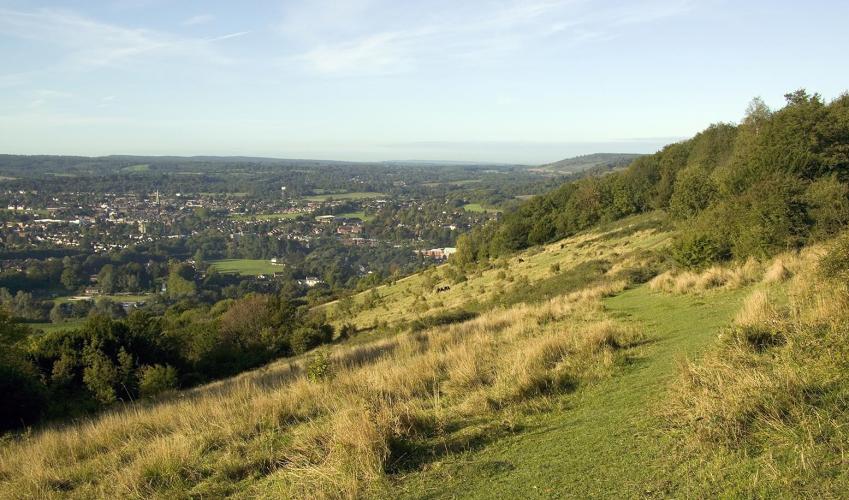
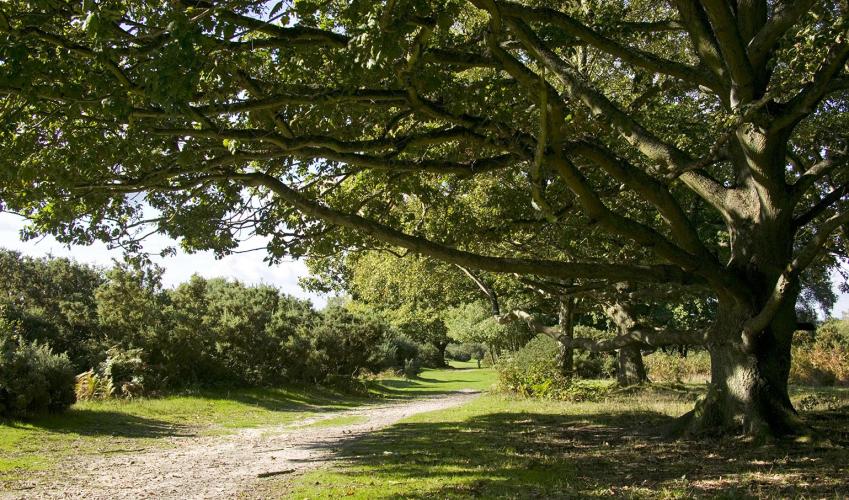
Box Hill to Westhumble
Walk directions
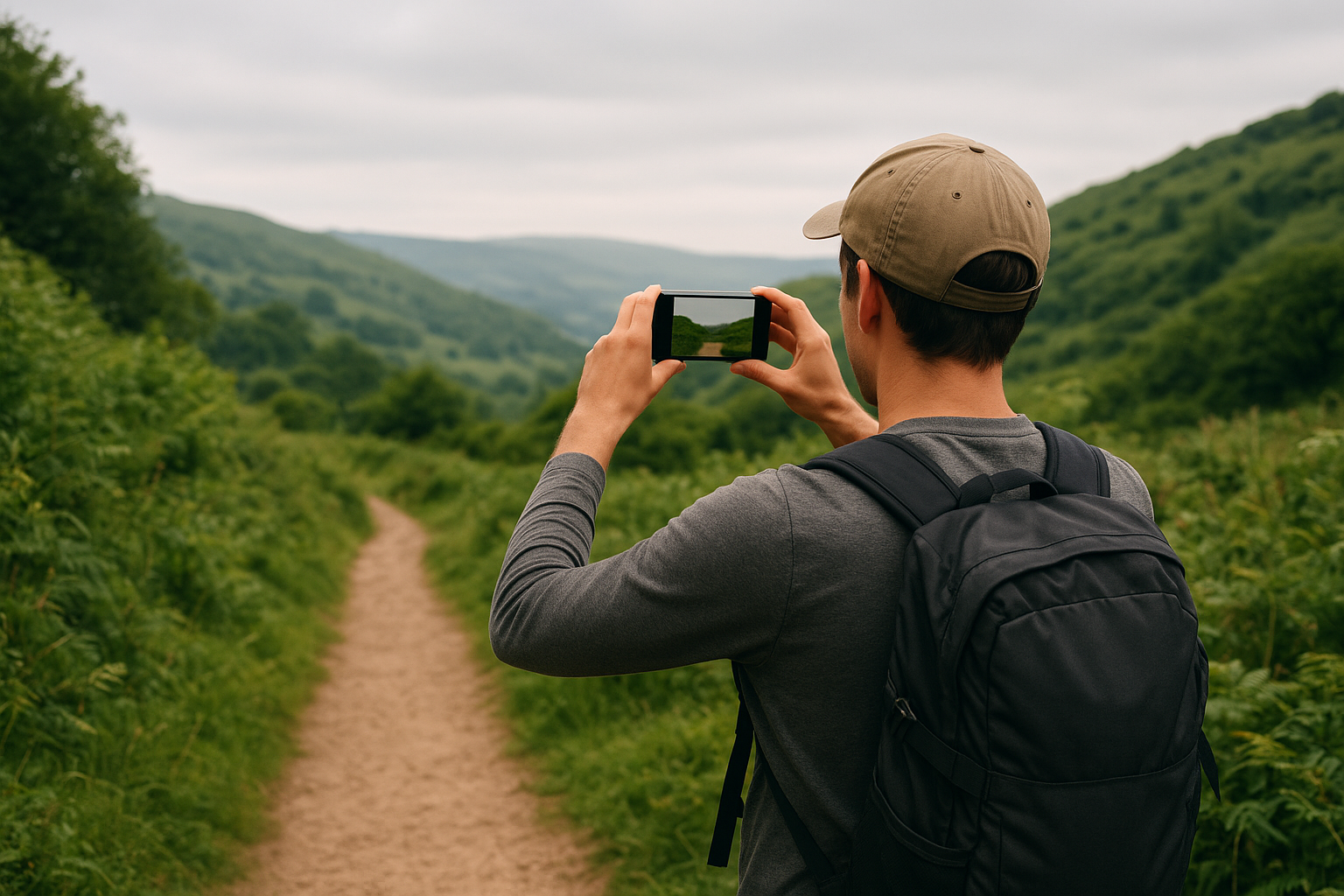
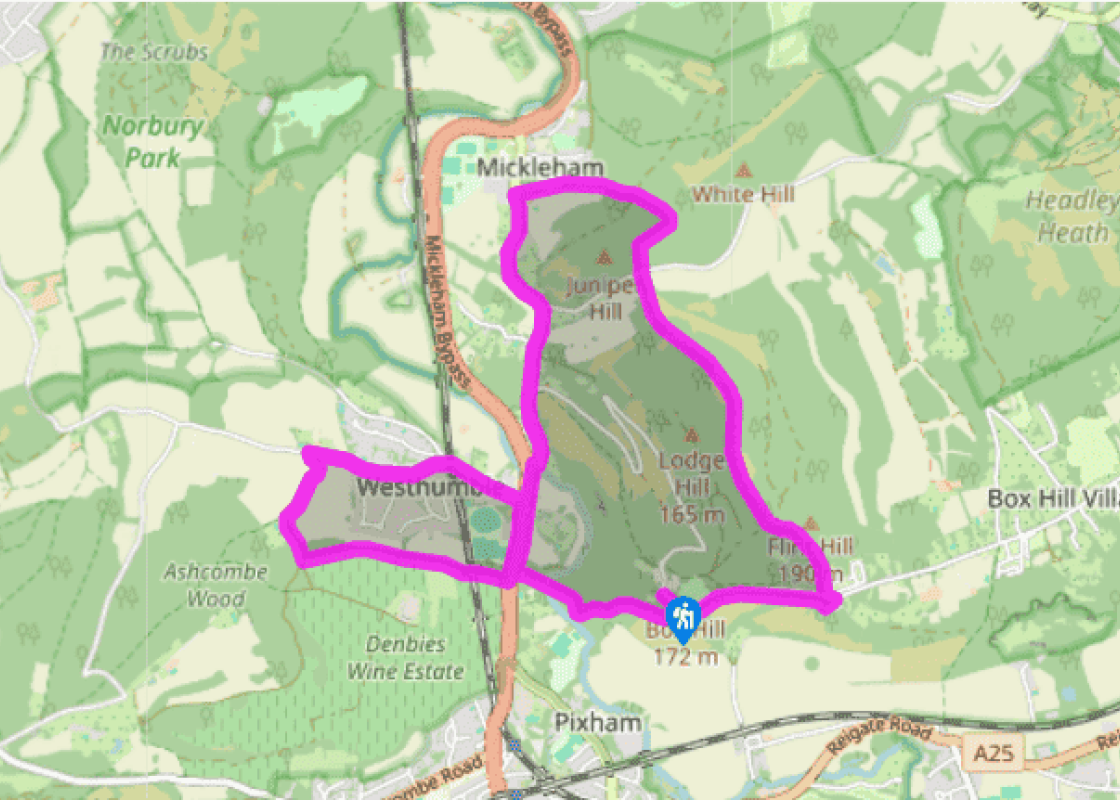
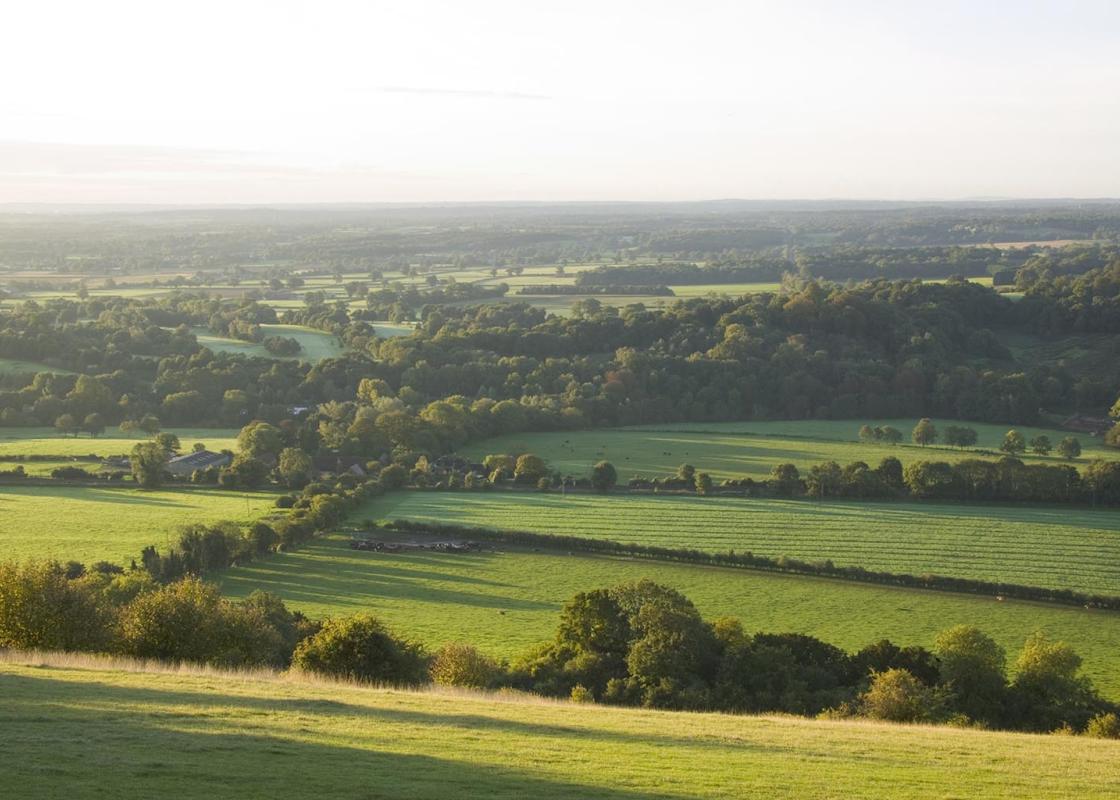
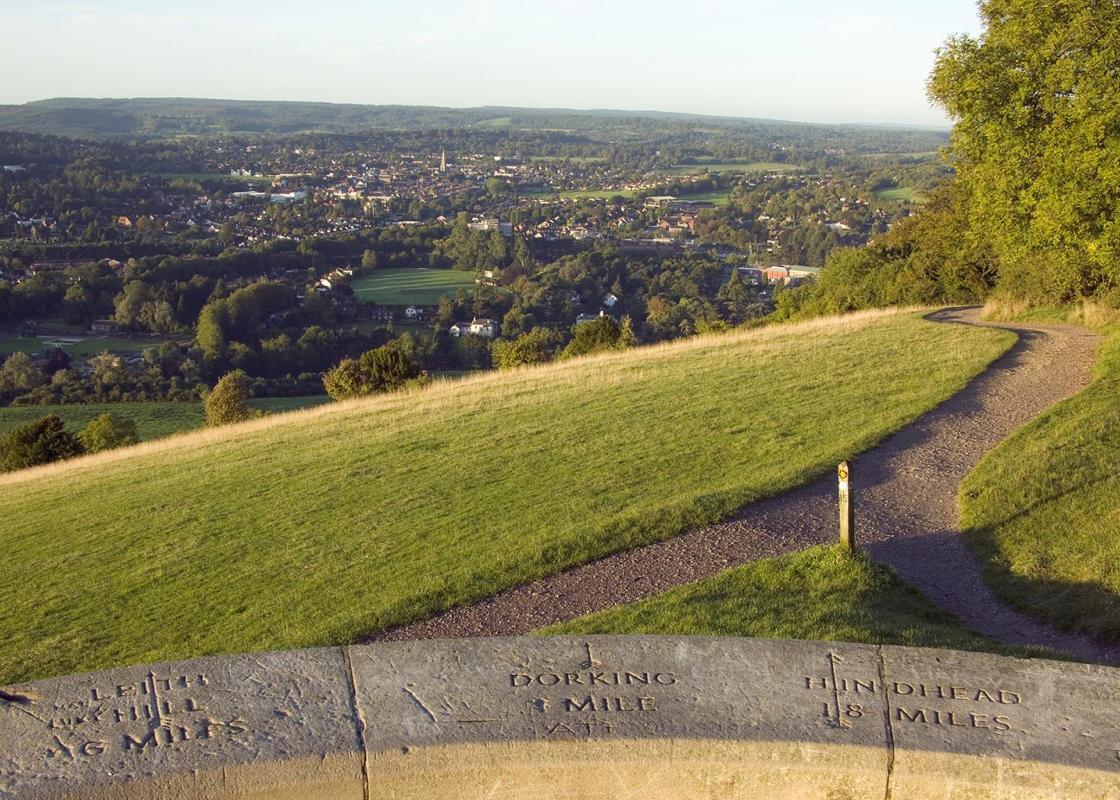
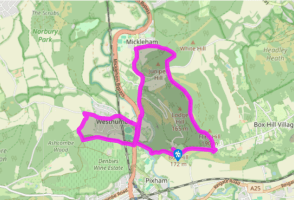
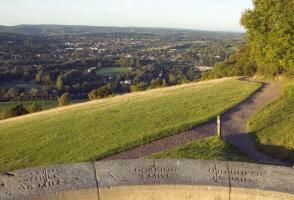
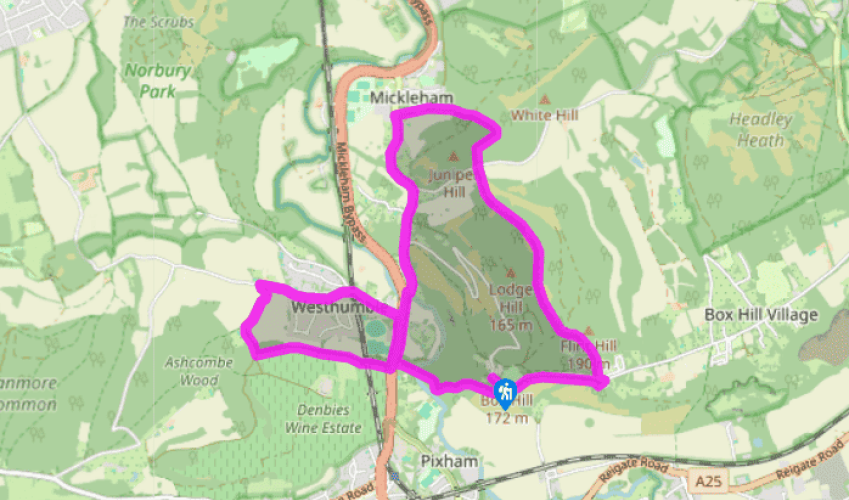
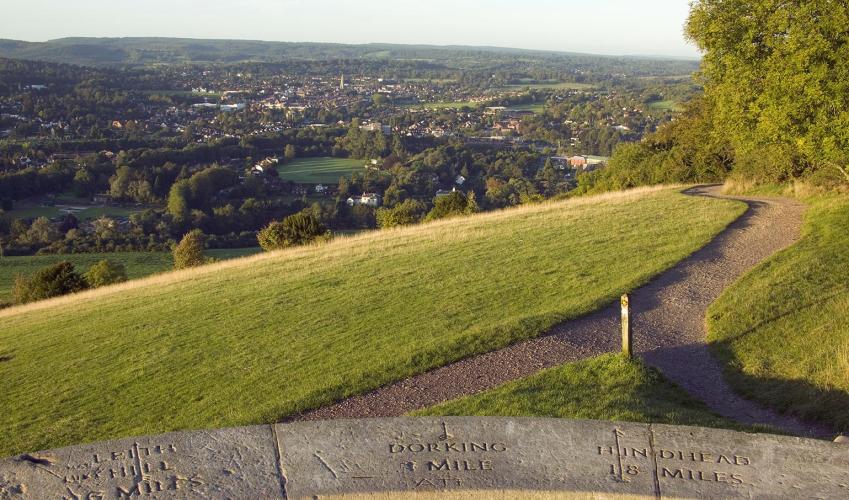
With your back to the visitor centre, turn right along the road to the viewpoint. Leave the viewpoint via the path to the left and follow the North Downs Way (NDW) signpost, the path running parallel with the road.
Continue until you reach the car park of the Smith and Western Bar, Grill and Diner and turn left to cross the road and turn left onto the signposted public bridleway. Follow the signposted route to a five-way junction and keep going straight ahead (third turning). The path descends to the valley bottom and emerges from woodland and then through the grasslands of Juniper Bottom to Headley Lane via a gate.
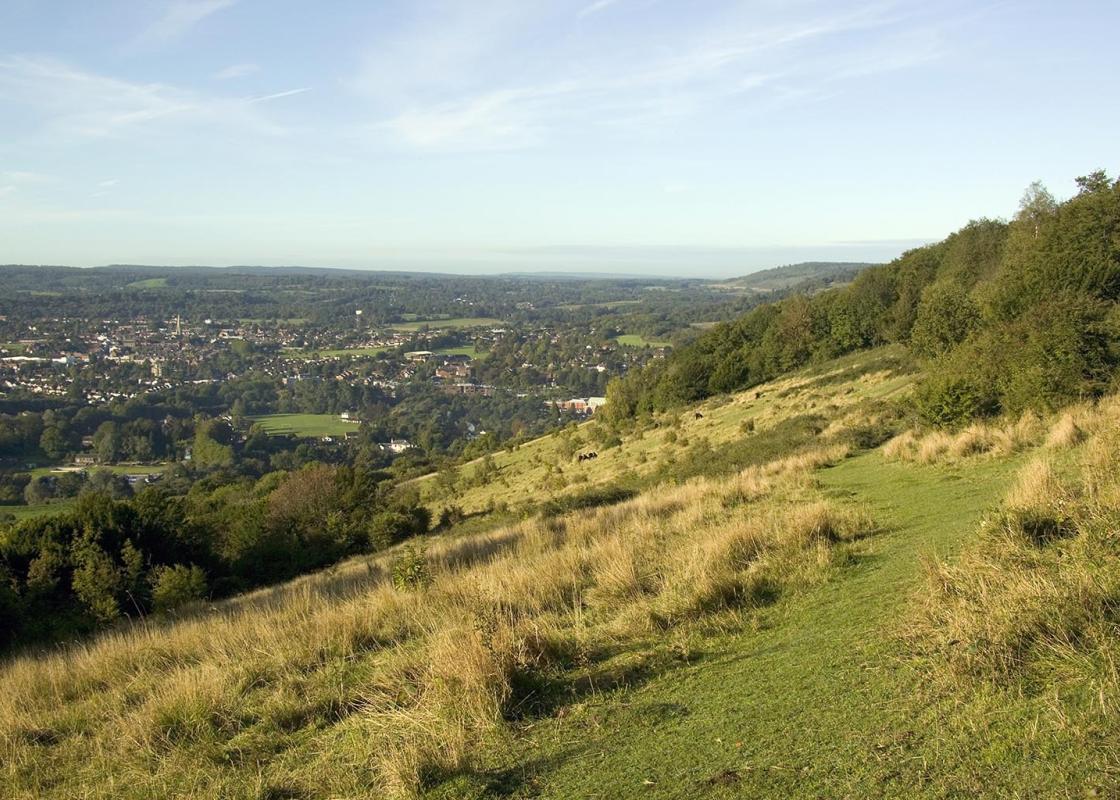
Cross straight over onto the public footpath and climb up a long flight of unrelentingly steep rustic steps. Just beyond the top of the steps, the path bears right and the gradient eases slightly. Soon you will come to a bench seat. Now follow the National Trust’s Box Hill Hike waymarks, through a yew wood, as you bear left and left again at the next waymark signpost. Drop down over a footpath crossroads, still following Box Hill Hike signs, and walk alongside a paddock en route to a stile. Cross the stile at the foot of the hill, and continue past the church into Mickleham. Turn left and follow the Old London Road. There’s a pavement on the right-hand side to begin with, which at times transforms into a rural path running a few paces from the road. Before reaching the junction with the Zig Zag Road, it’s a pavement again.
Continue past Ryka’s Café and the Burford Bridge Hotel, cross over the river and alongside the A24 and through the subway. Turn left then right into Westhumble Street, and carry on over the railway bridge into Chapel Lane. Keep left of Camilla Drive and continue ahead. Beyond the houses, look out for the ruins of Westhumble Chapel on your left.
Immediately beyond the chapel, turn left up the bridleway towards Ashleigh Grange. Climb steadily on a tarmac drive to a line of electricity pylons and follow the drive as it swings to the left. After 80yds (73m), fork left onto the waymarked path and continue for a further 100yds (91m).
Now turn left onto the North Downs Way National Trail. After 400yds (364m), you reach a crossroads of paths, signed to Dorking on the right. You can visit Denbies Wine Estate by turning right here and following the path to the main winery building. Otherwise keep straight on through a gate and under the railway, and pass through large gates to the A24. Turn left and cross the A24 via the subway used earlier in the walk. Emerging from the subway, turn right and walk alongside the A24 to the Stepping Stones car park. Walk through the car park, and cross the River Mole via the stepping stones. Alternatively, there’s a footbridge 100yds (91m) upstream. From here, there’s only one way to go – the North Downs Way hurls itself at Box Hill, up flight after flight of unremitting rustic steps. Swing right at the top of the steps and climb gently for another 200yds (182m) to the viewpoint. Turn hard left here, and double back for the last 150yds (137m) to the car park.
Additional information
Terrain
- Woodland tracks, with two sections on minor roads, 1 stile
Landscape
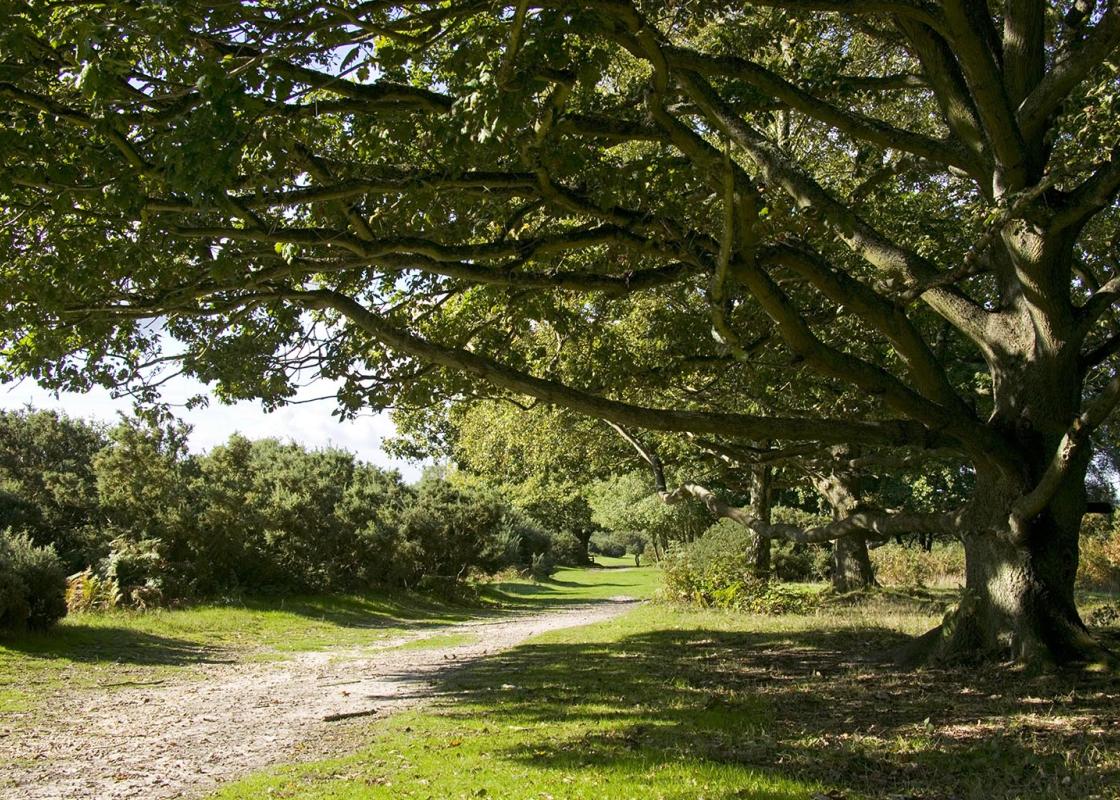
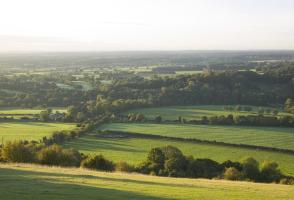
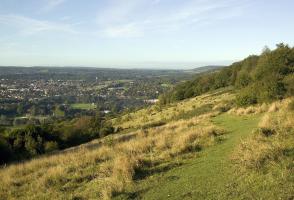
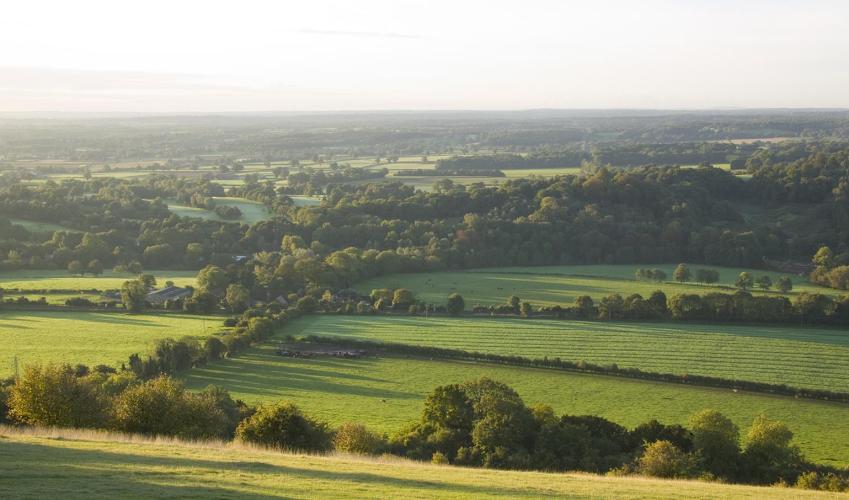
- Mainly wooded, but with some breathtaking views and a pretty village
Dog friendliness
- Some roadside sections and grazing animals; must be on leads on Denbies Wine Estate
Parking
- National Trust car park at Box Hill Country Park
Toilets en route
- At the start
About the walk
Just after leaving the car park, you’ll notice a drive to a private house on your right. This is Swiss Cottage, home to John Logie Baird during the 1920s and 1930s. Baird had trained as an electrical engineer, but spent his early life on a variety of hare-brained projects that ranged from curing... piles to producing jams and mango chutney. He was the archetypal absent-minded professor – scruffy, permanently short of cash, and given to sketching on restaurant tablecloths or changing his socks in public. Baird’s prototype for a mechanical television was pure Wallace and Gromit. On top of an old tea chest he set up a scanning disc cut from a hatbox, spinning on an old darning needle driven by an electric motor. There was a lamp in an empty biscuit tin and some fourpenny bull’s eye lenses, all held together with sealing wax and string. But it worked, and in 1925 he unveiled his ‘Televisor’ at Selfridges in London. After blowing up his lodgings in Hastings, Baird moved to London, and then to Box Hill, where he continued to demonstrate inventions like the ‘Noctovisor’, a night-vision infra-red viewer. Auntie takes a hand Towards the end of 1929, Baird overcame the BBC’s scepticism and began experimental transmissions using the 2LO transmitter in The Strand in London. It was always an uneasy relationship, with Baird continuing to promote mechanically scanned television at a time when pure electronic systems were being developed on the far side of the Atlantic. EMI launched its ‘Emitron’ camera in 1935, and in the following year the BBC began a new round of test transmissions from Alexandra Palace in south London. Baird and Marconi-EMI were now head to head, broadcasting from adjacent studios on alternate days. The service was officially opened using Baird’s system in November 1936, transmitting two hours of programmes each day. But within three months, the Government had decided that Britain should adopt Marconi-EMI’s electronic system as the new standard for television transmission. Baird was down, but not out. In the years before his death in 1946, he continued to experiment with big-screen television for cinemas, as well as colour and stereoscopic television, and Baird is generally remembered as a pioneer in British television.
Read more
Been on this walk?
Send us photos or a comment about this route. Or recommend a route of your own.

Walking in Safety
Read our tips to look after yourself and the environment when following this walk.
Get an AA guide
Explore our range of ‘50 Walks in’ guides - they’re the ideal companion for a ramble.
Been on this walk?
Send us photos or a comment about this route. Or recommend a route of your own.
Walking in Safety
Read our tips to look after yourself and the environment when following this walk.
Get an AA guide
Explore our range of ‘50 Walks in’ guides - they’re the ideal companion for a ramble.
About the area
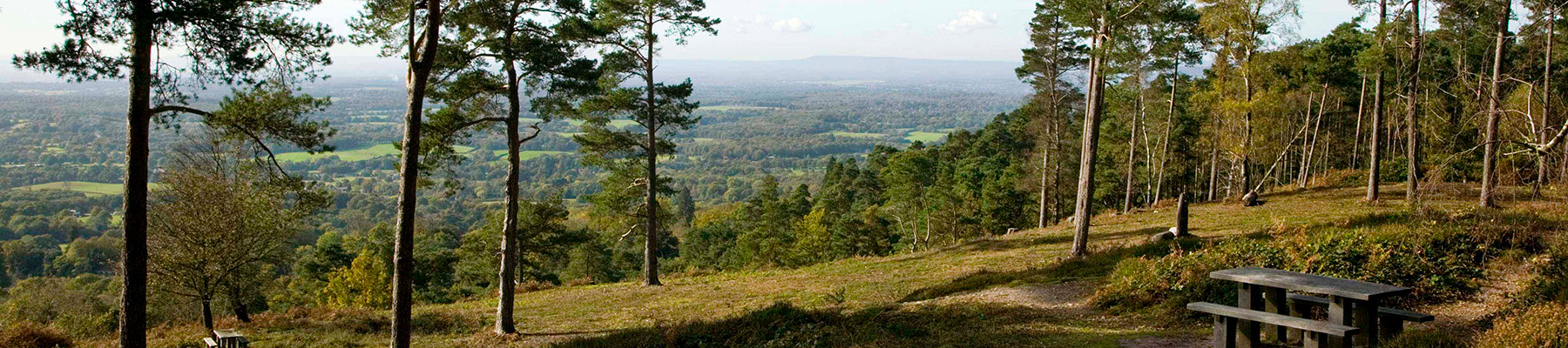
Surrey is one of England’s most wooded counties, with over a quarter of the landscape designated as an official AONB and plenty of history evident in the countryside. You’ll find sandy tracks, cottage gardens and welcoming village inns, and on the fringe of Greater London you can picnic in Chaldon’s hay meadows, explore the downs at Epsom, or drift idly beside the River Thames.
Nearby places to stay
View all (8)
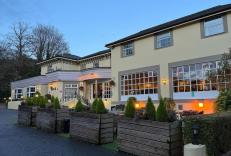
Hotel
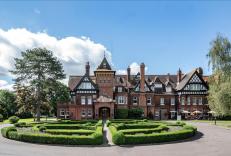
Reigate Manor
★★★
"Elegant manor house with plenty of space to explore...."
- En-suite rooms:
- Family rooms:
Hotel
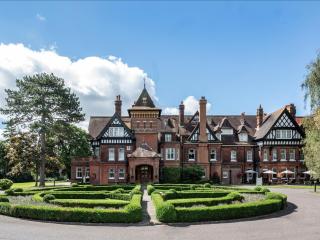
Woodlands Park Hotel
★★★★
"Grand country house style with original features retained...."
- Family rooms: 4
- Free TV
- WiFi available
- Lift available
Nearby places to stay
Reigate Manor
On the slopes of Reigate Hill, Reigate Manor is ideally located for access to the town and for motorway links. A range of public rooms is provided along with a variety of function rooms...
★★★ Rating
Woodlands Park Hotel
Originally built for the Bryant family of the matchmaking firm Bryant & May, the Woodlands Park Hotel, a traditional Victorian mansion, enjoys an attractive parkland setting in ten and ...
★★★★ Rating
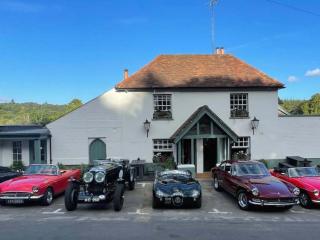
The Kings Head
Tucked away in a tranquil village in the Surrey Hills, The Kings Head offers three very comfy and stylish bedrooms. The team are extremely friendly and the kitchen sends out delicious a...
★★★★ Rating
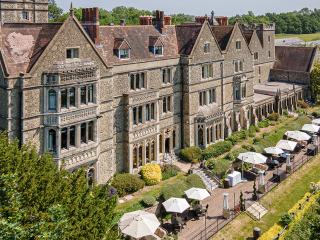
Nutfield Priory Hotel & Spa
Nutfield Priory is a country house that dates back to 1872 and is set in 40 acres of grounds with stunning views over the Surrey countryside. The hotel offers a range of individually ap...
★★★★ Rating
Edgeley Country Park
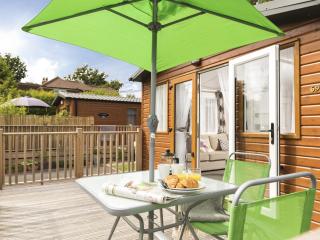
Within 45-minutes of central London and Gatwick Airport, but a whole world away from the stresses of everyday life, Edgeley Country Park is an idyllic retreat. Tucked away in 26 acres o...
★★★★★ Rating
Gainsborough Lodge
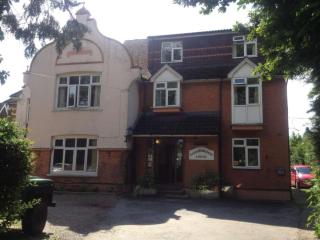
Close to Gatwick, Gainsborough Lodge is a fine Edwardian house. Its bright, recently refurbished bedrooms are comfortably appointed, and a Continental breakfast is served in the-dining ...
★★★ Rating
The Drummond at Albury
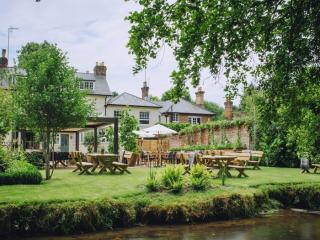
The Drummond at Albury is well located for a weekend away in the tranquillity of the Surrey Hills, and is popular with business guests looking for somewhere a bit less corporate than on...
Quality Assessed
Guildford Manor Hotel
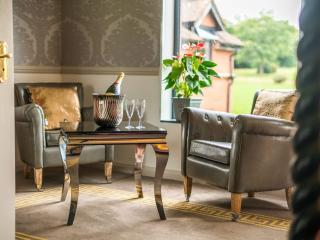
Guildford Manor Hotel is a contemporary hotel located in the tranquillity of the Surrey Hills countryside – it's the ideal place to celebrate special occasions and have a relaxing weeke...
★★★ Rating