A stroll around Dorking
Recommended by

Walk directions
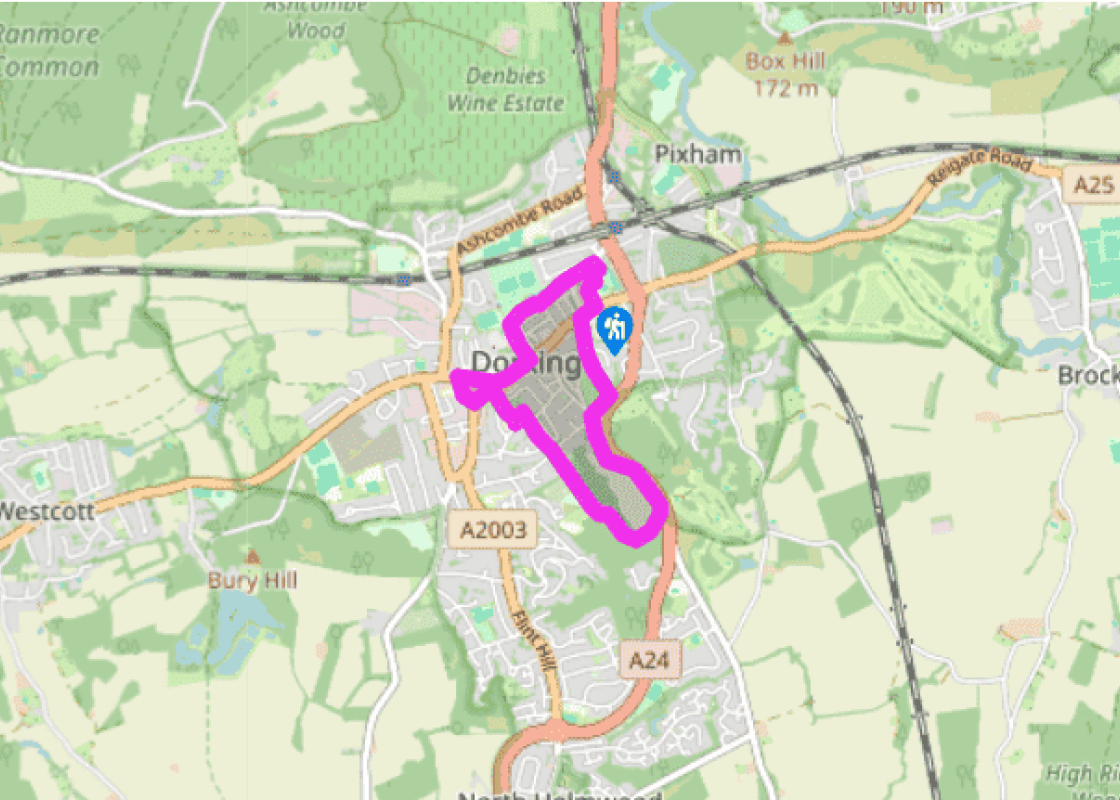
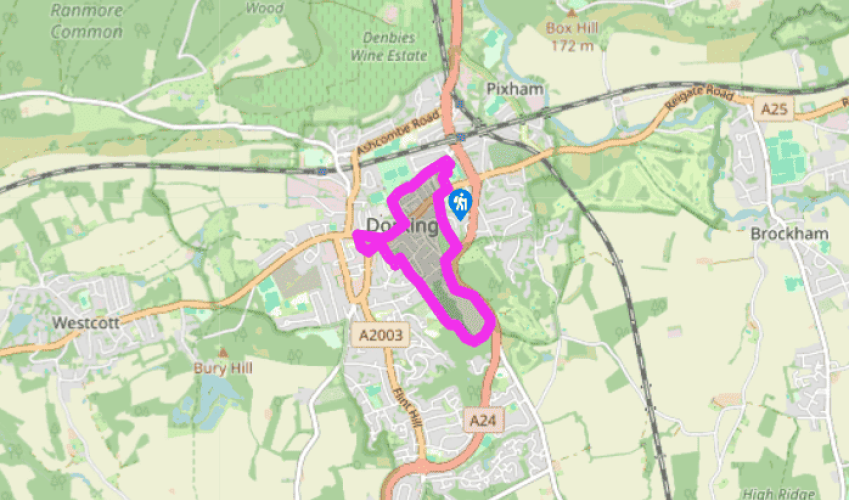
From the car park turn left along Reigate Road, pass the Dorking Halls and turn left into Moores Road. Walk to the end of Moores Road, as you reach the large expanse of common land known as Cotmandene you’ll see the Victorian almshouses, on your right. Walk ahead to the trees and bear right following the edge of the green to reach Chart Lane.
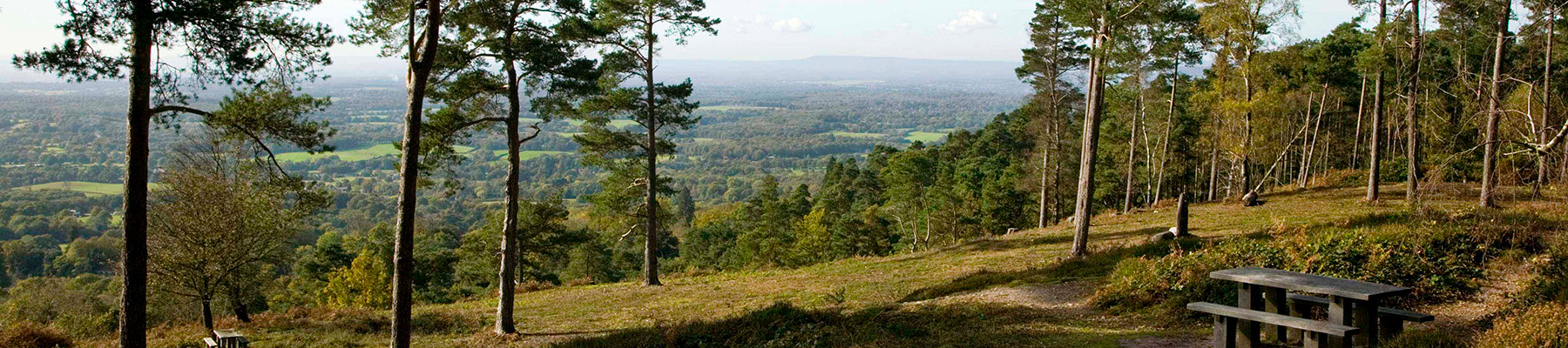
Turn left and follow the pavement as far as the A24, then carefully cross Chart Lane and bear right into Glory Wood, using the signed footpath off the verge. As the footpath climbs away from the road, steer as right as you can, keeping the edge of the wood in view on your right. Leave the woods at the barrier near an information board and fork right. There’s a bench here, and a fine view towards Ranmore Church spire in the woods on the horizon. Drop down past the allotments and then St Paul’s Primary School, cross St Paul’s Road, and dive down the little fenced footpath opposite. Keep straight on into Chequers Place; then, after 70yds (64m), turn off down a narrow alley on your left, signed Rose Hill.
View all directions
Additional information
Terrain
- Mainly paved streets, with easy section of woodland paths
Landscape
- Woodland scenery, parkland and busy town centre
Dog friendliness
- Not what most dogs think of as a great day out
Parking
- Reigate Road pay-and-display car park (near Dorking Sports Centre)
Toilets en route
- South Street or behind St Martins Walk precinct
About the walk
Nestling in the Surrey Hills, a stone’s throw from Box Hill, you’ll find the historic and attractive market town of Dorking. Progress has happened here, but it has happened sympathetically. Old architecture blends with the new, while behind the busy shopping streets the peaceful river threads its...
Read more

Been on this walk?
Send us photos or a comment about this route. Or recommend a route of your own.

Walking in Safety
Read our tips to look after yourself and the environment when following this walk.
Get an AA guide
Explore our range of ‘50 Walks in’ guides - they’re the ideal companion for a ramble.
Been on this walk?
Send us photos or a comment about this route. Or recommend a route of your own.
Walking in Safety
Read our tips to look after yourself and the environment when following this walk.
Get an AA guide
Explore our range of ‘50 Walks in’ guides - they’re the ideal companion for a ramble.
About the area
Surrey is one of England’s most wooded counties, with over a quarter of the landscape designated as an official AONB and plenty of history evident in the countryside. You’ll find sandy tracks, cottage gardens and welcoming village inns, and on the fringe of Greater London you can picnic in Chaldon’s hay meadows, explore the downs at Epsom, or drift idly beside the River Thames.
Nearby places to stay
View all (8)







Nearby places to stay

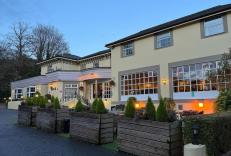
The Kings Head
Tucked away in a tranquil village in the Surrey Hills, The Kings Head offers three very comfy and stylish bedrooms. The team are extremely friendly and the kitchen sends out delicious a...
Reigate Manor
On the slopes of Reigate Hill, Reigate Manor is ideally located for access to the town and for motorway links. A range of public rooms is provided along with a variety of function rooms...
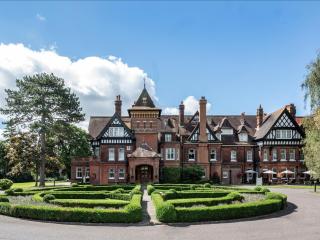
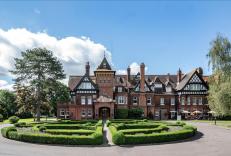
Woodlands Park Hotel
Originally built for the Bryant family of the matchmaking firm Bryant & May, the Woodlands Park Hotel, a traditional Victorian mansion, enjoys an attractive parkland setting in ten and ...
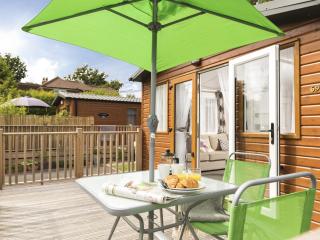
Edgeley Country Park
Within 45-minutes of central London and Gatwick Airport, but a whole world away from the stresses of everyday life, Edgeley Country Park is an idyllic retreat. Tucked away in 26 acres o...
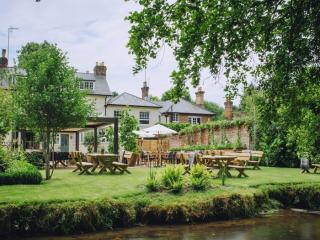
The Drummond at Albury
The Drummond at Albury is well located for a weekend away in the tranquillity of the Surrey Hills, and is popular with business guests looking for somewhere a bit less corporate than on...
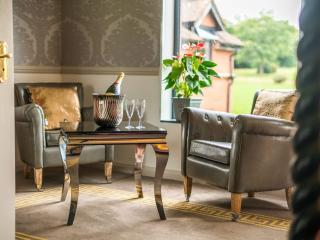
Guildford Manor Hotel
Guildford Manor Hotel is a contemporary hotel located in the tranquillity of the Surrey Hills countryside – it's the ideal place to celebrate special occasions and have a relaxing weeke...
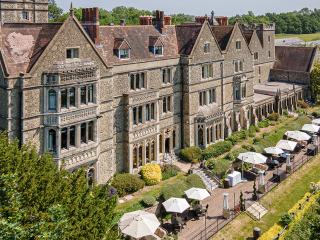
Nutfield Priory Hotel & Spa
Nutfield Priory is a country house that dates back to 1872 and is set in 40 acres of grounds with stunning views over the Surrey countryside. The hotel offers a range of individually ap...
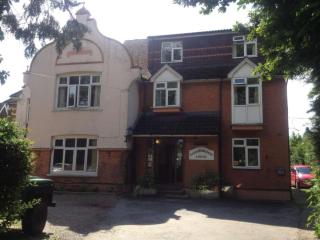
Gainsborough Lodge
Close to Gatwick, Gainsborough Lodge is a fine Edwardian house. Its bright, recently refurbished bedrooms are comfortably appointed, and a Continental breakfast is served in the-dining ...
Places to eat nearby View all